Act I
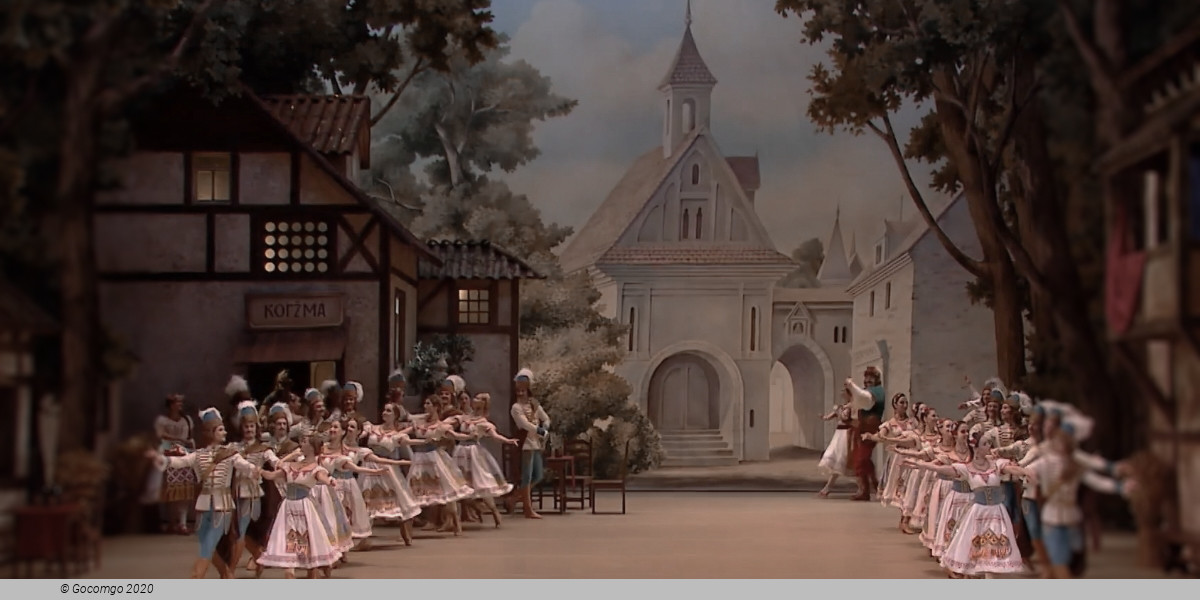
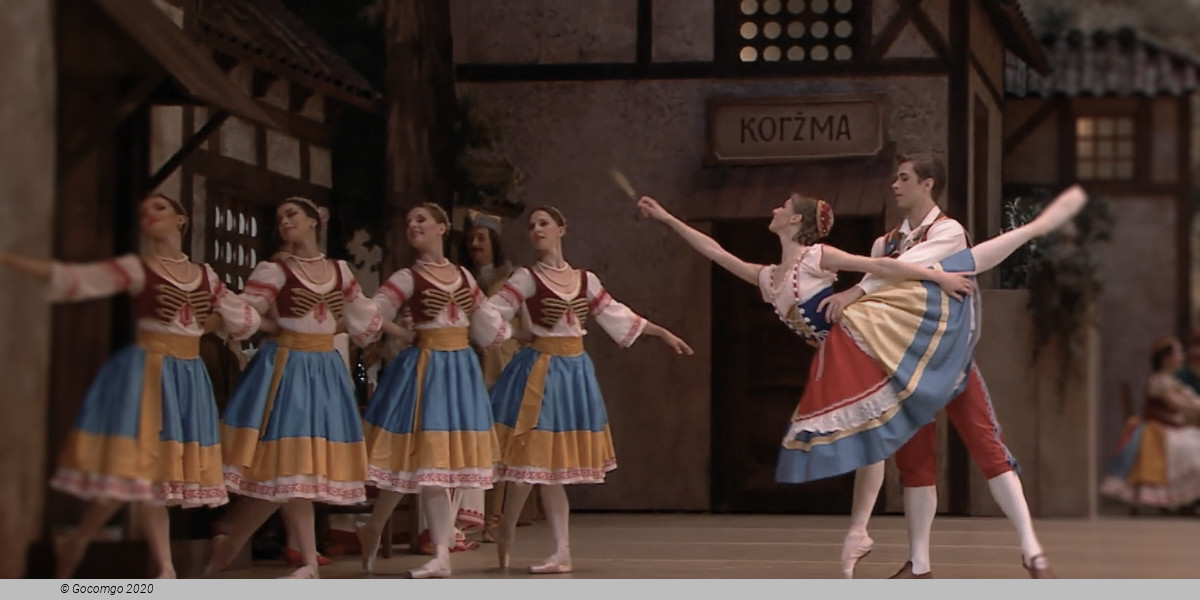
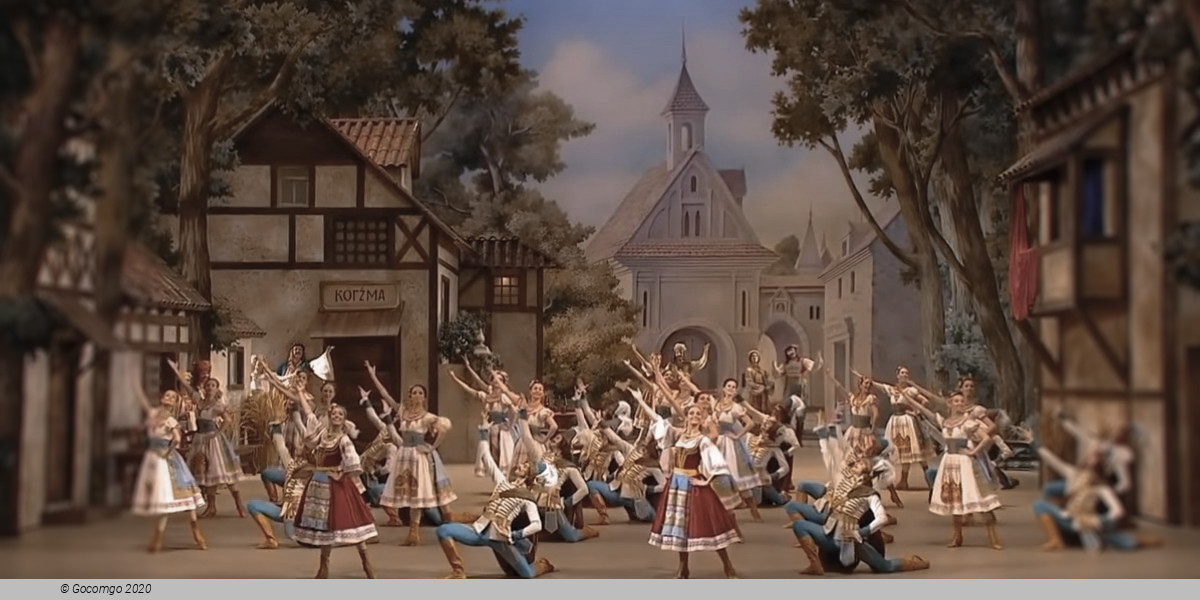
A public Square in a small town, on the borders of Galicia, with wooden houses painted with bright colors. One house stands outin contrast to the others, with grating before the windows and the door securely fastened. This is the residence of Coppelius.
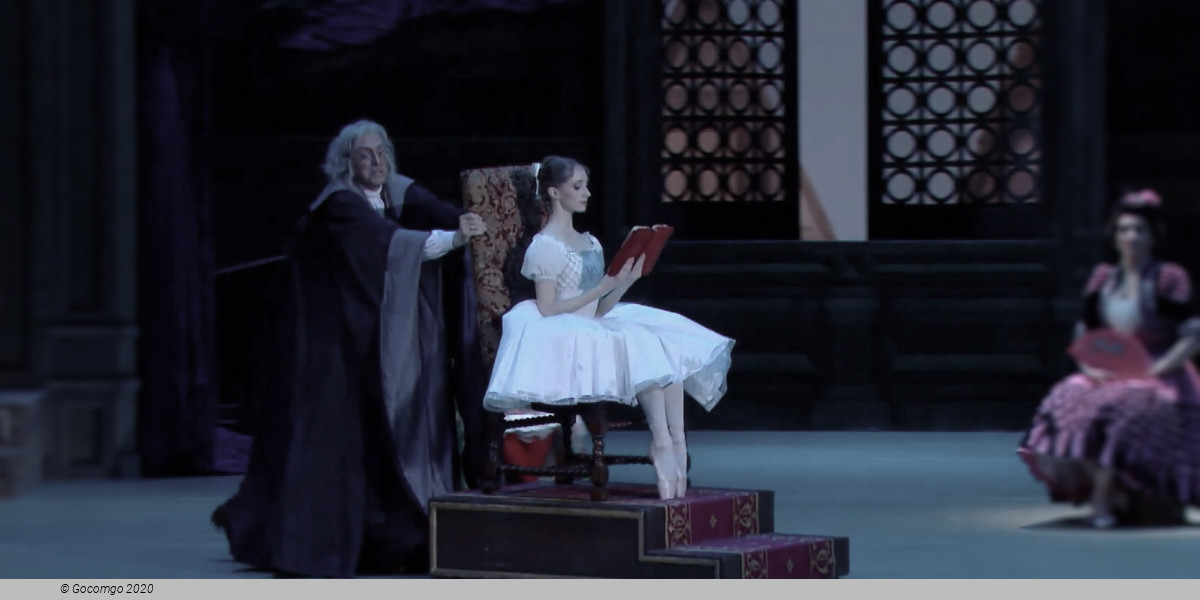
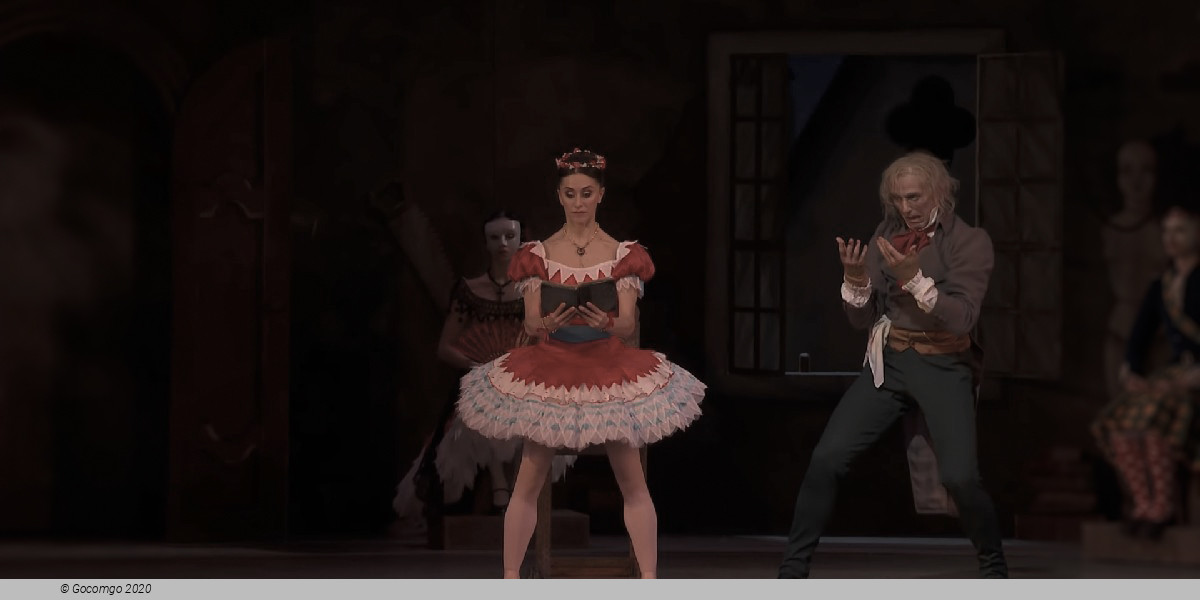
Swanilda is approaching the house of Coppelius, raises her eyes to a large window, behind which Coppelia, the daughter of old Coppelius, is seen, sitting with a book in her hands apparently absorbed in her reading. Every morning she is seen at the same window and in the same attitude, and then disappears. She never goes out from this mysterious residence. She appears to be pretty, and many young men in the town have passed long hours beneath her window, beseeching for one look.
Swanilda suspects that her fiance, Frantz, is not indifferent to the beauty of Coppelia. She tries to attract her attention, but Coppelia has her eyes always fixed on her book, of which she does not even turn the leaves.
Swanilda cannot contain her feelings of anger. She starts to knock at the door, but she perceives Frantz approaching, and remains in hiding to see what he is going to do.
Frantz, who at first was going toward Swanilda house, suddenly stops. Coppelia is at the window. He bows to her. At the same time she turns her head and appears to return Frantz’s salute. Frantz has scarcely time to throw a kiss to Coppelia before old Coppelius has opened his window, and seems to be amused at what has been going on.
Swanilda is furious against Coppelius and against Frantz. However, she remains quiet and pretends to have seen nothing. She runs after a butterfly. Frantz runs with her, and catching it, pins it in the collar of his coat. Swanilda reproaches him for his cruelty: “What has this poor insect done to you?” After many reproaches, the young maid brings herself to tell him, that she knows all. He has deceived her. He loves Coppelia. Frantz tries in vain to defend himself.
The Burgomaster announces that on the next day a grand fete will take place — the Lord of the manor has given a bell to the Town. They crowd round the Burgomaster. The noise is being made in Coppelius’ house. Odd looking lights are shining at the windows. Some of the girls shrink with fear from this mysterious abode. But it is nothing but the clash of the hammer on the anvil, and the light is the reflection from the forge. Coppelius is an old fool who is always working. At what? No one knows and who cares? He must be left alone and not be stopped from amusing himself. The Burgomaster approaches Swanilda. He tells her that tomorrow the lord of the manor will give a dowry and marriage to several couples. She is betrothed to Frantz; shall they not be united tomorrow? Ah! but there is time yet, and the young girl looking spitefully at Frantz, tells the Burgomaster that she will tell him a story. It is the story of a straw which reveals all secrets.
Swanilda takes the straw from a bundle, and placing it to her ear, pretends to listen; then she tells Frantz to listen also. Does it not tell him that he does not love Swanilda? Frantz answers that he hears nothing. Swanilda tries it with one of Frantz’s friends, who pretends to hear very distinctly what the straw says. Frantz tries to protest, but Swanilda breaking the straw before his eyes, tells him that everything is broken between them. Frantz goes away, while Swanilda dances in the midst of her companions. Glasses are placed on the tables, and they drink the health of the lord ofthe manor and the Burgomaster.
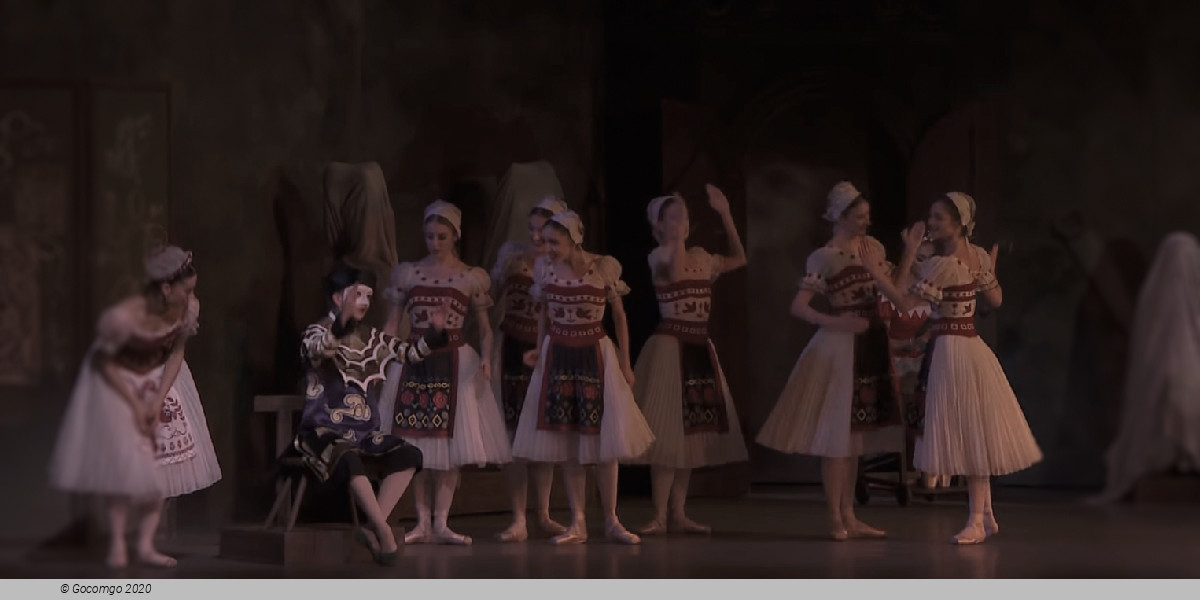
Coppelius leaves his house and securely fastens the door. He has not gone many steps, before he is surrounded by a crowd of young fellows; some of whom want to take him away with them, while the others want to make him dance. The old man goes off swearing.
Swanilda is bidding adieu to her friends, when one of them sees a key, which Coppelius must have dropped.
The girls suggest to Swanilda to visit the mysterious house. At first Swanilda hesitates, but she wants to meet this rival. “Well, then, let us enter, ” she says. The girls enter the house of Coppelius.
Frantz is seen coming up, carrying a ladder. He has determined to see what chance he has with Coppelia. The opportunity is most favorable and Coppelius is far off! But it is not so, for just as Frantz is steadying the ladder against the balcony, he sees Coppelius returning and looking for the lost key. He sees Frantz just about to climb the ladder. Frantz runs away.
Act II
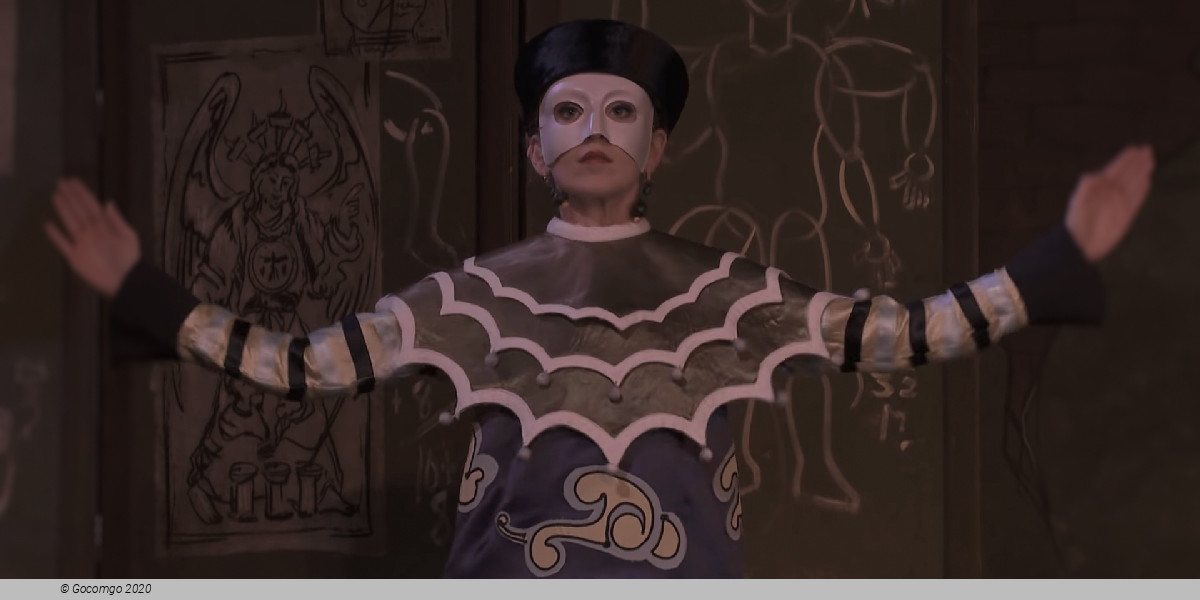
A large room is full of all kinds of instruments and tools. There are several automata on pedestals. There are figures of an old man, dressed in Persian costume, a Negro in threatening attitude, a little Moorish cymbal-player, a Chinaman with a tympanon before him.
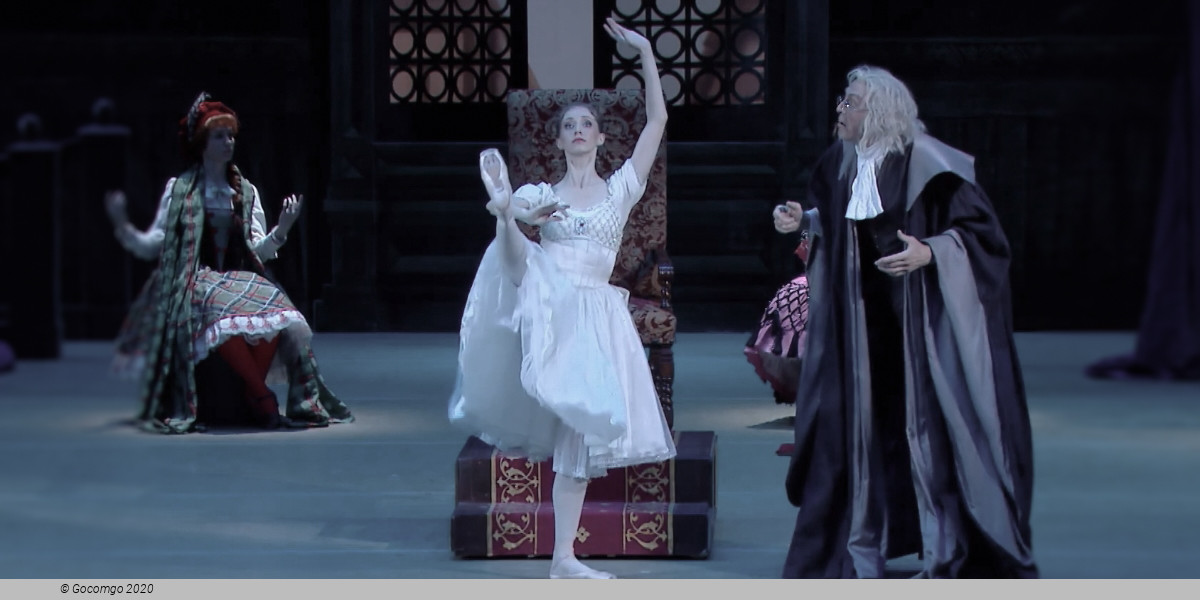
The girls cautiously enter Coppelius’ house. Who are those people standing still in the dark shadows? They are face to face with the strange figures which a moment before had so frightened them. Swanilda draws aside the heavy curtains. There she sees Coppelia seated with her book in her hand. Swanilda salutes the strange girl who remains motionless. She speaks to her, but gets no answer. She touches the young girl’s arm and then starts back through fear. Can it be a living creature? She puts her hand to the heart, but it does not beat. This young lady is an automaton, and thehandy-work of Coppelius! Swanilda doesn’t worry herself any more about her rival, but looks forward to the fun of telling Frantz all about her discovery. The girls run laughing, around the studio.They have nothing to fear now.
One of them in passing by the Tympanon player, touches it by accident. It begins playing a tune. The girls are at first bewildered, but soon begin dancing. They then find the spring, which sets the little Moorish figure in motion.
Suddenly Coppelius returns in a furious rage. He draws together the curtains which conceal Coppelia; stops the automata and runs after the girls. They slip through his hands and disappear down the back stairs. Swanilda is hiding behind the curtains. She is caught! but no; crouching in a corner she remains unseen when Coppelius looks behind the curtain. He examines Coppelia and finds that no harm has been done. He breathes more freely.
But what is that noise? He sees the top of a ladder in the window and then Frantz appears. Coppelius does not show himself. Frantz is going toward the spot where he has seen Coppelia, when two stout hands seize him. Frantz nearly dead with fright, implores Coppelius to forgive him. He tries to escape, but the old man holds him tightly. “What are you up to here?” he asks. Frantz confesses that he is in love. “I am not so bad as people say. Sit down and let us take a drink together and have a chat, ” answers Coppelius. He gets an old flagon of wine and two goblets. He takes a sip with Frantz, and then, when Frantz is not looking, he throws away the wine.
Frantz finds that the wine has a peculiar taste. He tosses it down, however, and Coppelius makes him drink more and more. Frantz tries to get near the window where he has seen Coppelia. But his legs give way, he falls heavily on the bench and is asleep.
Coppelius gets a magic book and studies its pages. Then he rolls the pedestal which holds Coppelia, bringing it nearer to sleeping Frantz. Placing his hands over the heart and forehead of the young man, he tries to take away his soul to give life to the young girl. Coppelia rises up, she begins her mechanical motions but then she descends the first step of the pedestal and then the second. She walks! She lives!
Coppelius is almost beside himself with joy. His work has surpassed all that human hand has ever created! She soon begins to dance slowly, and than all at once darts off so quickly that Coppeliuscan scarcely follow her. She smiles; a color comes to her cheeks and she is full of life!
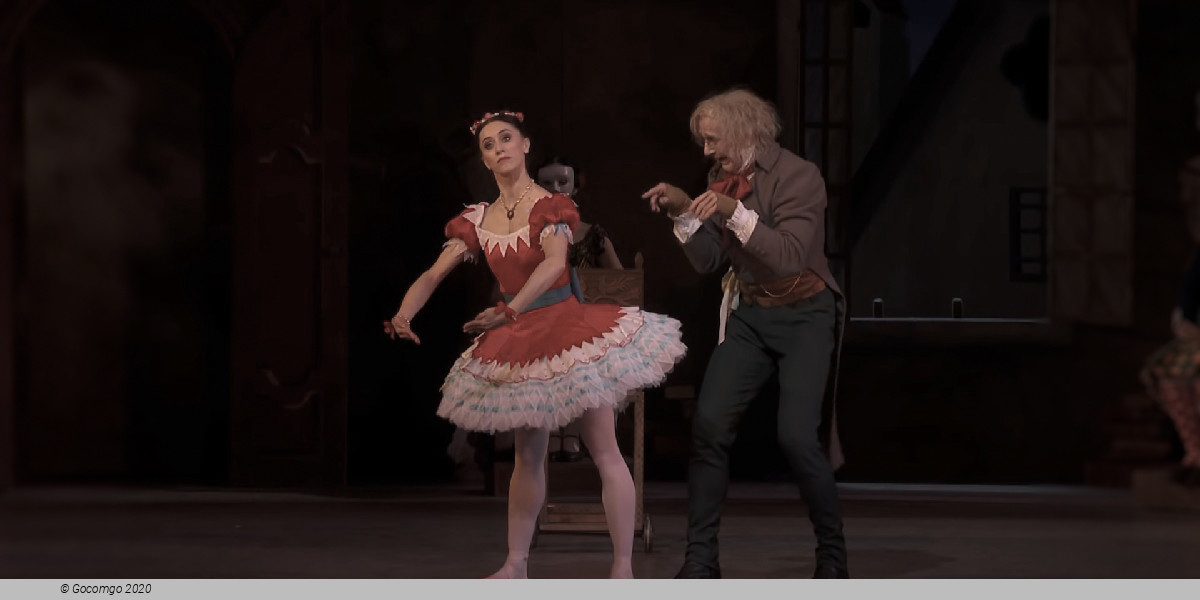
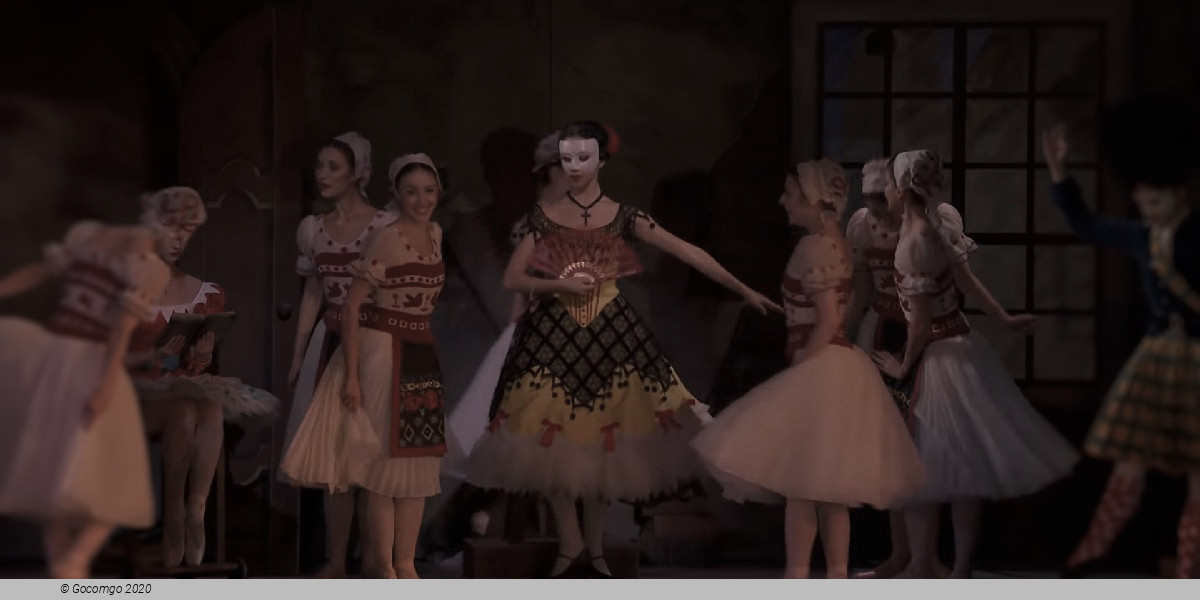
She sees the vial and places it to her lips. Coppelius is just in time to snatch the flagon from her hands. She perceives the magic book and asks Coppelius what it means. “There are impenetrable secrets, ” he answers, and closes the book. She examines the automata. “I have made them all, ” Coppelius says. She stops in front of Frantz. “And that one?” she asks. “It is like the rest, ” he answers. She sees a dagger and pricks her own finger with the point of it and then amuses herself by thrusting it at the little Moor. Coppelius roars with laughter... but she approaches Frantz... The oldman stops her and she turns against him and chases him around the studio. At last he disarms her. He throws a cloak over her shoulders, and it seems to awaken in her a world of new ideas. She dances a Spanish dance. Then she finds a Scotch scarf-pin and taking it in her hands, she dances a jig. She jumps and runs around, throwing everything within her reach to the ground and breaking it! She is decidedly too lively! What shall Coppelius do!
In the midst of all the noise, Frantz wakes up. Coppelius now seizes Coppelia and replacing her by main force on the pedestal, draws the curtains. He then goes up to Frantz and orders him toleave. “Go along!” he cries, “you are good for nothing.”
Then he stops and listens. Did he not hear the tune which generally accompanies the movement of the automata? He jumps up and while he is staring at Coppelia, who has started her old movements, Swanilda skips out unobserved from behind the curtain. She sets the other two automata going. “Are these two also moving by themselves?” Coppelius exclaims. All at once he sees Swanilda disappearing with Frantz. He has a vague notion that some game has been played on him and falls heavily in the midst of the automata which keep moving as if to mock at their master’s grief and despair.
Act III
A lawn in front of the baronial castle. At the back, the bell, the gift of the lord of the manor, is hung from poles, decorated with garlands and banners. A car covered with allegorical designs and on which are grouped the various actors for the fete, has just stopped in front of the bell.
The priests have pronounced a benediction over the bell. The betrothed couples who are to be given a dowry, and are to be united on this festal day go and bow before the baron. Frantz andSwanilda complete their mutual reconciliation. Frantz has disabused himself of his temporary infatuation and thinks no more of Coppelia. He knows what a joke has been played upon him. Swanilda forgives him and giving him her hand, advances with him before the lord of the manor.
All at once there is a stir among the crowd. Coppelius comes to implore and even to demand justice; they have ridiculed him and have broken everything in his house, his masterpieces made with the greatest labor and patience, have been smashed. Who is going to pay him? Swanilda, who has just received her dowry, quickly offers it to Coppelius. But the lord of the manor stops Swanilda. She may keep her dowry. He throws a purse to him and whilst Coppelius departs with his money, he gives the signal for the festivities to begin.
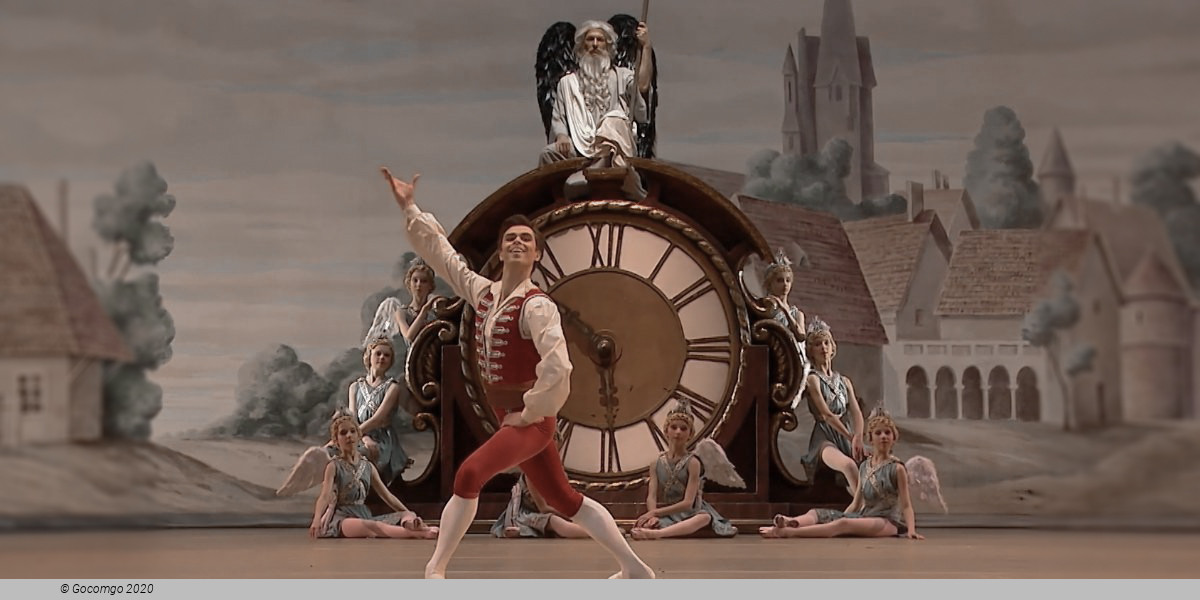
The Bell-ringer alights first from the car. He summons the Morning Hours. They appear, quickly followed by Aurora. The bell rings! It is the Hour of Prayer. Aurora vanishes, chased by the Hours ofDay. These are the working hours, and the young girls and reapers begin their work. The bell rings again! It announces a wedding.
Derived from: Delibes’ Ballet of Coppelia. Paris Opera Libretto. Under the Direction of Mr. Heinrich Conried. The Original Italian, French or German Libretto with a Correct English Translation. NewYork : F. Rullman. [1900s]
Dr. Coppélius is a doctor who has made a life-size dancing doll. It is so lifelike that Franz, a village youth, becomes infatuated with it and sets aside his heart's true desire, Swanhilda. She shows him his folly by dressing as the doll, pretending to make it come to life and ultimately saving him from an untimely end at the hands of the inventor.
Act I
The story begins during a town festival to celebrate the arrival of a new bell. The town crier announces that, when it arrives, anyone who becomes married will be awarded a special gift of money. Swanilda and Franz plan to marry during the festival. However, Swanilda becomes unhappy with Franz because he seems to be paying more attention to a girl named Coppélia, who sits motionless on the balcony of a nearby house. The house belongs to a mysterious and faintly diabolical inventor, Doctor Coppélius. Although Coppélia spends all of her time sitting motionless and reading, Franz is mesmerized by her beauty and is determined to attract her attention. Still upset with Franz, Swanilda shakes an ear of wheat to her head: if it rattles, then she will know that Franz loves her. Upon doing this, however, she hears nothing. When she shakes it by Franz's head, he also hears nothing; but then he tells her that it rattles. However, she does not believe him and runs away heartbroken.
Later on, Dr. Coppelius leaves his house and is heckled by a group of boys. After shooing them away, he continues on without realizing that he has dropped his keys in the melée. Swanilda finds the keys, which gives her the idea of learning more about Coppélia. She and her friends decide to enter Dr. Coppelius' house. Meanwhile, Franz develops his own plan to meet Coppélia, climbing a ladder to her balcony.
Act II
Swanilda and her friends find themselves in a large room filled with people. However, the occupants aren't moving. The girls discover that, rather than people, these are life-size mechanical dolls. They quickly wind them up and watch them move. Swanilda also finds Coppélia behind a curtain and discovers that she, too, is a doll.
Dr. Coppelius returns home to find the girls. He becomes angry with them, not only for trespassing but for also disturbing his workroom. He kicks them out and begins cleaning up the mess. However, upon noticing Franz at the window, Coppélius invites him in. The inventor wants to bring Coppélia to life but, to do that, he needs a human sacrifice. With a magic spell, he will take Franz's spirit and transfer it to Coppélia. After Dr. Coppelius proffers him some wine laced with sleeping powder, Franz begins to fall asleep. The inventor then readies his magic spell.
However, Dr. Coppelius did not expel all the girls: Swanilda is still there, hidden behind a curtain. She dresses up in Coppélia's clothes and pretends that the doll has come to life. She wakes Franz and then winds up all the mechanical dolls to aid their escape. Dr. Coppelius becomes confused and then saddened when he finds a lifeless Coppélia behind the curtain.
(Note: In some Russian versions of the ballet, after getting caught, Swanhilda confesses to Dr. Coppelius about what she and her friends did and her situation with Franz. Coppelius decides to forgive Swanhilda and teach her how to act like a doll coming to life to fool Franz, thus ending Act 2 on a happier note.)
Act III
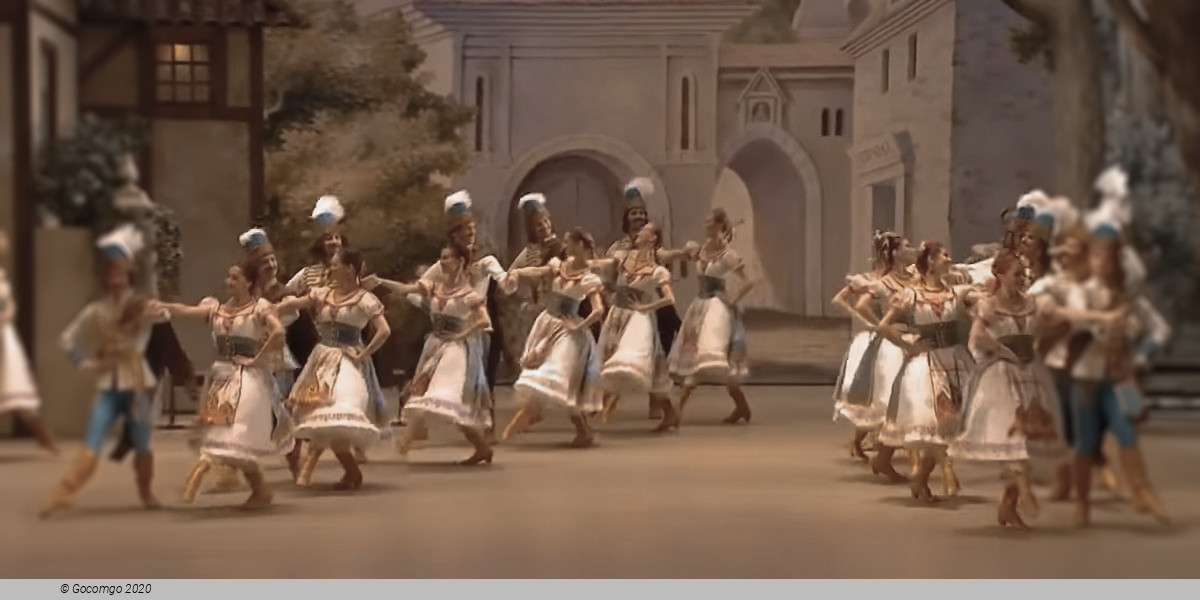
Swanilda and Franz are about to make their wedding vows when the angry Dr. Coppelius appears, claiming damages. Dismayed at having caused such an upset, Swanilda offers Dr. Coppelius her dowry in return for his forgiveness. However, Franz tells Swanilda to keep her dowry and offers to pay Dr. Coppelius instead. At that point, the mayor intervenes and gives Dr. Coppelius a bag of money, which placates him. Swanilda and Franz are married and the entire town celebrates by dancing.








 Teatralnaya Square 1