

Oslo Opera House tickets 31 January 2027 - Das Rheingold | GoComGo.com

Das Rheingold

Oslo Opera House, Main Stage, Oslo, Norway
All photos (9)
Select date and time
3 PM
From
US$ 102

E-tickets: Print at home or at the box office of the event if so specified. You will find more information in your booking confirmation email.

You can only select the category, and not the exact seats.
If you order 2 or 3 tickets: your seats will be next to each other.
If you order 4 or more tickets: your seats will be next to each other, or, if this is not possible, we will provide a combination of groups of seats (at least in pairs, for example 2+2 or 2+3).

Important Info
Type: Opera
City: Oslo, Norway
Starts at: 15:00
Duration: 2h 40min
Sung in: German
Titles in: English,Norwegian

E-tickets: Print at home or at the box office of the event if so specified. You will find more information in your booking confirmation email.

You can only select the category, and not the exact seats.
If you order 2 or 3 tickets: your seats will be next to each other.
If you order 4 or more tickets: your seats will be next to each other, or, if this is not possible, we will provide a combination of groups of seats (at least in pairs, for example 2+2 or 2+3).

Cast
Performers
Conductor: Edward Gardner
Baritone: Aleksander Nohr (Donner)
Tenor: Eirik Grøtvedt (Froh)
Baritone: Johannes Weisser (Alberich)
Tenor: Magnus Staveland (Loge)
Orchestra: Norwegian National Opera Orchestra
Tenor: Ya-Chung Huang (Mime)
Bass-Baritone: Yngve Søberg (Wotan)
Creators
Composer: Richard Wagner
Librettist: Richard Wagner
Director: Tatjana Gürbaca
Overview

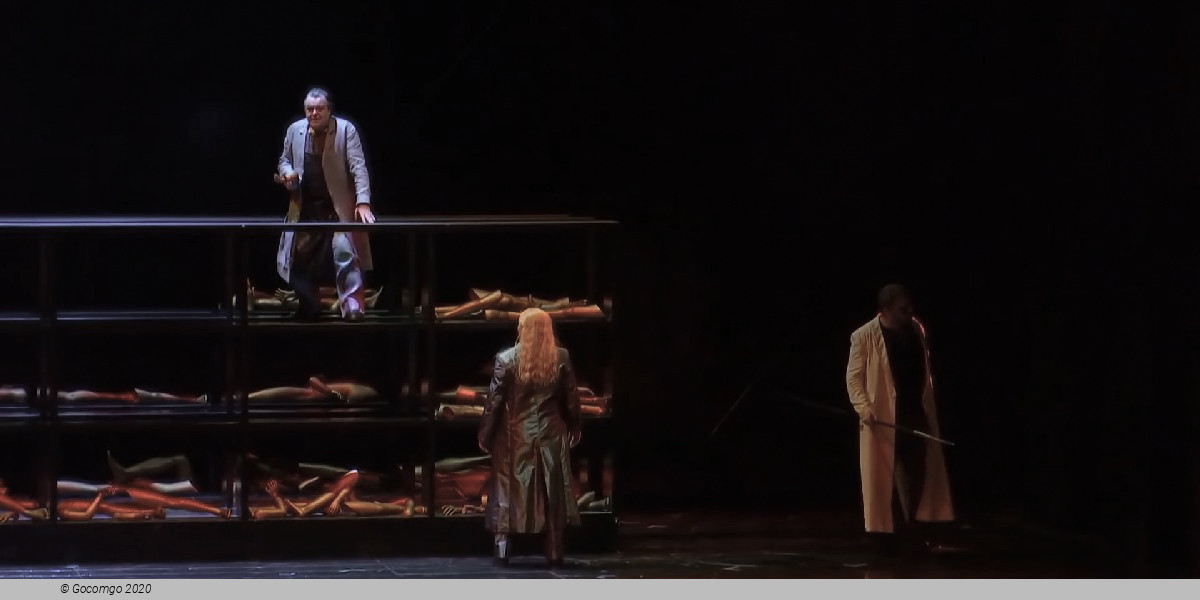
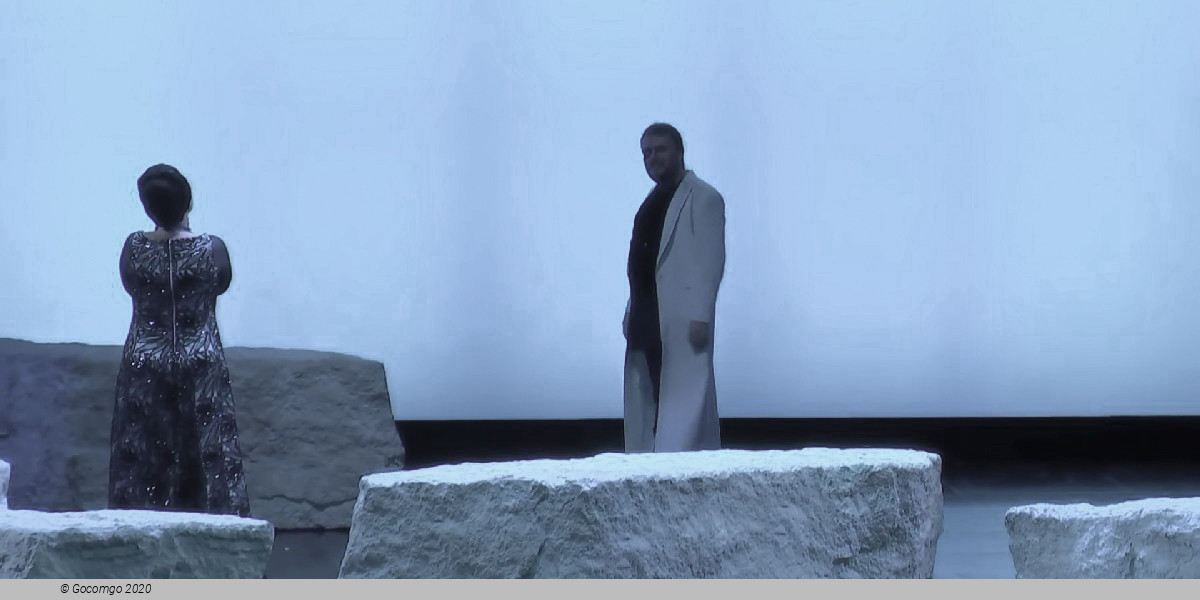
Wagner’s monumental Der Ring des Nibelungen opens with a tone from the depths that slowly grows in the orchestra. This is how a universe begins. Over the coming years, powerful music will open up an entire world to us. The time has come for the prelude to it all – the time has come for The Rhinegold.

The beginning of a masterpiece 
In January 2027, we begin our journey with Richard Wagner’s monumental work Der Ring des Nibelungen and invite you to join us on an operatic adventure you will never forget. 

Der Ring des Nibelungen consists of three music dramas – The Valkyrie, Siegfried and Götterdämmerung  – plus a prelude: The Rhinegold. From 2027 to 2029, you can experience the works one by one. In 2029, we will also perform the entire cycle over the course of one week, twice. But first, then – the prelude. 

What is The Rhinegold about? 
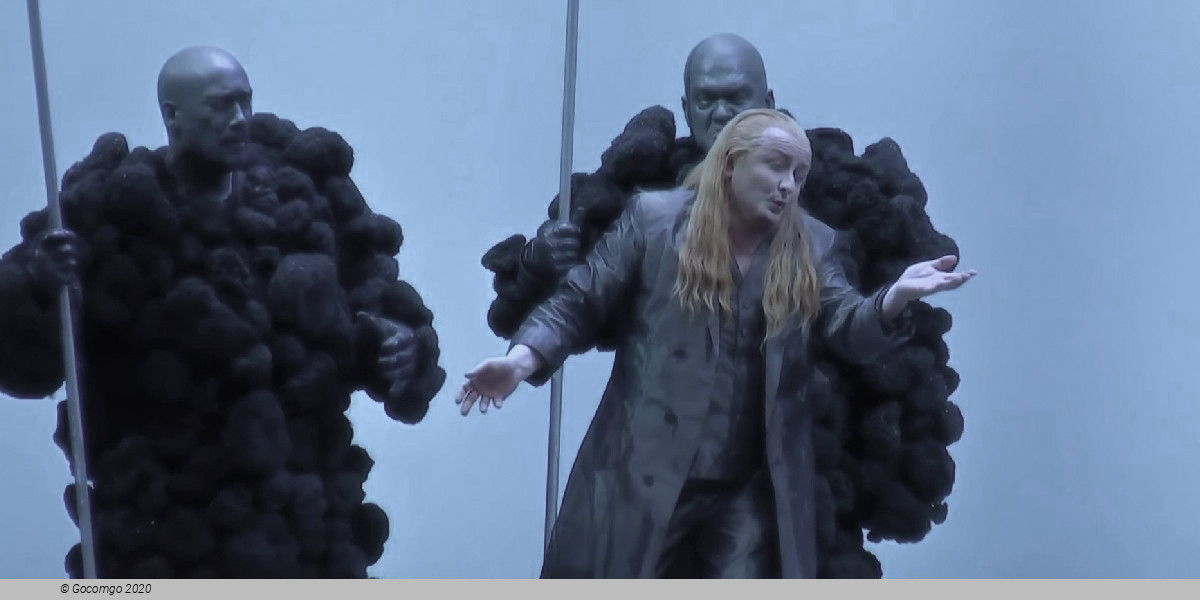
Deep down on the muddy bed of the Rhine, something enticing gleams. The gold is guarded by the Rhinemaidens, who taunt the dark elf Alberich. Whoever owns the gold gains power over the world, they say. Alberich is both provoked and tempted. He steals the gold – despite the Rhinemaidens’ warning that whoever takes it will never know love. 

In the world of the gods, Wotan has built himself a palace he cannot really afford. In desperation, he has promised his sister-in-law, Freia, as payment. His wife, Fricka, is, to put it mildly, far from pleased. That is when the cunning Loge tells of the gold Alberich has forged into a ring that grants all the power in the world … 

Wotan and Loge travel to Nibelheim, seize the treasure and the ring, but the primal mother Erda persuades Wotan to give it up. It does not take long before both we and Wotan see the far-reaching effects of the curse that will haunt generations – a struggle between loveless power and powerless love. 

A Ring for our time 
The acclaimed director Tatjana Gürbaca has been tasked with staging the Norwegian National Opera’s new Der Ring des Nibelungen. She is known for her psychologically precise interpretations of human relationships and for sharp, complex portrayals, particularly of female characters. 

With the Opera’s Music Director Edward Gardner on the podium and a top team of Norwegian and international soloists in the roles, everything is in place for an epic experience of a rare kind. 

History
Premiere of this production: 22 September 1869, National Theatre Munich

Das Rheingold is the first of the four music dramas that constitute Richard Wagner's Der Ring des Nibelungen, (English: The Ring of the Nibelung). It was performed, as a single opera, at the National Theatre Munich on 22 September 1869, and received its first performance as part of the Ring cycle at the Bayreuth Festspielhaus, on 13 August 1876.

Synopsis

Scene 1

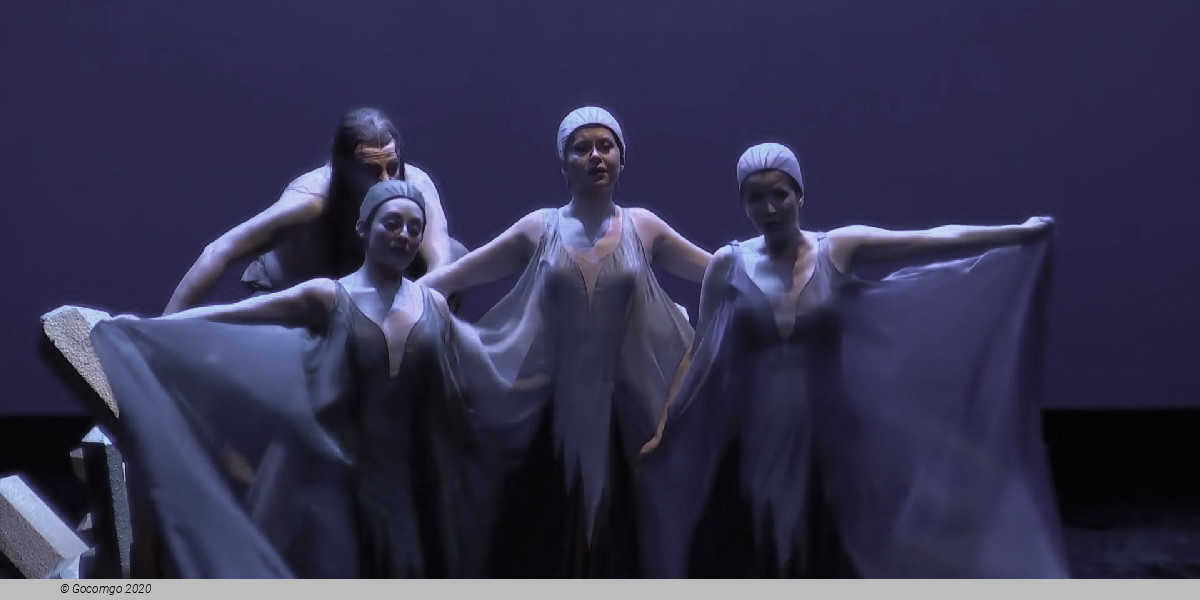
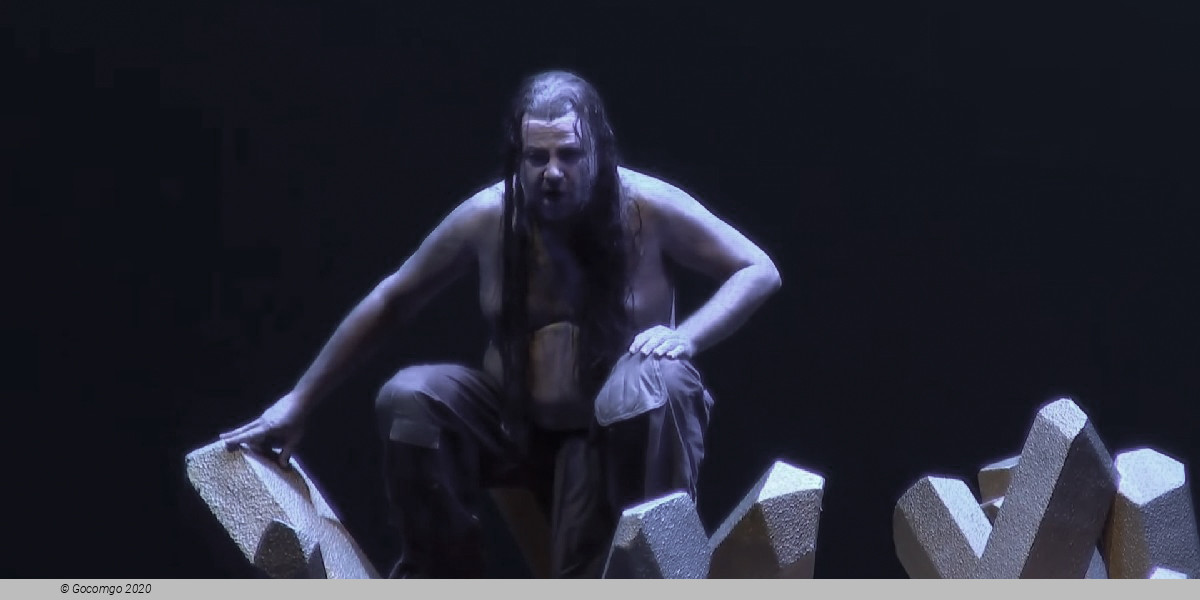
At the bottom of the Rhine, the three Rhinemaidens, Woglinde, Wellgunde, and Floßhilde, play together. Alberich, a Nibelung dwarf, appears from a deep chasm and tries to woo them. The maidens mock his advances and he grows angry – he chases them, but they elude, tease and humiliate him. A sudden ray of sunshine pierces the depths, to reveal the Rhinegold. The maidens rejoice in the gold's gleam. Alberich asks what it is. They explain that the gold, which their father has ordered them to guard, can be made into a magic ring which gives power to rule the world, if its bearer first renounces love. The maidens think they have nothing to fear from the lustful dwarf, but Alberich, embittered by their mockery, curses love, seizes the gold and returns to his chasm, leaving them screaming in dismay.

Scene 2

Wotan, ruler of the gods, is asleep on a mountaintop, with a magnificent castle behind him. His wife, Fricka, wakes Wotan, who salutes their new home. Fricka reminds him of his promise to the giants Fasolt and Fafner, who built the castle, that he would give them Fricka's sister Freia, the goddess of youth and beauty, as payment. Fricka is worried for her sister, but Wotan is confident that Loge, the demigod of fire, will find an alternative payment.

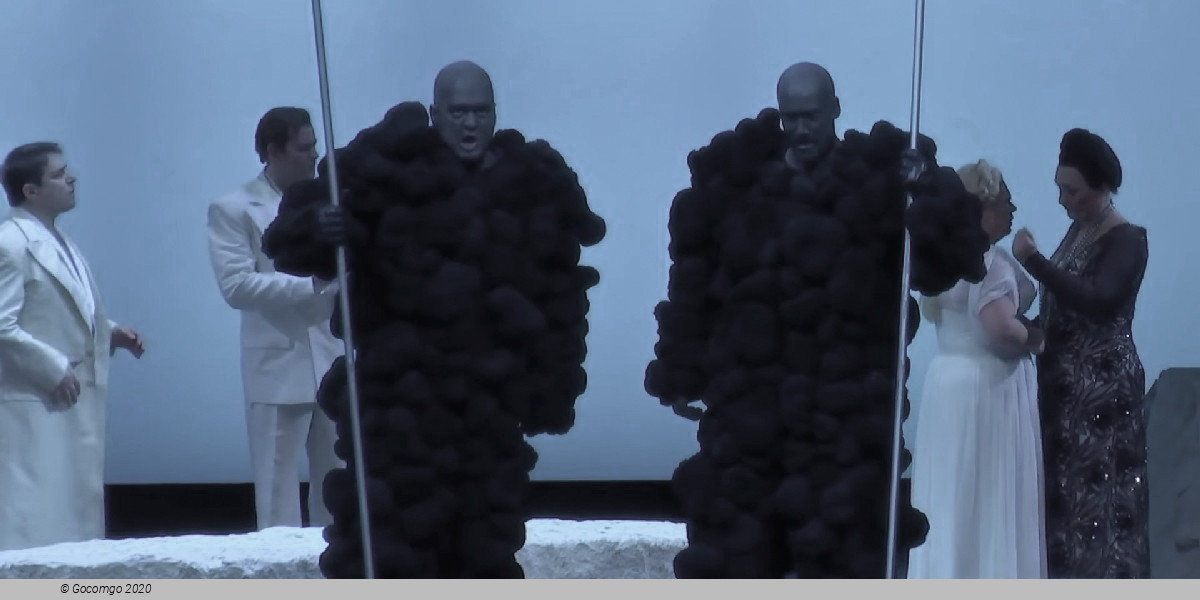
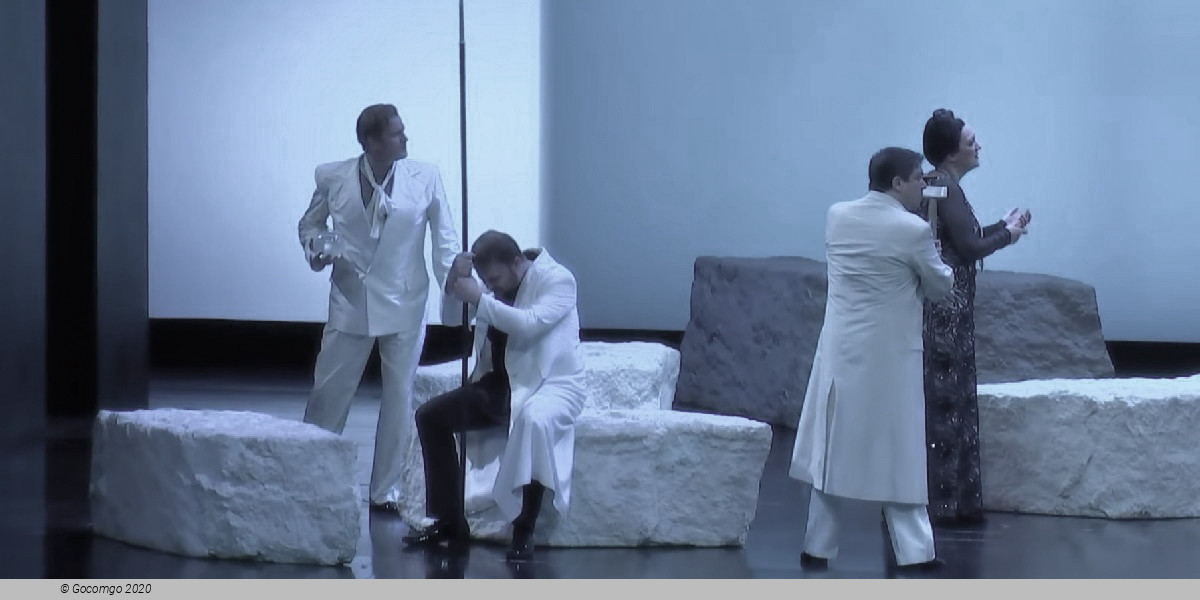
Freia enters in a panic, followed by Fasolt and Fafner. Fasolt demands that Freia be given up. He points out that Wotan's authority is sustained by the treaties carved into his spear, including his contract with the giants, which Wotan therefore cannot violate. Donner, god of thunder, and Froh, god of sunshine, arrive to defend Freia, but Wotan cannot permit the use of force to break the agreement. Hoping that Loge will arrive with the alternative payment he has promised, Wotan tries to stall.

When Loge arrives, his initial report is discouraging: nothing is more valuable to men than love, so, there is apparently no possible alternative payment besides Freia. Loge was able to find only one instance where someone willingly gave up love for something else: Alberich the Nibelung has renounced love, stolen the Rhine gold and made a powerful magic ring out of it. A discussion of the ring and its powers ensues, and everyone finds good reasons for wanting to own it. Fafner makes a counter-offer: the giants will accept the Nibelung's treasure in payment, instead of Freia. When Wotan tries to haggle, the giants depart, taking Freia with them as hostage and threatening to keep her forever unless the gods ransom her by obtaining, and giving them, the Nibelung's gold, by the end of the day.

Freia's golden apples had kept the gods eternally young, but in her absence they begin to age and weaken. In order to redeem Freia, Wotan resolves to travel with Loge to Alberich's subterranean kingdom to obtain the gold.

Scene 3

In Nibelheim, Alberich has enslaved the rest of the Nibelung dwarves with the power of the ring. He has forced his brother Mime, a skillful smith, to create a magic helmet, the Tarnhelm. Alberich demonstrates the Tarnhelm's power by making himself invisible, the better to torment his subjects.

Wotan and Loge arrive and happen upon Mime, who tells them of the dwarves' misery under Alberich's rule. Alberich returns, driving his slaves to pile up a huge mound of gold. He boasts to the visitors about his plans to conquer the world using the power of the ring. Loge asks how he can protect himself against a thief while he sleeps. Alberich replies the Tarnhelm will hide him, by allowing him to turn invisible or change his form. Loge expresses doubt and requests a demonstration. Alberich complies by transforming himself into a giant snake; Loge acts suitably impressed, and then asks whether Alberich can also reduce his size, which would be very useful for hiding. Alberich transforms himself into a toad. Wotan and Loge seize him, tie his hands, and drag him up to the surface.

Scene 4

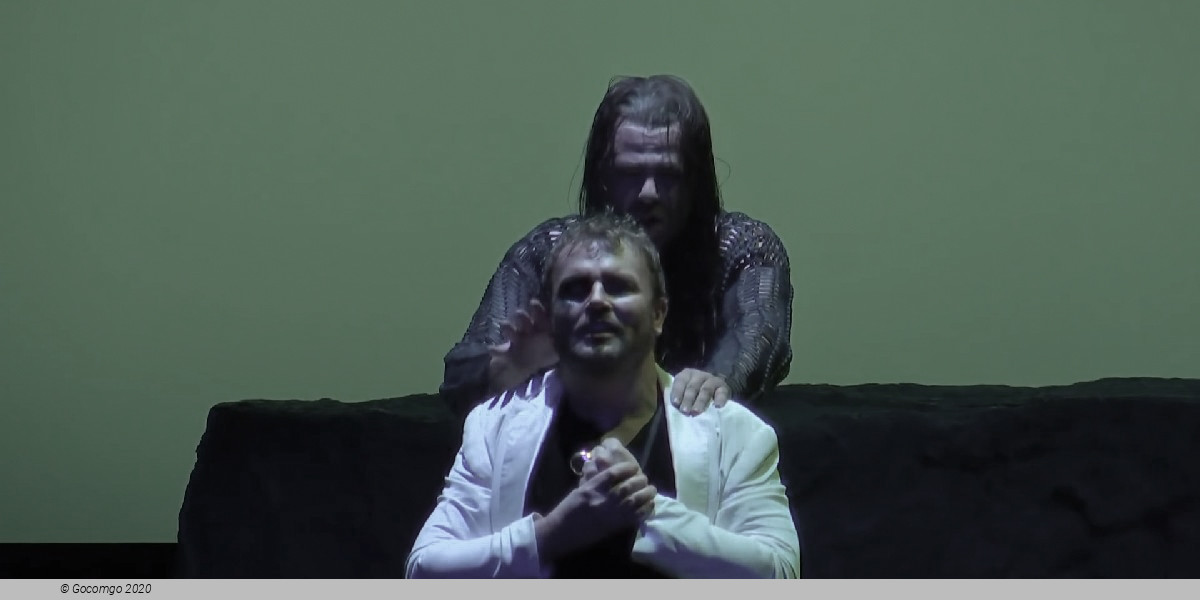
Back on the mountaintop, Wotan and Loge force Alberich to exchange his wealth for his freedom. He summons the Nibelungen, who bring up the hoard of gold. He then asks for the return of the Tarnhelm, but Loge says that it is part of his ransom. Alberich still hopes he can keep the ring, but Wotan demands it, and when Alberich refuses, Wotan tears it from Alberich's hand and puts it on his own finger. Crushed by his loss, Alberich lays a curse on the ring: until it should return to him, whoever possesses it will live in anxiety, and will eventually be robbed of it and killed.

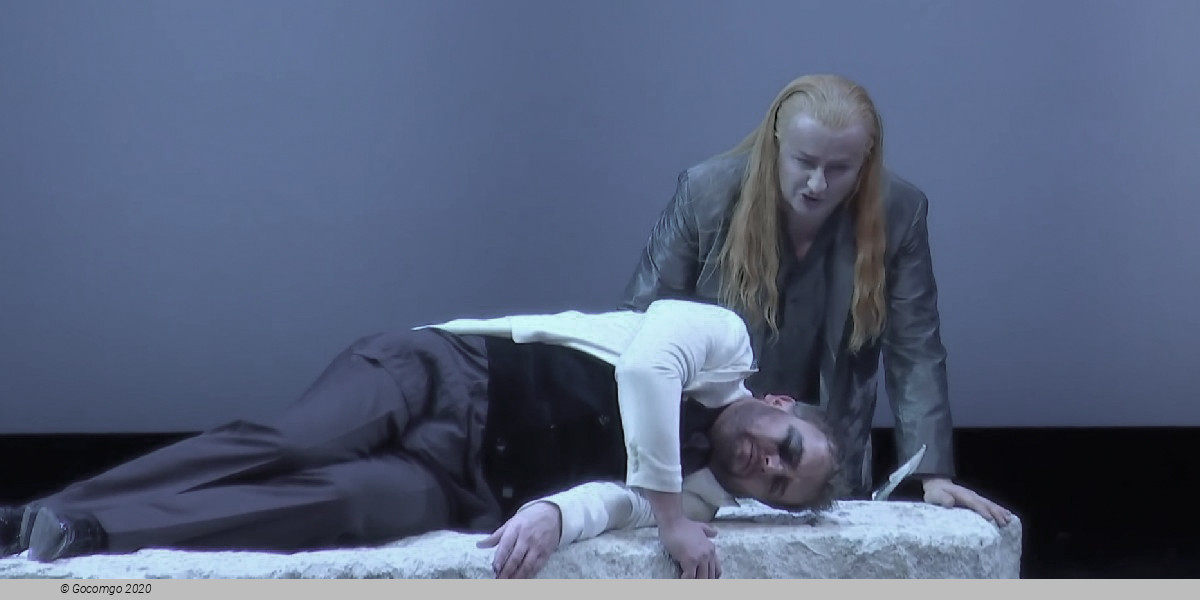
The gods reconvene. Fasolt and Fafner return with Freia. Fasolt, reluctant to release her, insists that the gold be piled high enough to hide her from view. Wotan is forced to relinquish the Tarnhelm, to help cover Freia completely. However, Fasolt spots a remaining crack in the gold, through which one of Freia's eyes can be seen. Loge says that there is no more gold, but Fafner, who has noticed the ring on Wotan's finger, demands that Wotan add it to the pile, to block the crack. Loge protests that the ring belongs to the Rheinmaidens, and Wotan angrily declares that he intends to keep it for his own. As the giants seize Freia and start to leave, Erda, the earth goddess, appears and warns Wotan of impending doom, urging him to give up the cursed ring. Troubled, Wotan calls the giants back and surrenders the ring. The giants release Freia and begin dividing the treasure, but they quarrel over the ring itself. Fafner clubs Fasolt to death. Wotan, horrified, realizes that Alberich's curse has terrible power.

Donner summons a thunderstorm to clear the air, after which Froh creates a rainbow bridge that stretches to the gate of the castle. Wotan leads the gods across the bridge to the castle, which he names Valhalla. Loge does not follow; he says in an aside that he is tempted to destroy the treacherous gods by fire – he will think it over. Far below, the Rhine maidens mourn the loss of their gold, and condemn the gods as false and cowardly.

Venue Info

Oslo Opera House - Oslo
Location   Kirsten Flagstads Plass 1

The Oslo Opera House is the home of The Norwegian National Opera and Ballet, and the national opera theatre in Norway. The building is situated in the Bjørvika neighbourhood of central Oslo, at the head of the Oslofjord. It is operated by Statsbygg, the government agency which manages property for the Norwegian government. The structure contains 1,100 rooms in a total area of 38,500 m2 (414,000 sq ft). The main auditorium seats 1,364 and two other performance spaces can seat 200 and 400. The main stage is 16 m (52 ft) wide and 40 m (130 ft) deep. The angled exterior surfaces of the building are covered with marble from Carrara, Italy and white granite and make it appear to rise from the water. It is the largest cultural building constructed in Norway since Nidarosdomen was completed circa 1300.

In 1999, after a long national debate, the Norwegian legislature decided to construct a new opera house in the city. A design competition was held and, of the 350 entries received, the judges chose that of Snøhetta. Construction started in 2003 and was completed in 2007, ahead of schedule and 300 million NOK (~US$52 million) under its budget of 4.4 billion NOK (~US$760 million). The gala opening on 12 April 2008 was attended by His Majesty King Harald, Queen Margrethe II of Denmark and President Tarja Halonen of Finland and other leaders. During the first year of operation, 1.3 million people passed through the building's doors.

The Opera House won the culture award at the World Architecture Festival in Barcelona in October 2008 and the 2009 European Union Prize for Contemporary Architecture.

The roof of the building angles to ground level, creating a large plaza that invites pedestrians to walk up and enjoy the panoramic views of Oslo. While much of the building is covered in white granite and La Facciata, a white Italian carrara marble, the stage tower is clad in white aluminium, in a design by Løvaas & Wagle that evokes old weaving patterns.

The lobby is surrounded by 15 m (49 ft) tall windows with minimal framing and special glass that allows maximum views of the water. The roof is supported by thin angled columns also designed not to interfere with views.

Interior surfaces are covered in oak to bring warmth to spaces in contrast to the coolness of the white exterior. The main auditorium is a horseshoe shape and illuminated by an oval chandelier containing 5,800 handmade crystals. Seats include monitors for the electronic libretto system, allowing audiences to follow opera libretti in Norwegian and English in addition to the original language.

Several art projects were commissioned for the interior and exterior of the Opera House. The most notable is She Lies, a sculpture constructed of stainless steel and glass panels by Monica Bonvicini. It is permanently installed on a concrete platform in the fjord adjacent to Opera House and floats on the water moving in response to tides and wind to create an ever-changing face to viewers. The work was unveiled by Her Majesty Queen Sonja on 11 May 2010.

A perforated wall panel which covers roof supports in the lobby was designed by Olafur Eliasson. It features hexagonal opening and is illuminated from below and behind to create the illusion of melting ice. Other artists involved in the construction include Kristian Blystad, Jorunn Sannes and Kalle Grude, who designed the shape of the pavers on the forecourt and roof; Bodil Furu and Trine Lise Nedreaas, who created a film and video project; Marte Aas, Talleiv Taro Manum, Tom Sandberg, Gerd Tinglum and Nina Witoszek Fitzpatrick, who created the art book Site Seeing; and Linus Elmes and Ludvig Löfgren, who created the foundation stone.

The main stage curtain is the work of Pae White who designed it to look like crumpled aluminum foil. White scanned a crumpled piece of foil into a computer which translated the information to a loom that wove the curtain from wool, cotton and polyester to create a three-dimensional effect. The curtain was manufactured by the German-based theatrical equipment company Gerriets GmbH. The finished curtain measures 74 ft (23 m) wide and 36 ft (11 m) and weighs 1,100 lb (500 kg).

Important Info
Type: Opera
City: Oslo, Norway
Starts at: 15:00
Duration: 2h 40min
Sung in: German
Titles in: English,Norwegian
Top of page