


Prague National Theatre tickets 24 June 2026 - Werther | GoComGo.com

Werther

Prague National Theatre, The National Theatre, Prague, Czech Republic
All photos (5)
Select date and time
7 PM
From
US$ 71

E-tickets: Print at home or at the box office of the event if so specified. You will find more information in your booking confirmation email.

You can only select the category, and not the exact seats.
If you order 2 or 3 tickets: your seats will be next to each other.
If you order 4 or more tickets: your seats will be next to each other, or, if this is not possible, we will provide a combination of groups of seats (at least in pairs, for example 2+2 or 2+3).

Important Info
Type: Opera
City: Prague, Czech Republic
Starts at: 19:00
Acts: 2
Intervals: 1
Duration: 2h 35min
Sung in: French
Titles in: Czech,English

E-tickets: Print at home or at the box office of the event if so specified. You will find more information in your booking confirmation email.

You can only select the category, and not the exact seats.
If you order 2 or 3 tickets: your seats will be next to each other.
If you order 4 or more tickets: your seats will be next to each other, or, if this is not possible, we will provide a combination of groups of seats (at least in pairs, for example 2+2 or 2+3).

Cast
Performers
Conductor: Sébastien Rouland
Tenor: Alejandro Del Angel (Werther)
Mezzo-Soprano: Arnheiður Eiríksdóttir (Charlotte)
Soprano: Ekaterina Krovateva (Sophie)
Baritone: Pavol Kubáň (Albert)
Choir: Prague Philharmonic Children's Choir
Orchestra: The National Theatre Orchestra
Creators
Composer: Jules Massenet
Librettist: Édouard Blau
Librettist: Georges Hartmann
Librettist: Paul Milliet
Stage Director: Willy Decker
Overview

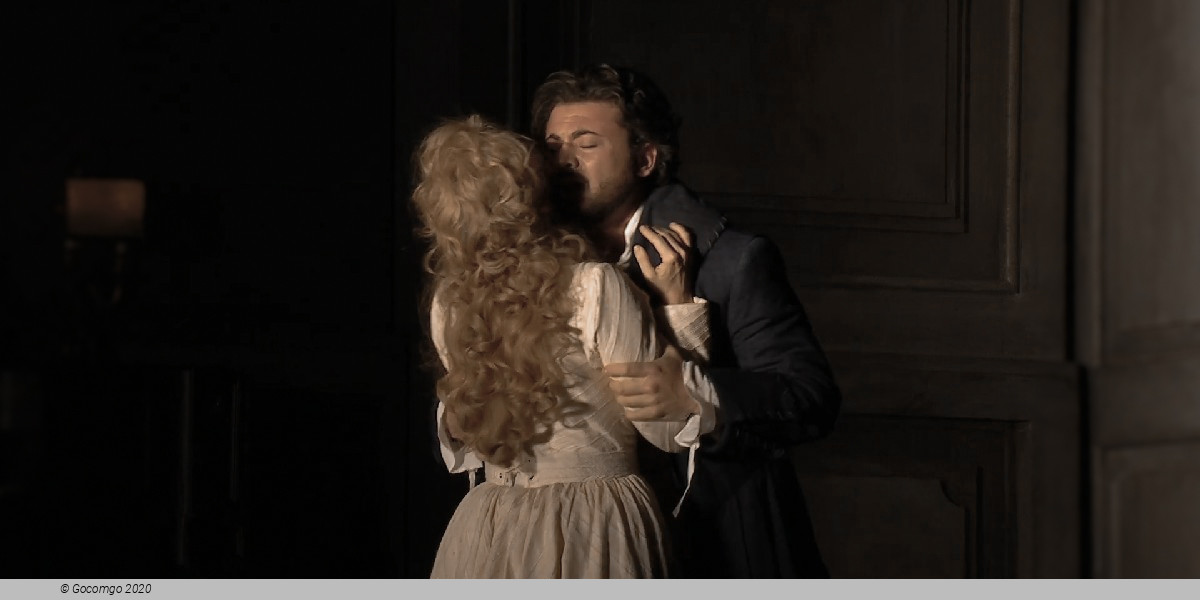
An emotionally intense work about unfulfilled love, passion, and the tragic fate of a young man.

Johann Wolfgang von Goethe‘s literary works have inspired numerous artists, including composers. The most acclaimed operas based on them are Ambrois Thomas’s Mignon, Charles Gounod’s Faust and Jules Massenet’s Werther.

Soon after its publication, Goethe’s 1774 epistolary novel The Sorrows of Young Werther became a cult book. The work is a seminal text of the German proto-Romantic literary movement known as Sturm und Drang, whose adherents placed emphasis on human emotionality as the answer to the detached rationalism of the Enlightenment era. Linking up to his teacher Thomas and his colleague Gounod, the compositional style of Massenet’s opera is primarily noted for abundant distinct melody and colourful orchestration, inspired in part by Richard Wagner. The evocative musical idiom serves to underline a story replete with passions the protagonists fail to satisfy.

Massenet's Werther is one of the most acclaimed French operas. The currently revived production received its premiere on 14 January 1996 at the Het Muziektheater (Nederlandse Opera) in Amsterdam and after several stagings in other European opera houses also on 7 June 2018 at the National Theatre in Prague.

History
Premiere of this production: 16 February 1892, Hofoper, Vienna (in German)

Werther is an opera (drame lyrique) in four acts by Jules Massenet to a French libretto by Édouard Blau, Paul Milliet and Georges Hartmann (who used the pseudonym Henri Grémont). It is loosely based on the German epistolary novel The Sorrows of Young Werther by Johann Wolfgang von Goethe, which was based both on fact and on Goethe's own early life. Earlier examples of operas using the story were made by Kreutzer (1792) and Pucitta (1802).

Synopsis

Time: Within the period July to December, in an undefined year in the 1780s.
Place: Wetzlar in Germany.

Act 1

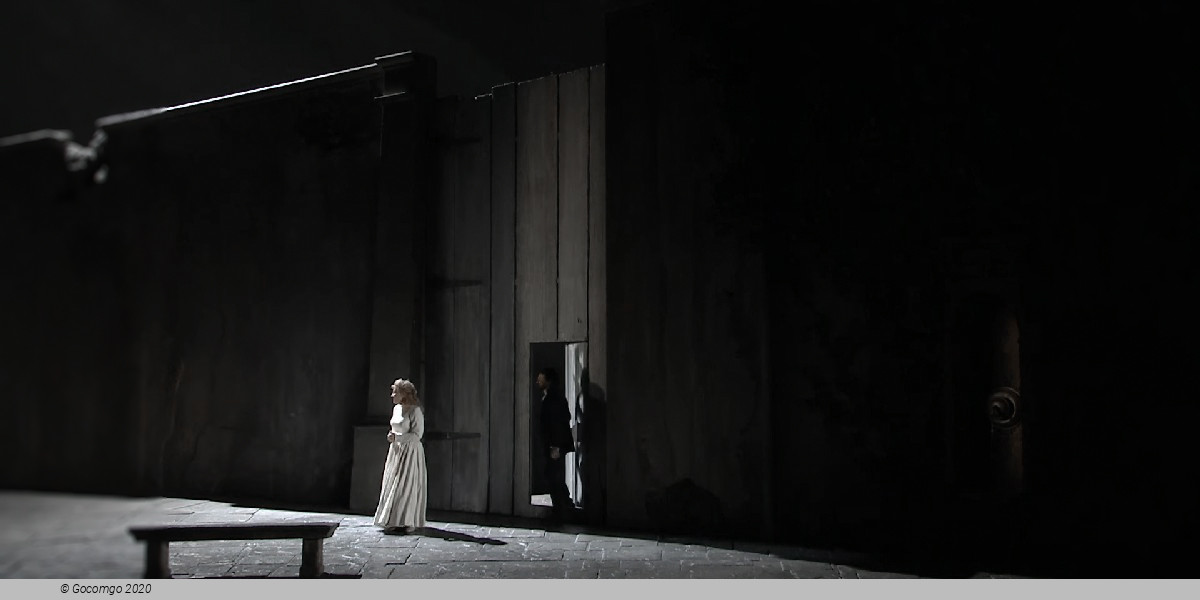
In July, the widowed Bailiff (a Magistrate, rather than one who comes to seize property), is teaching his six youngest children a Christmas carol ("Noël! Jésus vient de naître"). His drinking companions, Johann and Schmidt, arrive as Charlotte, the eldest daughter, dresses for a ball. Since her fiancé Albert is away, she is to be escorted by Werther, whom the Bailiff and his companions find gloomy. Werther arrives ("O Nature, pleine de grâce"), and watches as Charlotte prepares her young siblings' supper, just as her mother had before she died. He greets her and they leave for the ball. Albert returns unexpectedly after a six-month trip. He is unsure of Charlotte's intentions and disappointed not to find her at home, but is reassured and consoled by Charlotte's younger sister Sophie. He leaves after promising to return in the morning. After an orchestral interlude, Werther and Charlotte return very late; he is already enamoured of her. His declaration of love is interrupted by the announcement of Albert's return. Charlotte recalls how she promised her dying mother she would marry Albert. Werther is in despair.

Act 2

It is three months later, and Charlotte and Albert are now married. They walk happily to church to celebrate the minister's 50th wedding anniversary, followed by the disconsolate Werther ("Un autre est son époux!"). First Albert and then Sophie ("Du gai soleil, plein de flamme") try to cheer him up. When Charlotte exits the church, he speaks to her of their first meeting. Charlotte begs Werther to leave her, though she indicates that she would be willing to receive him again on Christmas Day. Werther contemplates suicide ("Lorsque l'enfant revient d'un voyage"). He encounters Sophie but the tearful girl does not understand his distressing behavior. Albert now realizes that Werther loves Charlotte.

Act 3

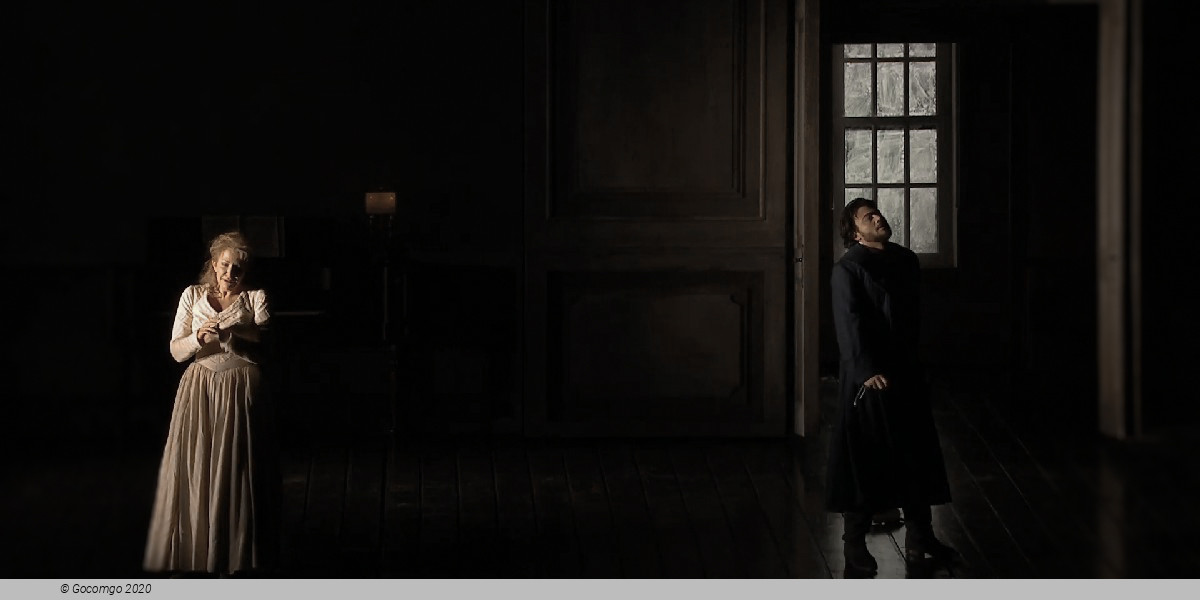
Charlotte is at home alone on Christmas Eve. She spends time rereading the letters that she has received from Werther ("Werther! Qui m'aurait dit ... Ces lettres!"), wondering how the young poet is and how she had the strength to send him away. Sophie comes in and tries to cheer up her older sister ("Ah! le rire est béni"), though Charlotte is not to be consoled ("Va! laisse couler mes larmes"). Suddenly Werther appears, and while he reads to her some poetry of Ossian ("Pourquoi me réveiller?"), he realizes that she does indeed return his love. They embrace for a moment, but she quickly bids him farewell. He leaves with thoughts of suicide. Albert returns home to find his wife distraught. Werther sends a messenger to Albert, requesting to borrow his pistols, explaining he is going on an extended trip. After the servant has taken them, Charlotte has a terrible premonition and hurries to find Werther. An orchestral intermezzo ("La nuit de Noël") leads without a break into the final Act.

Act 4

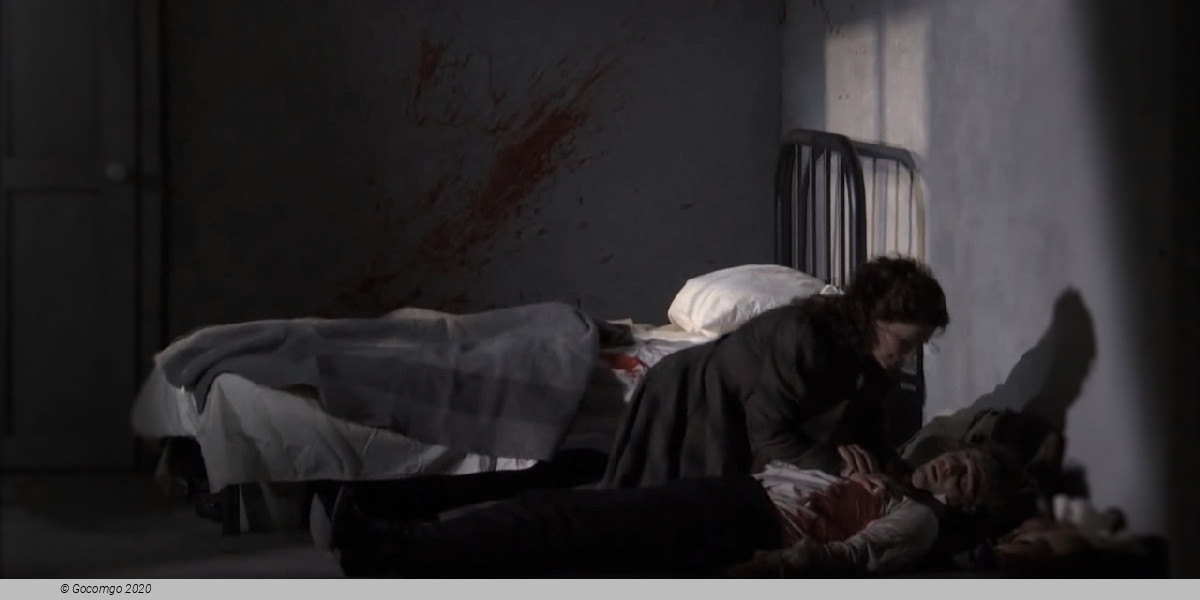
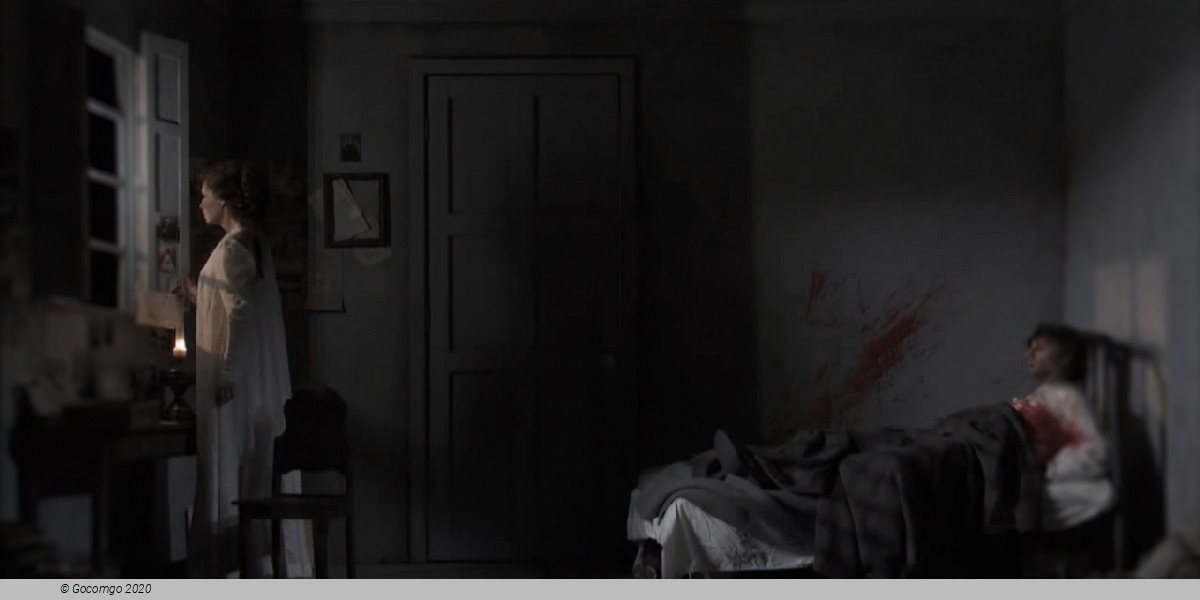
"The death of Werther": At Werther's apartment, Charlotte has arrived too late to stop him from shooting himself; he is dying. She consoles him by declaring her love. He asks for forgiveness. After he dies, Charlotte faints. Outside children are heard singing the Christmas carol.

Venue Info

Prague National Theatre - Prague
Location   Národní 2

The National Theatre is the prime stage of the Czech Republic. It is also one of the symbols of national identity and a part of the European cultural space, with a tradition spanning more than 130 years. It is the bearer of the national cultural heritage, as well as a space for free artistic creation.

The National Theatre (Czech: Národní divadlo) in Prague is known as the alma mater of Czech opera, and as the national monument of Czech history and art.

The National Theatre belongs to the most important Czech cultural institutions, with a rich artistic tradition, which helped to preserve and develop the most important features of the nation–the Czech language and a sense for a Czech musical and dramatic way of thinking.

Today, the National Theatre is made up of four artistic companies – the Opera, Drama, Ballet and Laterna magika. It artistically manages four stages – the three historical buildings: the National Theatre (1883), the State Opera (1888), and the Estates Theatre (1783), and the more recently opened New Stage (1983). The Opera, Drama and Ballet companies perform not only titles from the ample classical legacy, in addition to Czech works, they also focus on contemporary international creation.

Grand opening

The National Theatre was opened for the first time on 11 June 1881, to honour the visit of Crown Prince Rudolf of Austria. Bedřich Smetana's opera Libuše was given its world premiere, conducted by Adolf Čech. Another 11 performances were presented after that. Then the theatre was closed down to enable the completion of the finishing touches. While this work was under way a fire broke out on 12 August 1881, which destroyed the copper dome, the auditorium, and the stage of the theatre.

The fire was seen as a national catastrophe and was met with a mighty wave of determination to take up a new collection: Within 47 days a million guldens were collected. This national enthusiasm, however, did not correspond to the behind-the-scenes battles that flared up following the catastrophe. Architect Josef Zítek was no longer in the running, and his pupil architect Josef Schulz was summoned to work on the reconstruction. He was the one to assert the expansion of the edifice to include the block of flats belonging to Dr. Polák that was situated behind the building of the Provisional Theatre. He made this building a part of the National Theatre and simultaneously changed somewhat the area of the auditorium to improve visibility. He did, however, take into account with utmost sensitivity the style of Zítek's design, and so he managed to merge three buildings by various architects to form an absolute unity of style.

Important Info
Type: Opera
City: Prague, Czech Republic
Starts at: 19:00
Acts: 2
Intervals: 1
Duration: 2h 35min
Sung in: French
Titles in: Czech,English
Top of page