

Royal Swedish Opera: Pagliacci Tickets | Event Dates & Schedule | GoComGo.com

Pagliacci Tickets

Royal Swedish Opera, Stockholm, Sweden
1 / 7
Available Dates: 27 May - 19 Jun, 2027 (7 events)
Important Info
Type: Opera
City: Stockholm, Sweden

E-tickets: Print at home or at the box office of the event if so specified. You will find more information in your booking confirmation email.

You can only select the category, and not the exact seats.
If you order 2 or 3 tickets: your seats will be next to each other.
If you order 4 or more tickets: your seats will be next to each other, or, if this is not possible, we will provide a combination of groups of seats (at least in pairs, for example 2+2 or 2+3).

Cast
Performers
Choose the date to see the peformers
Creators
Composer: Ruggero Leoncavallo
Director: Nora Nilsson
Opera Company: Royal Swedish Opera
Librettist: Ruggero Leoncavallo
Overview

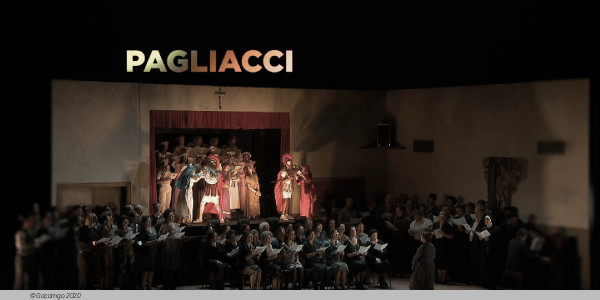
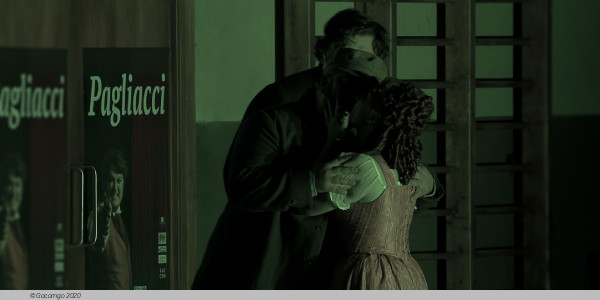
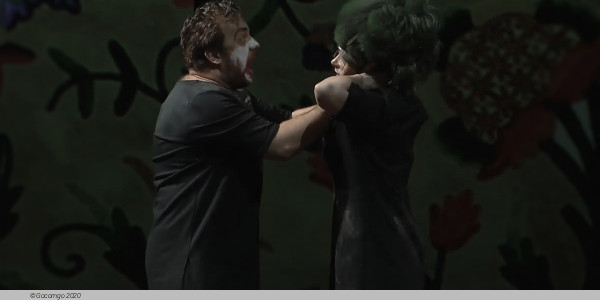
A clown is supposed to make the audience laugh. At the same time, his life is falling apart. When a travelling theatre company arrives in a village for an evening of entertainment, the performance turns into a story of love, betrayal and people who can no longer distinguish between the roles they play and their real lives.

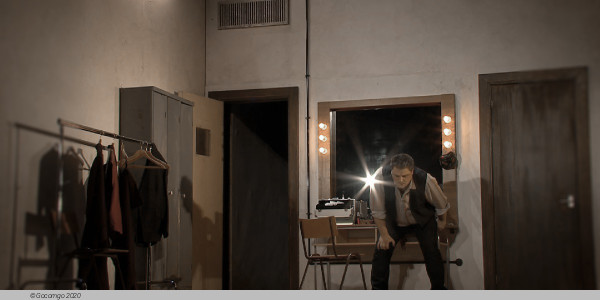
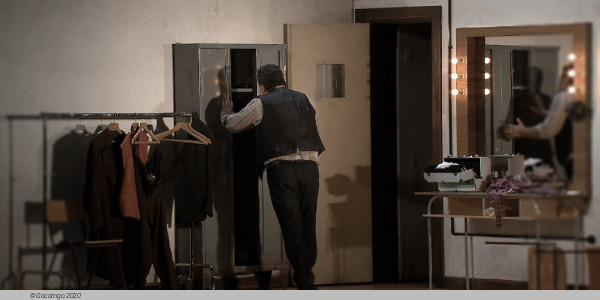
The audience is expecting laughter, romance and an evening’s entertainment. But backstage, jealousy and secrets are growing. When the curtain rises, reality begins to take over the performance, until no one can tell where acting ends and reality begins.

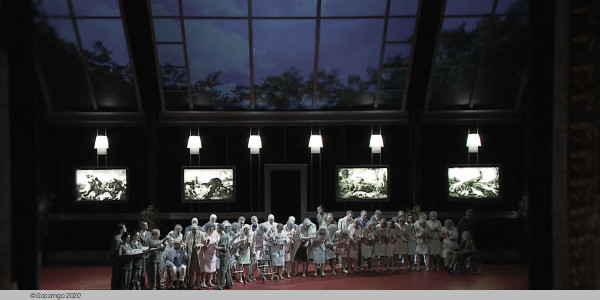
In Nora Nilsson’s new production, the theatre itself takes centre stage. A travelling company arrives in a place where everyone is eager to be entertained.

History
Premiere of this production: 21 May 1892, Teatro Dal Verme, Milan

Pagliacci is an Italian opera in a prologue and two acts, with music and libretto by Ruggero Leoncavallo. It is the only Leoncavallo opera that is still widely performed. Opera companies have frequently staged Pagliacci with Cavalleria rusticana by Mascagni, a double bill known colloquially as 'Cav and Pag'.

Synopsis

Place: Calabria, near Montalto, on the Feast of the Assumption
Time: between 1865 and 1870

Prologue

During the overture, the curtain rises. From behind a second curtain, Tonio, dressed as his commedia character Taddeo, addresses the audience (Si può?... Si può?... Signore! Signori! ... Un nido di memorie). He reminds the audience that actors have feelings too, and that the show is about real people.

Act 1

At three o'clock in the afternoon, the commedia troupe enters the village to the cheering of the villagers. Canio describes the night's performance: the troubles of Pagliaccio. He says the play will begin at "ventitré ore", an agricultural method of time-keeping that means the play will begin an hour before sunset. As Nedda steps down from the cart, Tonio offers his hand, but Canio pushes him aside and helps her down himself.

The villagers suggest drinking at the tavern. Canio and Beppe accept, but Tonio stays behind. The villagers tease Canio that Tonio is planning an affair with Nedda. Canio warns everyone that while he may act the foolish husband in the play, in real life he will not tolerate other men making advances to Nedda. Shocked, a villager asks if Canio really suspects her. He says no, and sweetly kisses her on the forehead. As the church bells ring vespers, he and Beppe leave for the tavern, leaving Nedda alone.

Nedda is frightened by Canio's vehemence (Qual fiamma avea nel guardo), but the birdsong comforts her (Stridono lassù). Tonio returns and confesses his love for her, but she laughs. Enraged, Tonio grabs Nedda, but she takes a whip, strikes him and drives him off. Silvio, who is Nedda's lover, comes from the tavern, where he has left Canio and Beppe drinking. He asks Nedda to elope with him after the performance and, though she is afraid, she agrees. Tonio, who has been eavesdropping, leaves to inform Canio so that he might catch Silvio and Nedda together. Canio and Tonio return and, as Silvio escapes, Nedda calls after him, "I will always be yours!"

Canio chases Silvio, but does not catch him and does not see his face. He demands that Nedda tell him the name of her lover, but she refuses. He threatens her with a knife, but Beppe disarms him. Beppe insists that they prepare for the performance. Tonio tells Canio that her lover will give himself away at the play. Canio is left alone to put on his costume and prepares to laugh (Vesti la giubba – "Put on the costume").

Act 2

As the crowd arrives, Nedda, costumed as Colombina, collects their money. She whispers a warning to Silvio, and the crowd cheers as the play begins.

Colombina's husband Pagliaccio has gone away until morning, and Taddeo is at the market. She anxiously awaits her lover Arlecchino, who comes to serenade her (O Colombina) from beneath her window. Taddeo returns and confesses his love, but she mocks him. She lets Arlecchino in through the window. He boxes Taddeo's ears and kicks him out of the room, and the audience laughs.

Arlecchino and Colombina dine, and he gives her a sleeping potion to use later. When Pagliaccio returns, Colombina will drug him and elope with Arlecchino. Taddeo bursts in, warning that Pagliaccio is suspicious of his wife and is about to return. As Arlecchino escapes through the window, Colombina tells him, "I will always be yours!"

As Canio (as Pagliaccio) enters, he hears Nedda (as Colombina) and exclaims "Name of God! Those same words!" He tries to continue the play, but loses control and demands to know her lover's name. Nedda, hoping to keep to the performance, calls Canio by his stage name "Pagliaccio," to remind him of the audience's presence. He answers with his arietta: No! Pagliaccio non son! He sings that if his face is pale, it is not from the stage makeup but from the shame she has brought him. The crowd, impressed by his emotional performance, which they do not realize is real, cheers him.

Nedda, trying to continue the play, admits that she has been visited by the innocent Arlecchino. Canio, furious and forgetting the play, demands the name of her lover. Nedda swears she will never tell him, and it becomes apparent that they are not acting. Beppe asks Tonio to intervene, but Tonio refrains and prevents Beppe from halting the action. Silvio begins to fight his way toward the stage. Canio, grabbing a knife from the table, stabs Nedda. As she dies, she calls: "Help! Silvio!" Silvio attacks Canio, but Canio kills Silvio also. The horrified audience then hears the celebrated final line:

La commedia è finita! – "The comedy is finished!"

Venue Info

Royal Swedish Opera - Stockholm
Location   Gustav Adolfs torg 2

Royal Swedish Opera is Sweden's major national stage for opera and ballet. Famous singers who have been part of the opera's ensemble have included Jussi Björling, Gösta Winbergh, Nicolai Gedda, Peter Mattei, Jenny Lind, Birgit Nilsson, Elisabeth Söderström, Fritz Arlberg, Anne Sofie von Otter, Katarina Dalayman and Nina Stemme.

The orchestra of the Royal Swedish Opera, the Royal Swedish Orchestra, Kungliga Hovkapellet, dates back to 1526. Royal housekeeping accounts from 1526 mention twelve musicians including wind players and a timpanist but no string players. Consequently, the Royal Swedish Orchestra is one of the oldest orchestras in Europe.

Armas Järnefelt was on the music staff from 1905, rising to become chief conductor between 1923–1933 and 1938–1946. The Royal Swedish Ballet, Kungliga Baletten, was founded by Gustav III of Sweden in 1773.

The building is located in the center of Sweden's capital Stockholm in the borough of Norrmalm, on the eastern side of Gustav Adolfs torg across from the former Arvfurstens Palats, now Ministry for Foreign Affairs. It lies on the north side of the Norrström river and is connected to the Royal Palace through the Norrbro bridge.

The opera company was founded by King Gustav III and its first performance, Thetis and Phelée with Carl Stenborg and Elisabeth Olin, was given on January 18, 1773; this was the first native speaking opera performed in Sweden.

But the first opera house was not opened until 1782 and served for a century before being replaced at the end of the 19th century. Both houses are officially called the "Royal Opera", however the terms "The Gustavian Opera" and "The Oscarian Opera", or the "Old" and "New" Opera are used when distinction is needed.

The Gustavian Opera
The original Stockholm Opera House, the work of architect Carl Fredrik Adelcrantz was commissioned by King Gustav III, a strong adherent of the ideal of an enlightened absolutism and as such was a great patron of the arts. The Swedish Opera company had first been located in Bollhuset, but there was a need to separate the Opera from the theatre and give them separate buildings. Construction began in 1775 and the theatre was inaugurated on 30 September 1782 with a performance of the German composer Johann Gottlieb Naumann's Cora och Alonzo. It was also the place for public masquerade balls, events inspired from the famous opera-balls in Paris, which was open for everyone wearing a mask at a cheap cost and somewhat ill-reputed.

The building was very imposing with its centre Corinthian tetrastyle portico supporting four statues and topped by the royal crown. The four-tiered auditorium was oval in shape, had excellent acoustics and sight lines. The sumptuous foyer contained neoclassic medallions and pilasters.

It was in the foyer of the opera house where the king met his fate: during a masquerade on March 16, 1792, he was shot by Jacob Johan Anckarström, and died 7 days later. (In turn, this event inspired the operas Gustave III by Daniel Auber and Un ballo in maschera by Verdi.) Following the assassination, the opera house was closed until 1 November 1792, when it was opened again, which by some was considered shocking. The son of Gustav III, King Gustav IV Adolf of Sweden, did not like the Opera, possibly because of the murder of his father, and disliked the fact that the scene of his father's murder was used as a place of amusement and leisure, and when a frivolous play was performed for his queen Frederica of Baden in 1806, he decided to close it down. It remained closed until 1809, and when the king was deposed, it took until May 1812, before it was organised enough to be fully opened again.

The Oscarian Opera, Operan

The old opera was demolished in 1892 to give way to the construction of a new Opera drawn by Axel Johan Anderberg, which was finished seven years later and inaugurated by King Oscar II with a production of a Swedish opera (that tradition having been quite firmly established during the 19th century), Franz Berwald's Estrella de Soria.

The new house had the letters Kungl. Teatern, literally "Royal Theatre" (which caused the later-founded Royal Dramatic Theatre to add the distinction "dramatic" to its name). The building is now simply called Operan ("The Opera"), written in golden letters above the middle arch on the front facade. It is a majestic neo-classical building with a magnificent gold foyer (Guldfoajén) and elegant marble grand staircase leading to a three-tiered auditorium somewhat smaller than the old theatre. It presently seats 1,200. Most productions are now sung in the original language (with Swedish subtitles), with only a few in Swedish.

The Royal Swedish Family of King Carl XVI Gustaf keeps the Royal Box reserved, located in the first tier in the auditorium above the orchestra pit.

The current general manager of the Royal Swedish Opera is the Swedish mezzo-soprano Birgitta Svendén. In November 2011, the Dutch conductor Lawrence Renes was named the next chief conductor of the company, as of the 2012–13 season, with an initial contract through the 2016–17 season.

Important Info
Type: Opera
City: Stockholm, Sweden

E-tickets: Print at home or at the box office of the event if so specified. You will find more information in your booking confirmation email.

You can only select the category, and not the exact seats.
If you order 2 or 3 tickets: your seats will be next to each other.
If you order 4 or more tickets: your seats will be next to each other, or, if this is not possible, we will provide a combination of groups of seats (at least in pairs, for example 2+2 or 2+3).

From
$ 110
Top of page