
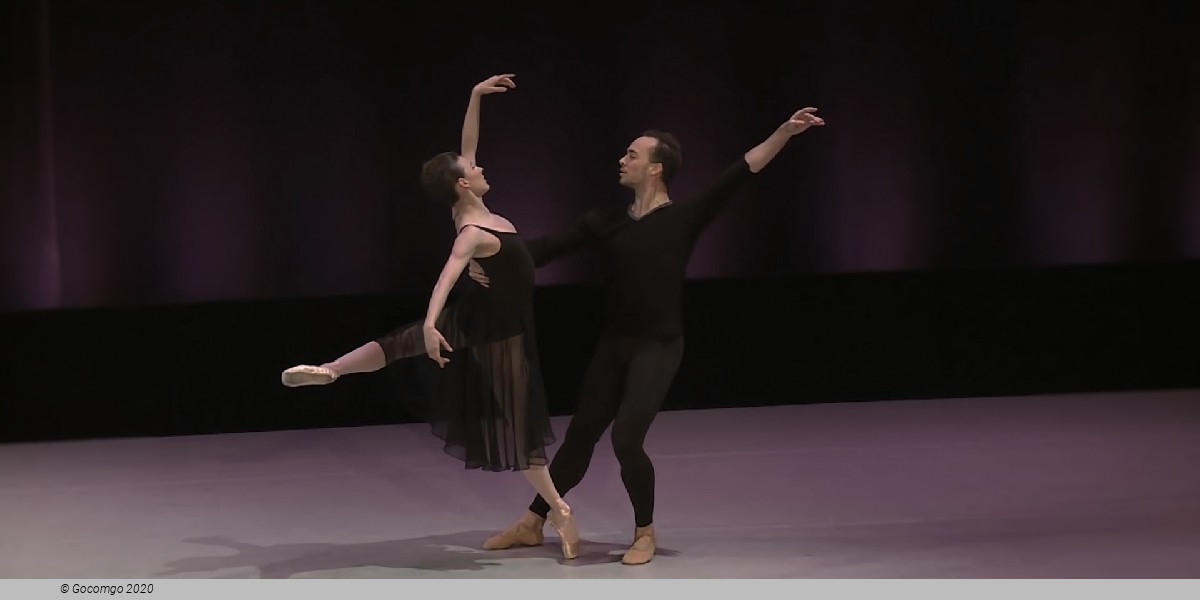
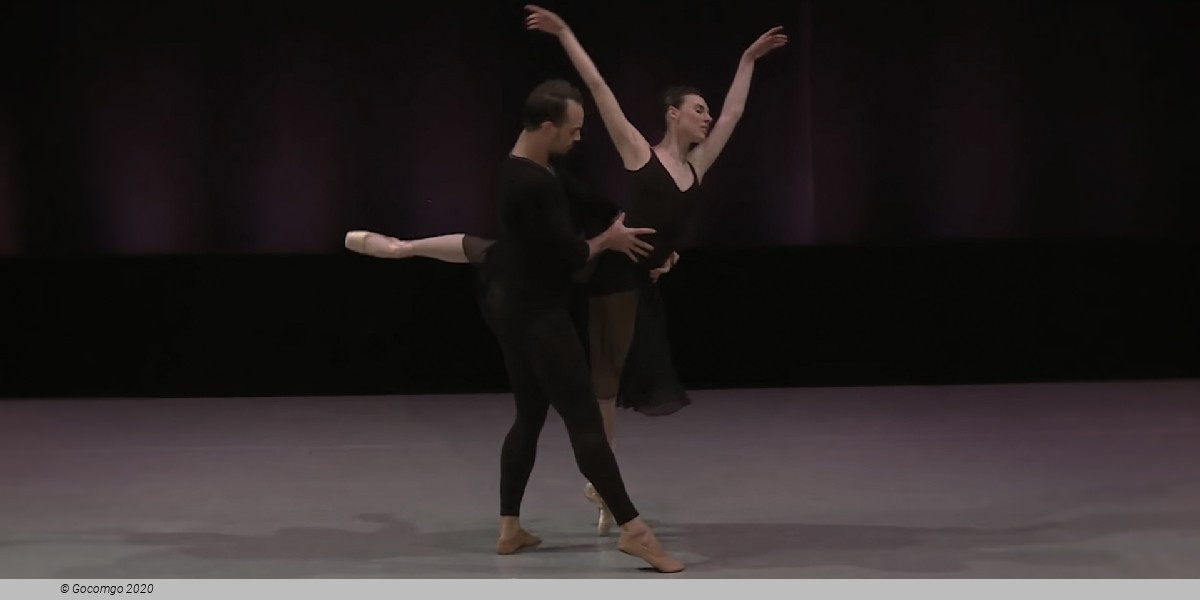
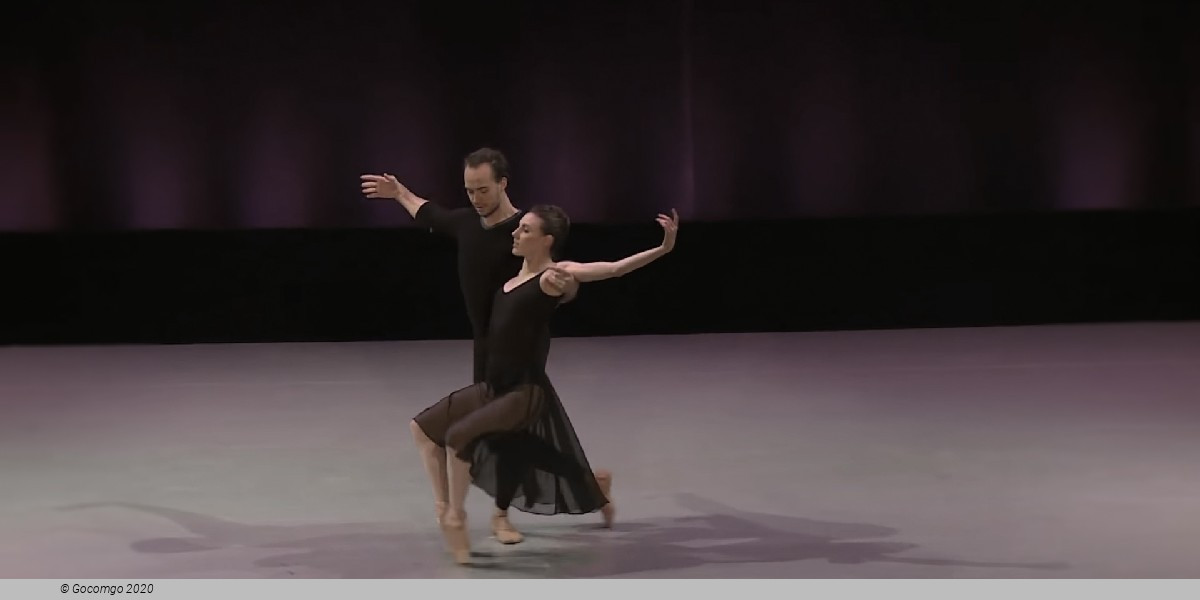
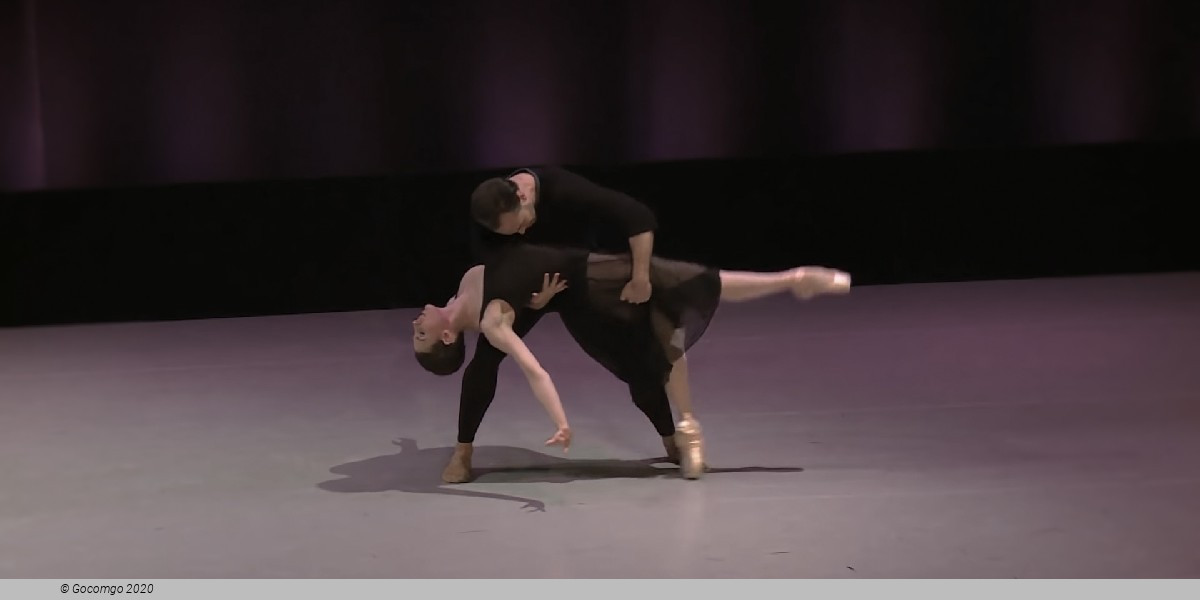
Shanghai Grand Theatre tickets 17 July 2026 - Chen Zhenwei and Friends: New York Stars - Ballet Night | GoComGo.com

Chen Zhenwei and Friends: New York Stars - Ballet Night

Shanghai Grand Theatre, Lyric Theatre, Shanghai, China
All photos (52)
Select date and time
7:30 PM
From
US$ 82

E-tickets: Print at home or at the box office of the event if so specified. You will find more information in your booking confirmation email.

You can only select the category, and not the exact seats.
If you order 2 or 3 tickets: your seats will be next to each other.
If you order 4 or more tickets: your seats will be next to each other, or, if this is not possible, we will provide a combination of groups of seats (at least in pairs, for example 2+2 or 2+3).

Important Info
Type: Ballet
City: Shanghai, China
Starts at: 19:30

E-tickets: Print at home or at the box office of the event if so specified. You will find more information in your booking confirmation email.

You can only select the category, and not the exact seats.
If you order 2 or 3 tickets: your seats will be next to each other.
If you order 4 or more tickets: your seats will be next to each other, or, if this is not possible, we will provide a combination of groups of seats (at least in pairs, for example 2+2 or 2+3).

Cast
Performers
Ballet company: New York City Ballet
Creators
Choreographer: William Forsythe
Composer: Igor Stravinsky
Composer: Pyotr Tchaikovsky
Composer: Anthony Gonzalez
Composer: Chen Gang
Composer: Clyde Otis
Composer: Édouard Deldevez
Composer: Gabriel Fauré
Composer: HE Zhanhao
Composer: Louis Moreau Gottschalk
Composer: Ludwig Minkus
Composer: Max Richter
Composer: Riccardo Drigo
Composer: Thom Willems
Choreographer: Christopher Wheeldon
Choreographer: George Balanchine
Choreographer: Tiler Peck
Costume designer: Barbara Karinska
Choreography: Chen Zhenwei
Choreography: Chun Wai Chan
Author: Ernst Theodor Amadeus Hoffmann
Librettist: Igor Stravinsky
Choreography: Justin Peck
Choreography: Marius Petipa
Librettist: Marius Petipa
Librettist: Paul Foucher
Choreography: Peter Martin
Overview

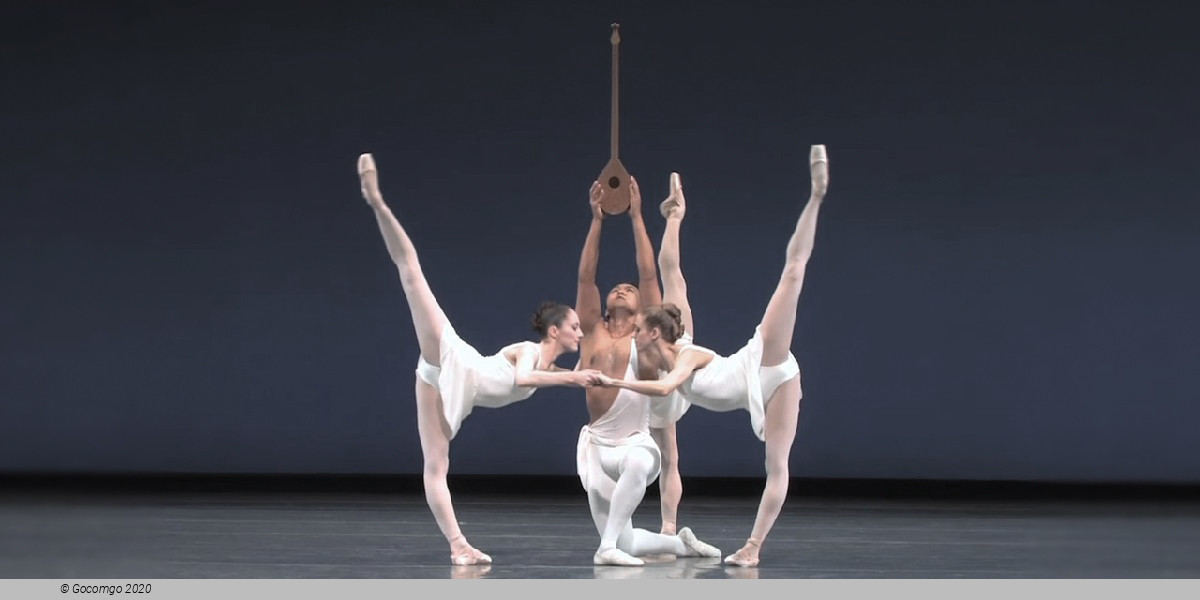
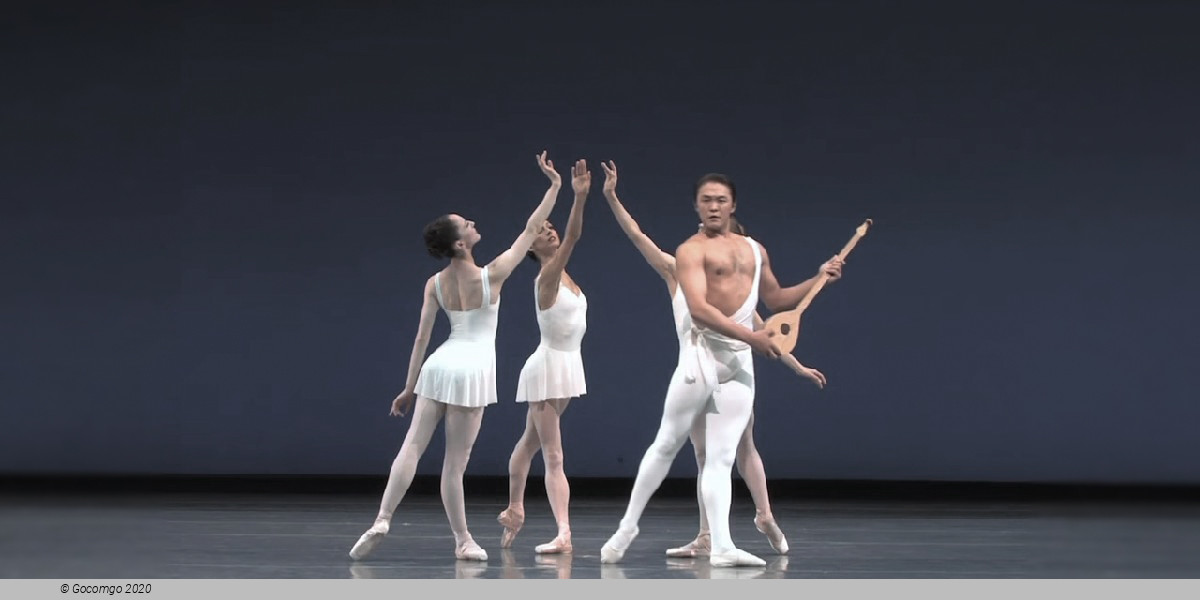
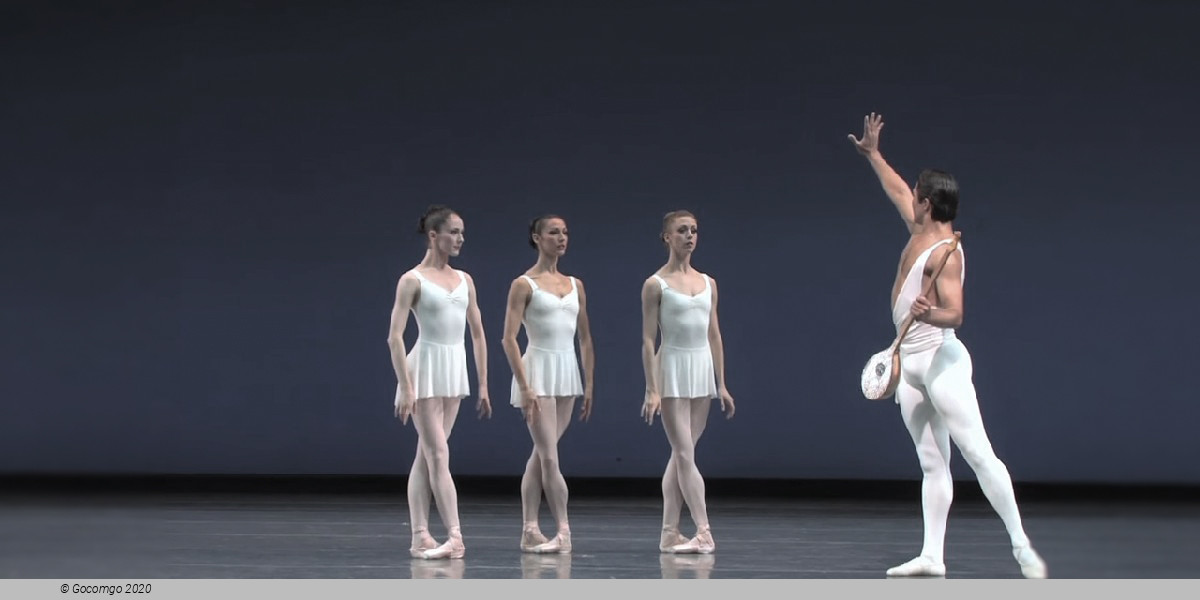
Balanchine regarded Apollo as his artistic coming of age. He said that through the creation of this work, he learned he could “dare not use all my ideas, that I too, could eliminate. . . to the one possibility that is inevitable.” The ballet depicts Apollo, the young god of music, who is visited and instructed by three Muses who were also children of Zeus and thus his half-sisters: Calliope, Muse of poetry, whose symbol is a tablet; Polyhymnia, Muse of mime, whose symbol is a mask that represents the power of gesture; and Terpsichore, Muse of dance and song, whose symbol is a lyre.

Stravinsky, who possessed a strong interest in Greek mythology, conceived of and composed the score as a ballet. It was with this work, his second ballet set to the music of Stravinsky, that Balanchine, at age 24, achieved international recognition and began his lifelong partnership with the composer.

Scenery and costumes for Balanchine's production were by French artist André Bauchant. Coco Chanel provided new costumes in 1929. Apollo wore a reworked toga with a diagonal cut, a belt, and laced up. The Muses wore a traditional tutus. The decoration was baroque: two large sets, with some rocks and Apollo's chariot. In the dance a certain academicism resurfaced in the stretching out and upward leaping of the body, but the Balanchine bent the angles of the arms and hands to define instead the genre of neoclassical ballet.

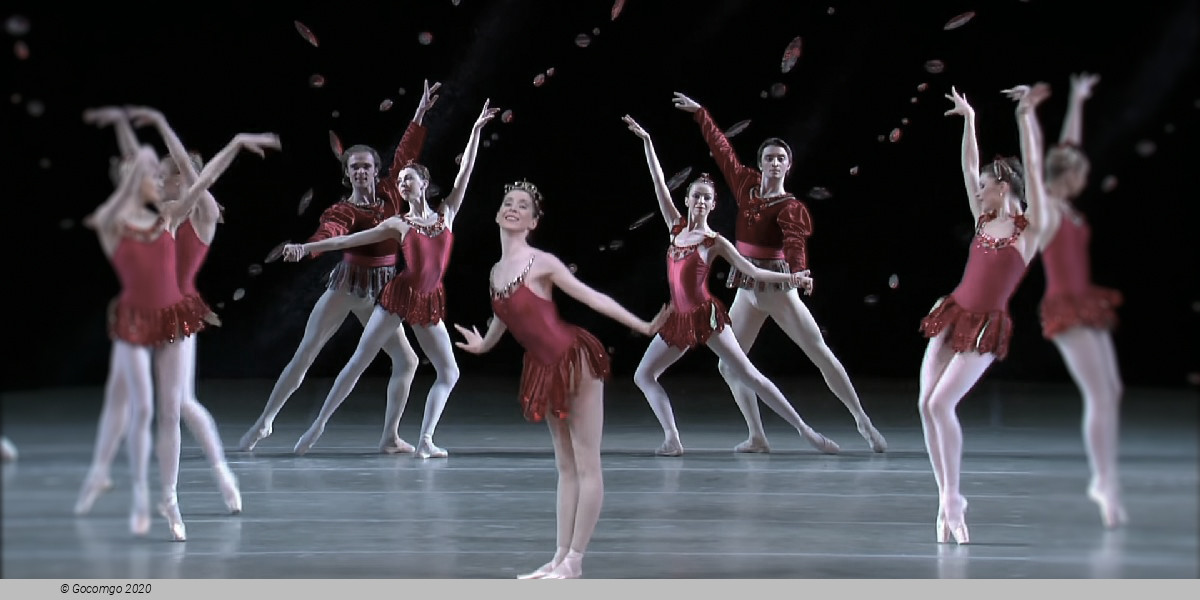
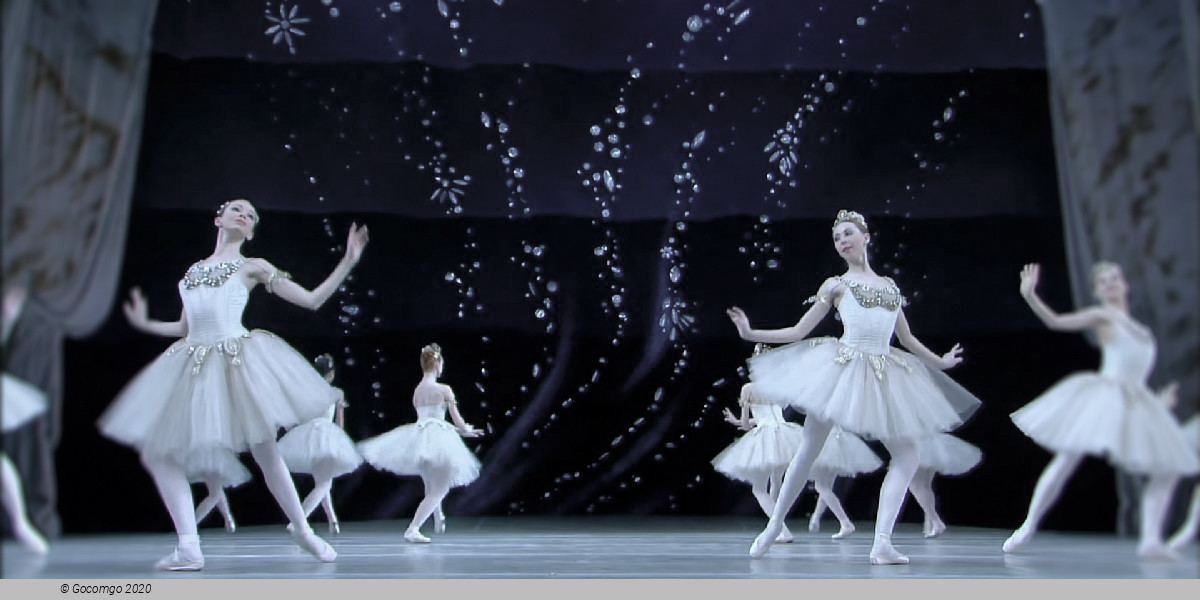
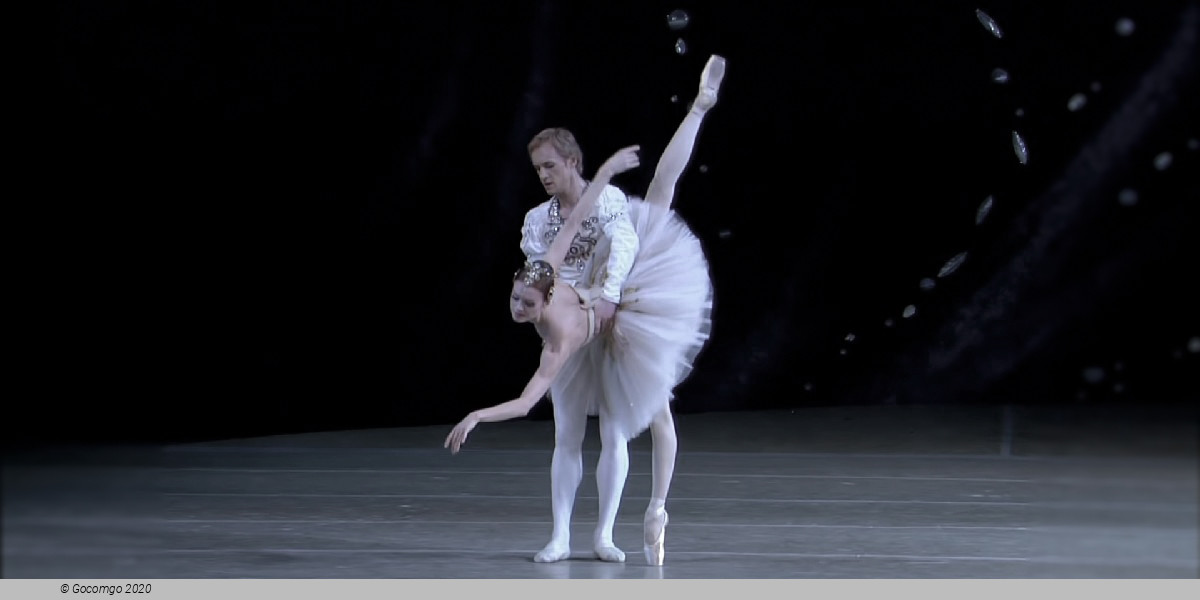
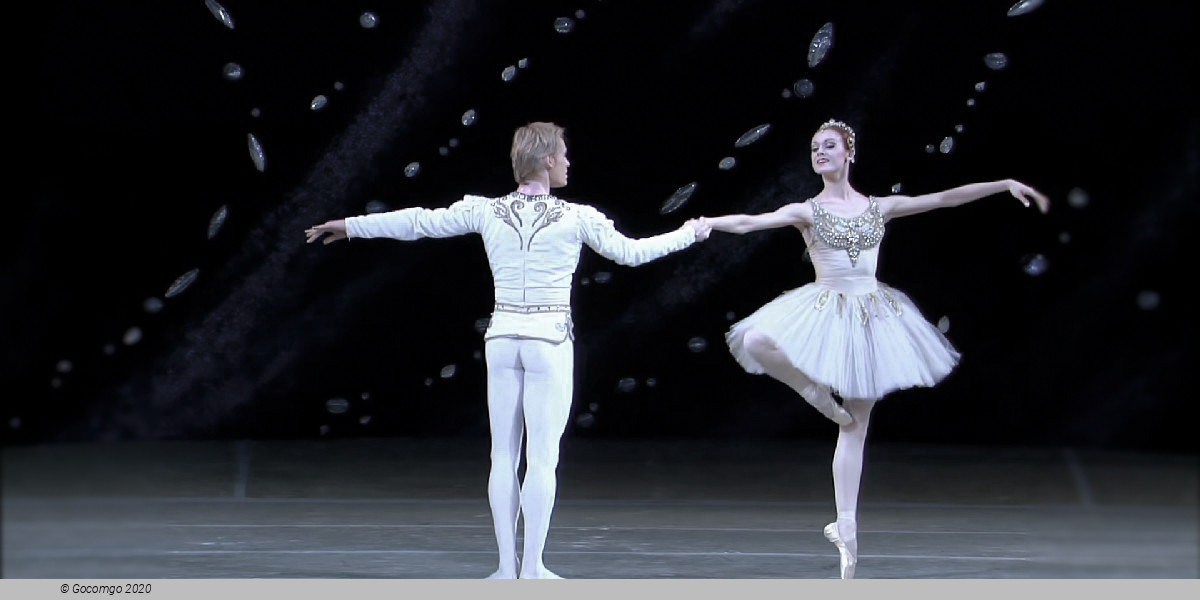
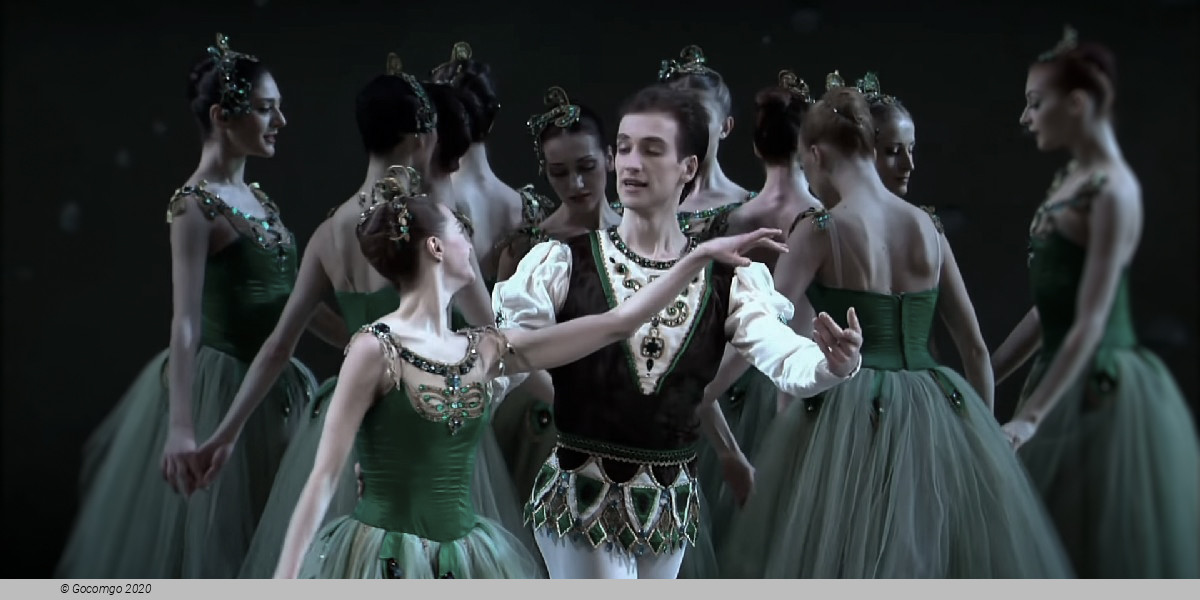
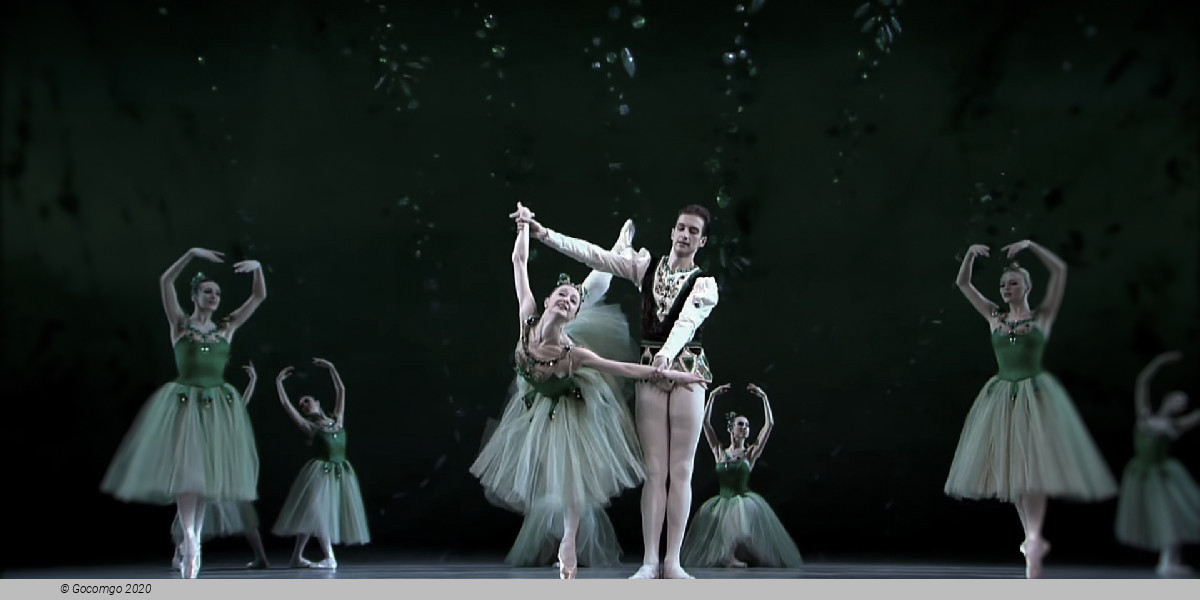
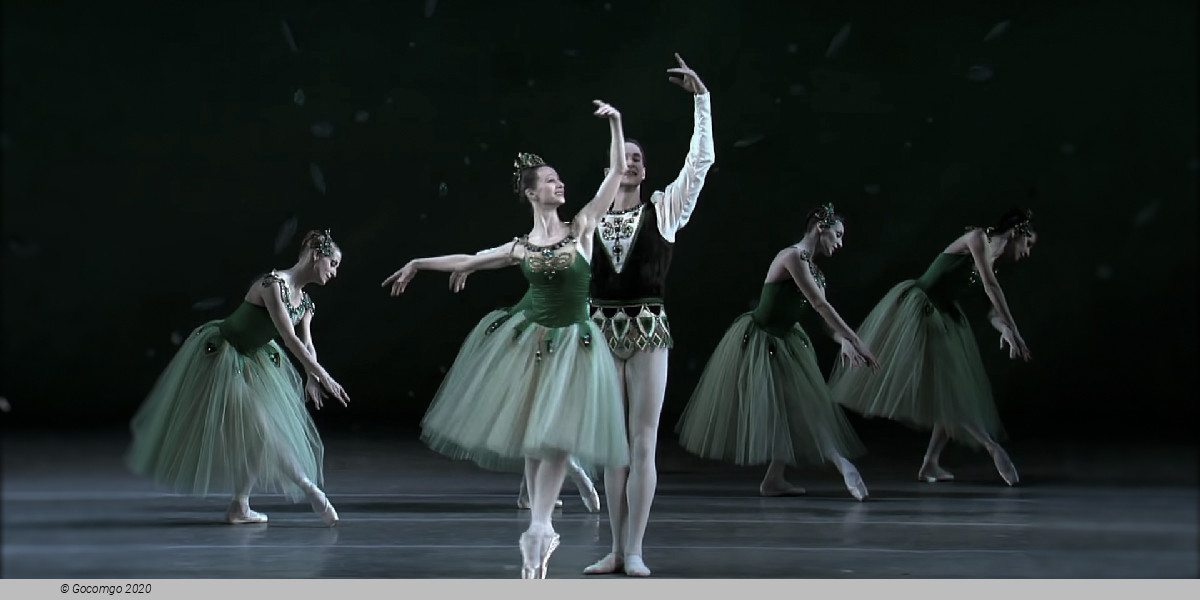
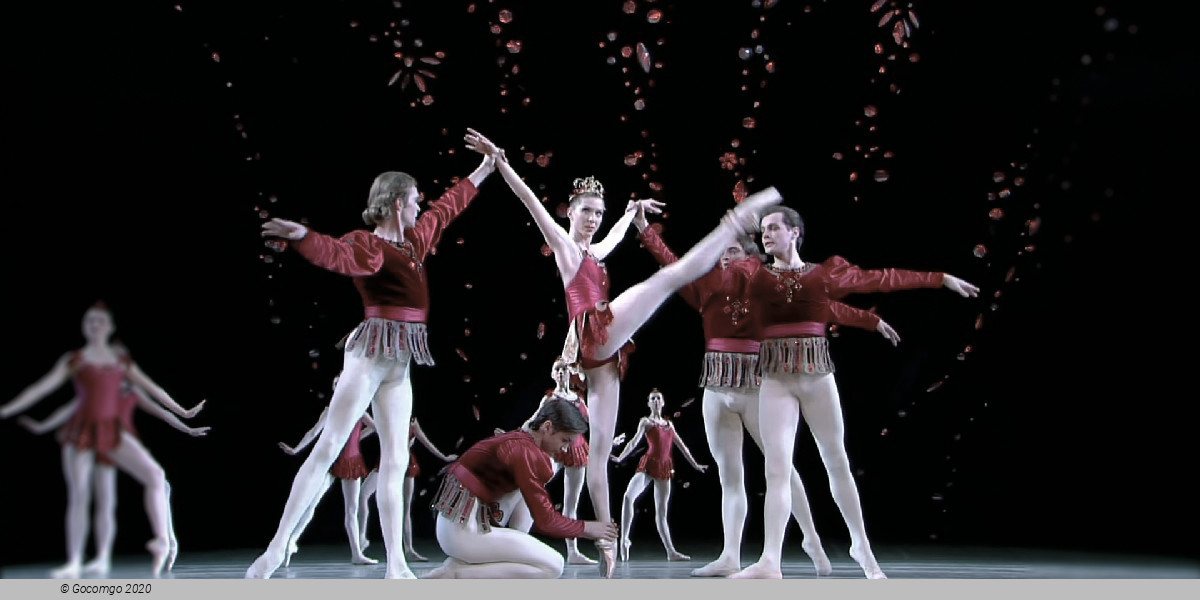
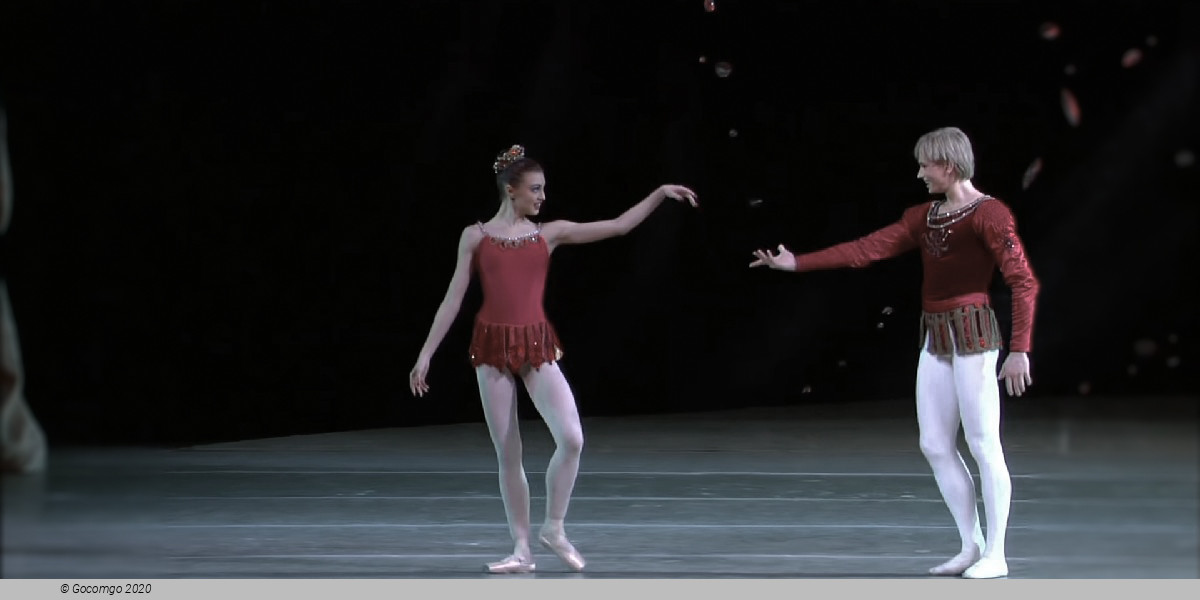
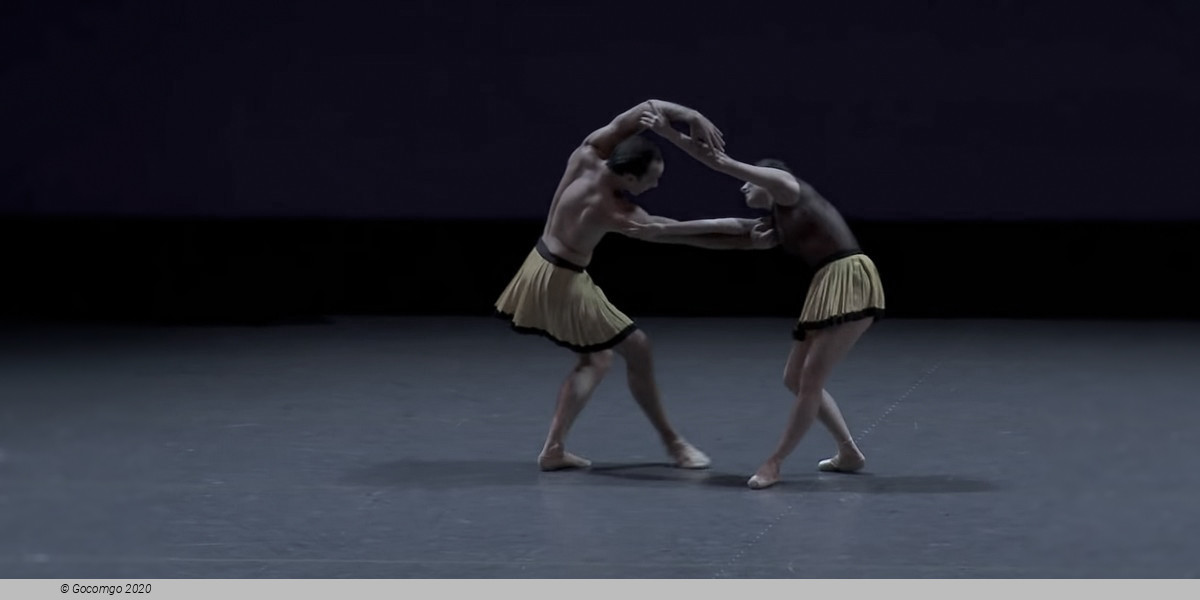
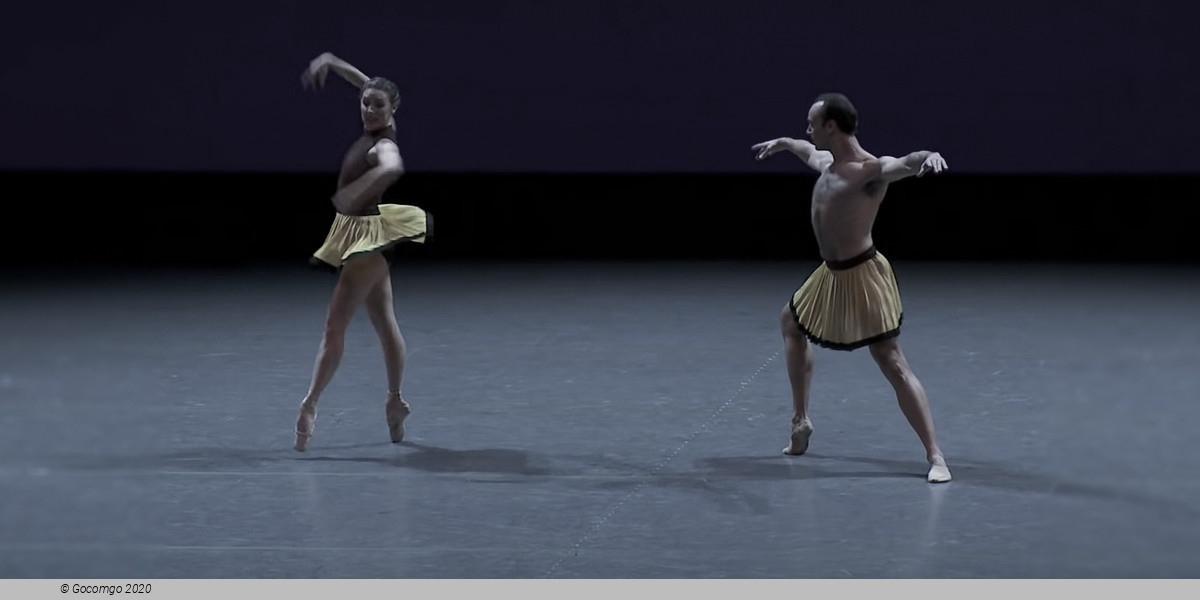
First performed on 13 April 1967 in New York, Jewels represents the first full-length “abstract ballet” by George Balanchine. The three parts of the ballet, „Emeralds“ (to music by Gabriel Fauré), „Rubies“ (to music by Igor Stravinsky) and „Diamonds“ (to music by Peter Ilich Tchaikovsky) are loosely connected by the idea of gems or jewels; a meeting with the jeweller Claude Arpels was a significant stimulus to Balanchine to create the work. Through the choice of the different composers, the ballet also forms a kind of geographical retrospective of the life of George Balanchine, who spent periods of time in France, the United States and Russia. Manuel Legris’ time as director is also closely connected with the work: after „Rubies“ (2010/2011) and „Diamonds“ (Pas de deux, 2017/2018), the complete work now appears on the programme as his period of office in Vienna draws to a close.

Jewels is a three-act ballet created for the New York City Ballet by co-founder and founding choreographer George Balanchine. It premièred on Thursday, 13 April 1967 at the New York State Theater, with sets designed by Peter Harvey and lighting by Ronald Bates.

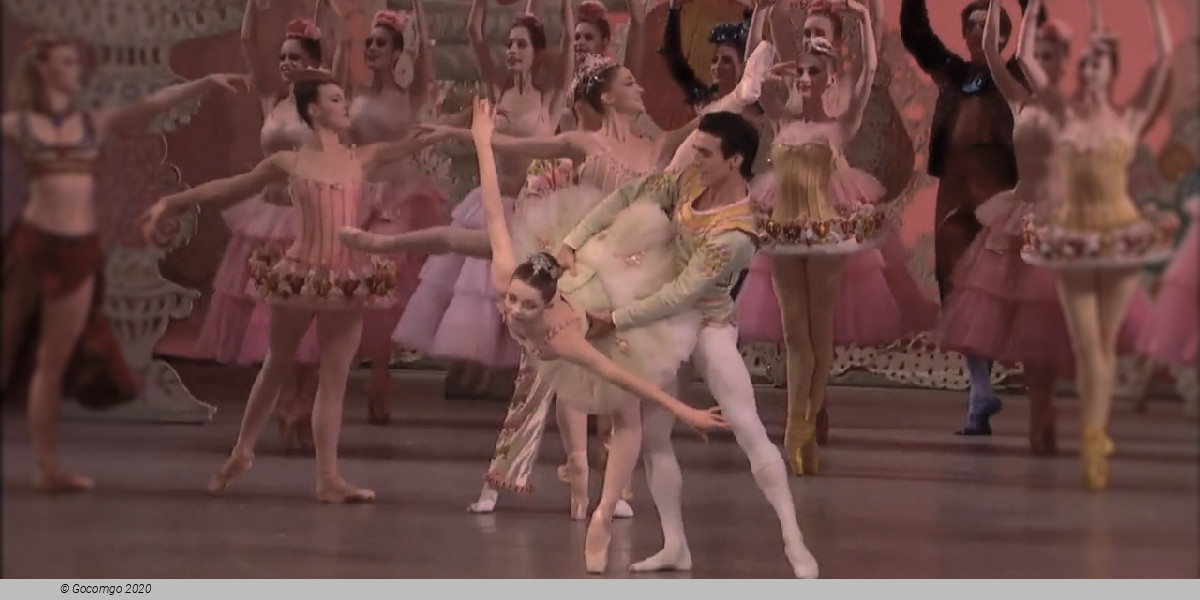
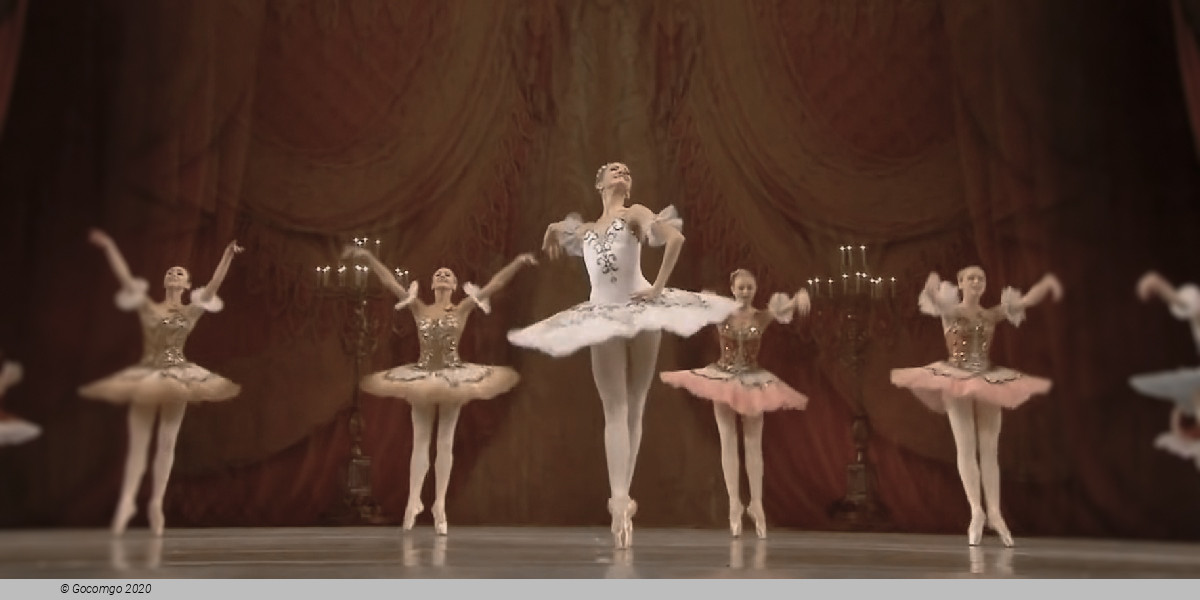
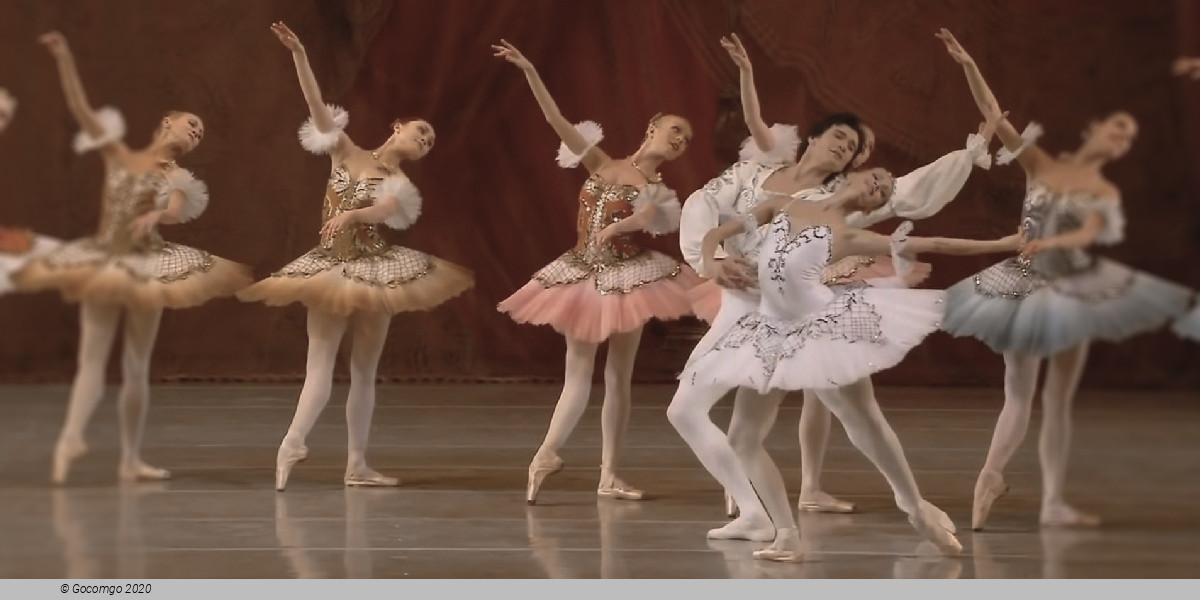
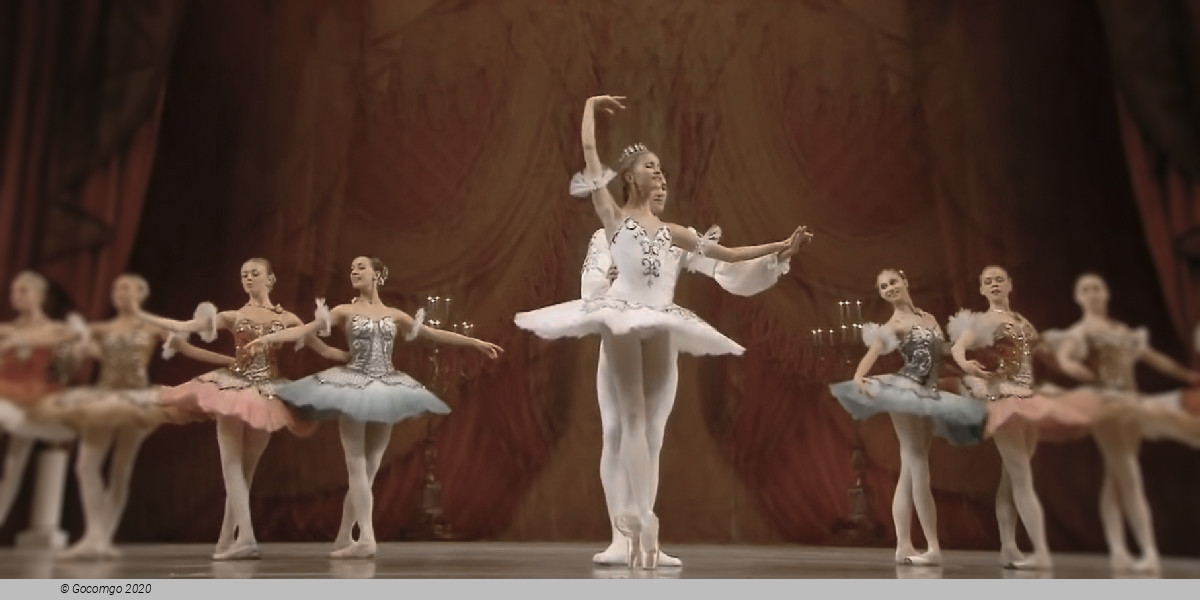
Jewels has been called the first full-length abstract ballet. It has three related movements: Emeralds, Rubies, and Diamonds (usually separated by intermissions). It can also be seen as three separate ballets, linked by their jewel-colored costumes. Balanchine commented: "The ballet had nothing to do with jewels. The dancers are just dressed like jewels." Each of the three acts features the music of a different composer: Emeralds is set to the music of Gabriel Fauré, Rubies to the music of Igor Stravinsky and Diamonds to music by Pyotr Ilyich Tchaikovsky.

Costumes

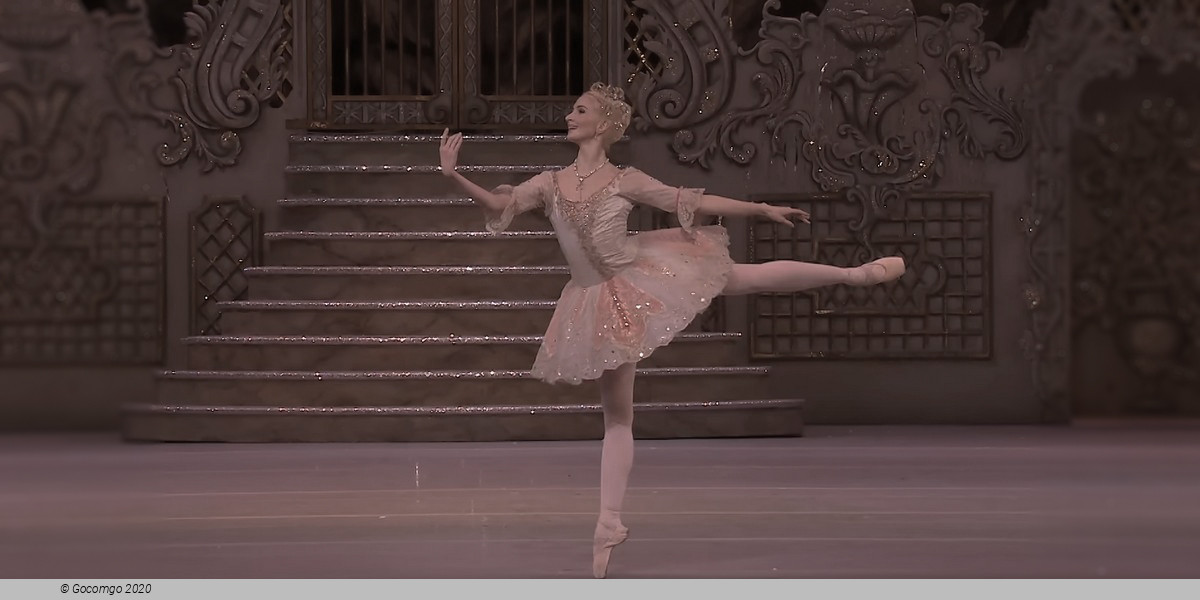
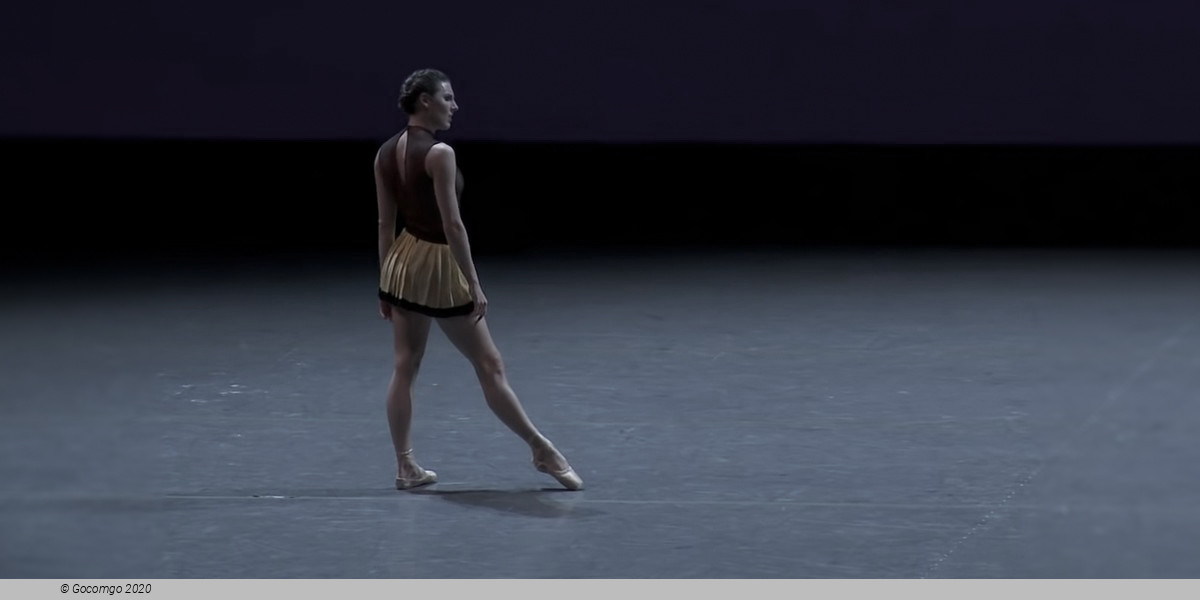
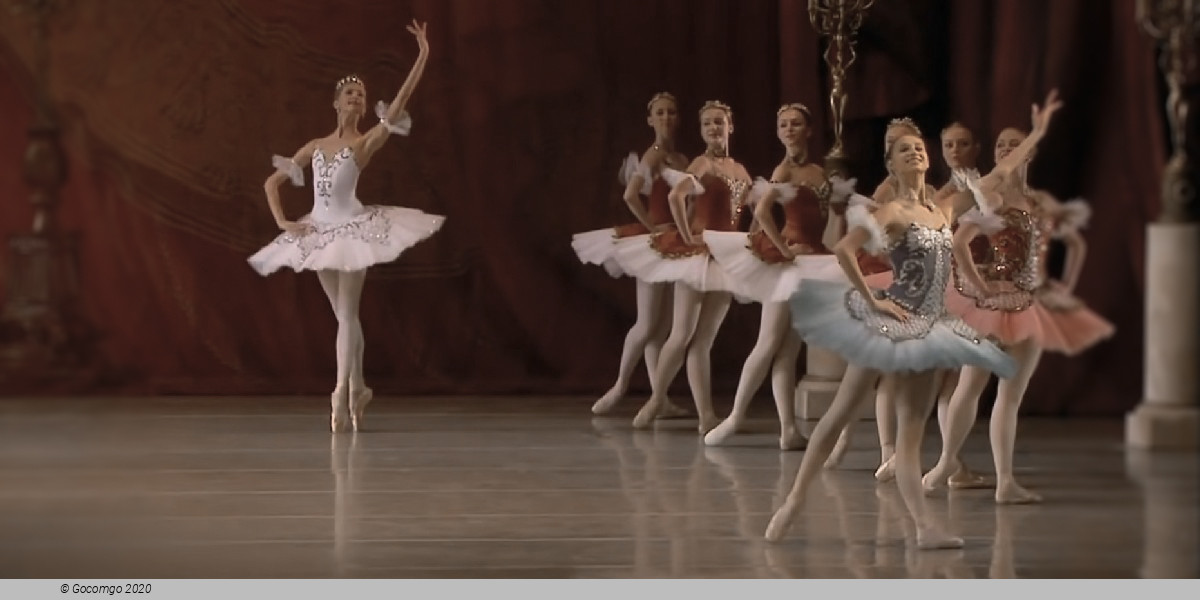
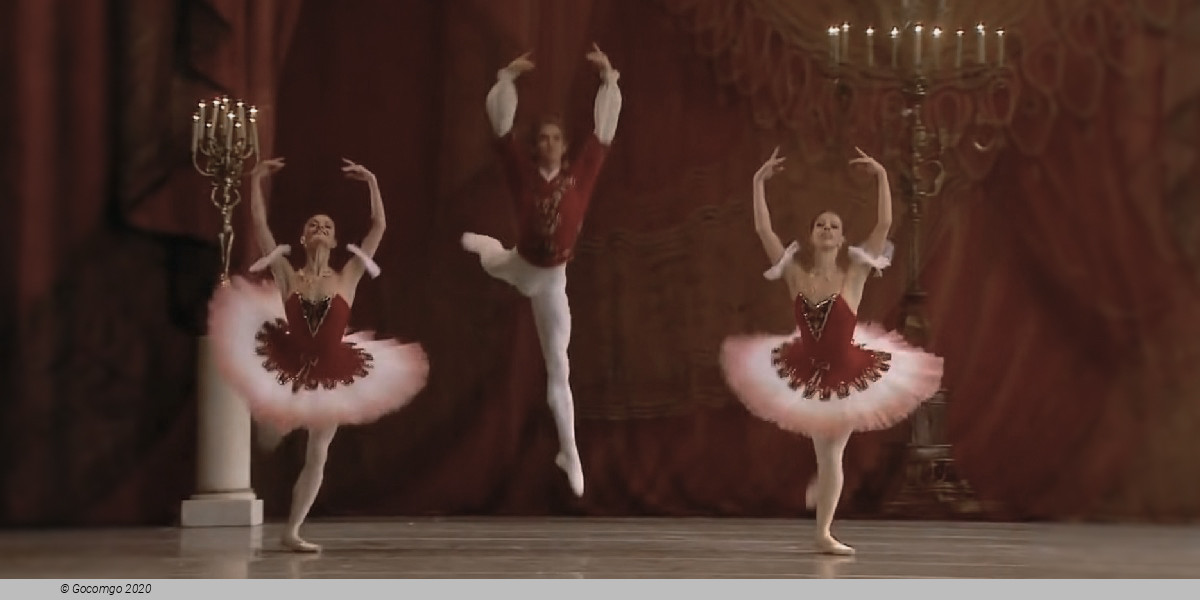
The costumes were created by Balanchine's long-time collaborator Barbara Karinska, who created a distinct look for each different act: romantic, calf-length tulle skirts for Emeralds, fabric that flared at the hips of both men and women in Rubies, and the flat, classical tutu of the Imperial Russian Ballet for Diamonds. The costumes were such finely crafted pieces of art in their own right that some of them have been exhibited in museums and in theatre lobbies. Even Claude Arpels of Van Cleef & Arpels, who suggested the idea of a ballet based on gems to the choreographer, was impressed with her attention to finding the finest trim that would accurately represent the true glitter of genuine gemstones. Additionally, Karinska's painstaking work is credited with making the costumes last despite the sweat and strain of dancing in them. Her designs, needlework and choice in fabrics made them both durable and danceable, illustrating that the bodies inside the costumes were deserving of her utmost respect. When questioned about her attention to her almost extravagant detail she replied, "I sew for girls and boys who make my costumes dance; their bodies deserve my clothes."

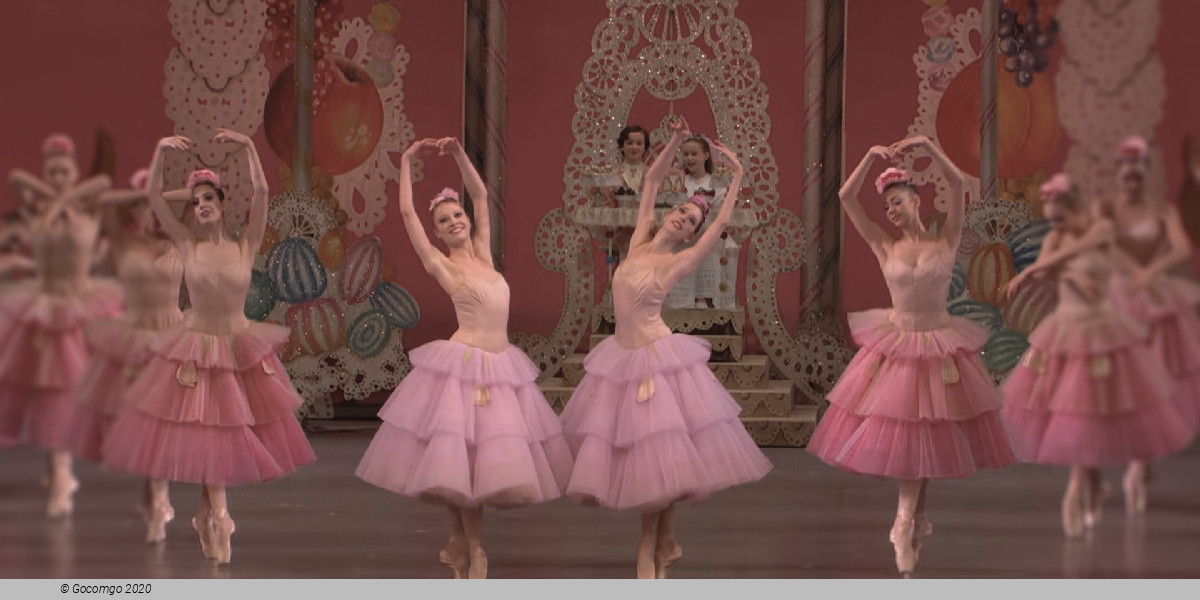
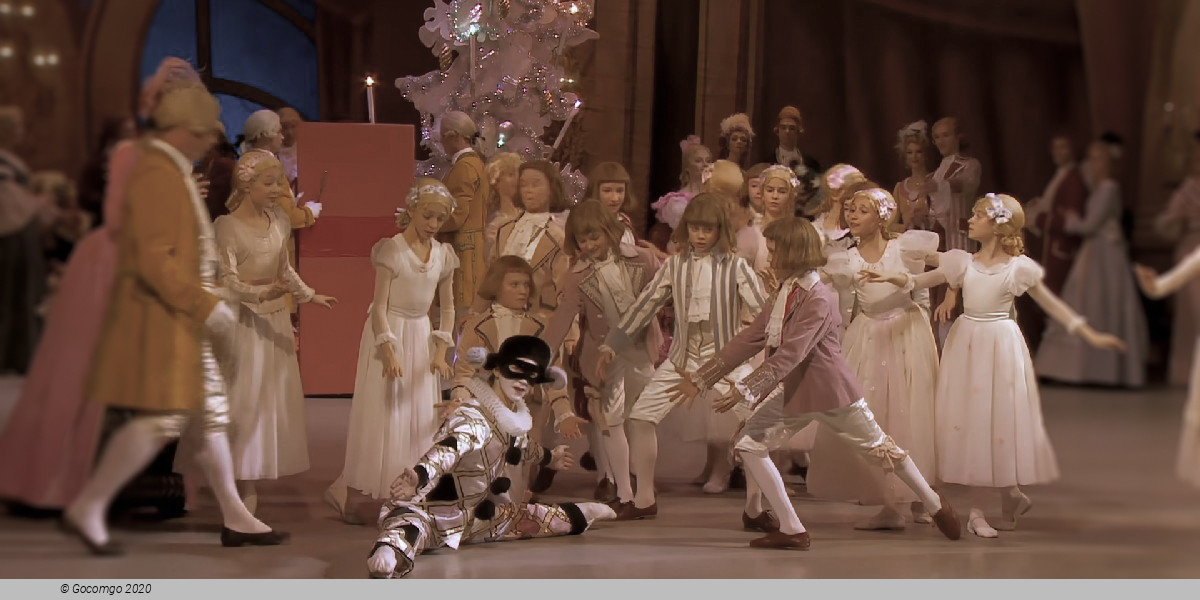
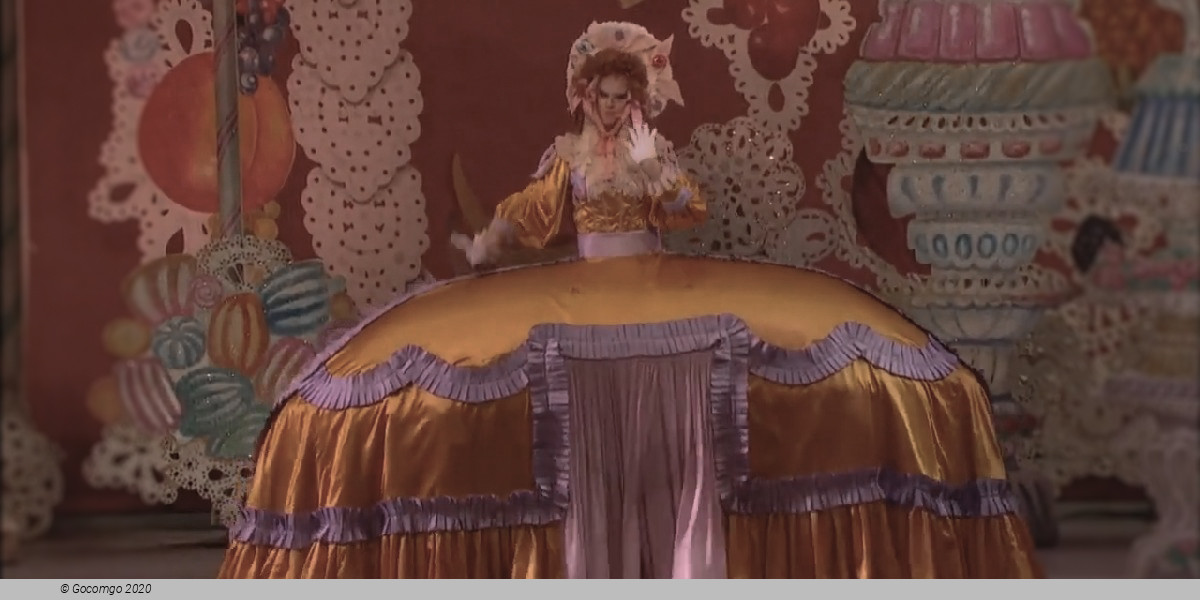
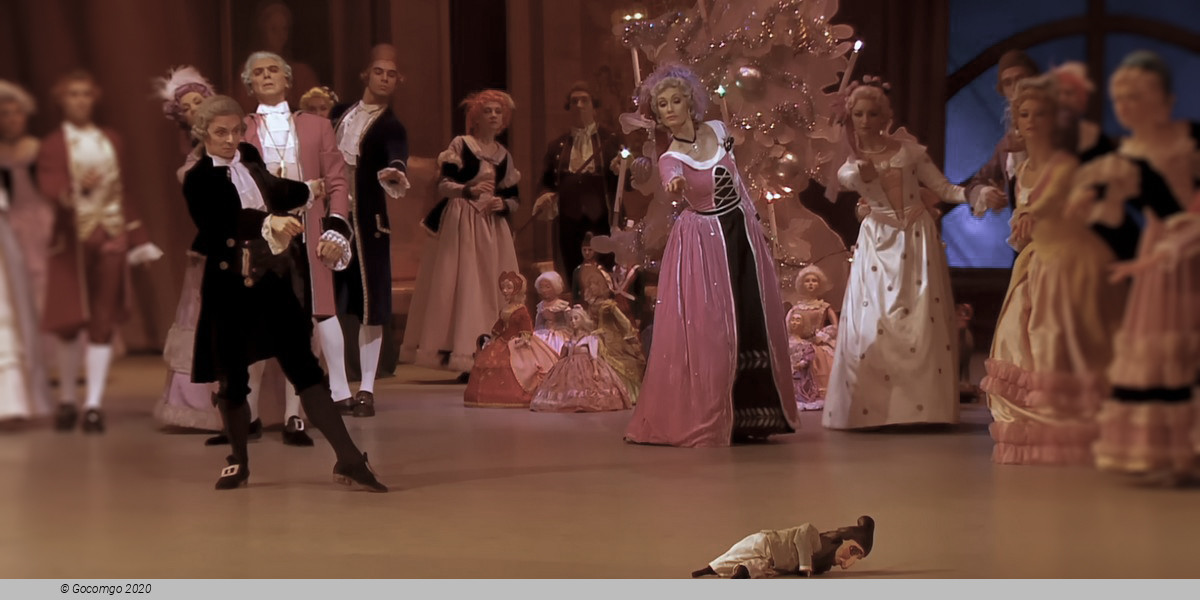
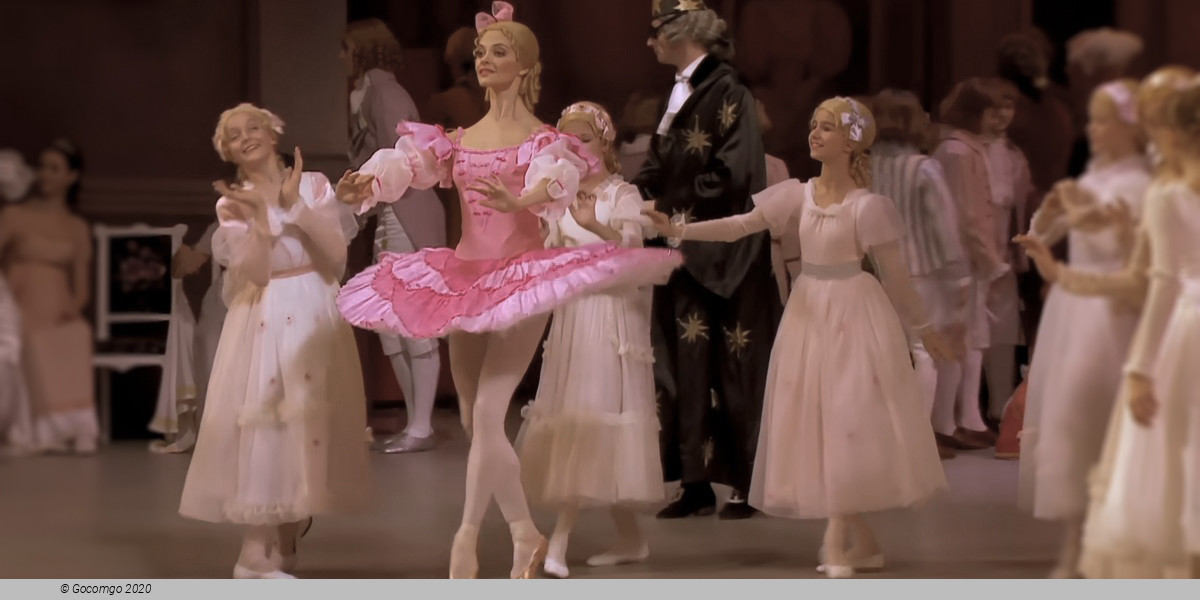
Choreographer George Balanchine's production of Tchaikovsky's ballet The Nutcracker has become the most famous stage production of the ballet performed in the U.S. (Mikhail Baryshnikov's production is the most famous television version, although it too originated onstage.) It uses the plot of the Alexandre Dumas, père, version of E.T.A. Hoffmann's tale, The Nutcracker and the Mouse King (1816). Its premiere took place on February 2, 1954, at City Center, New York, with costumes by Karinska and sets by Horace Armistead. It has been staged in New York every year since 1954, and many other productions throughout the United States either imitate it, or directly use the Balanchine staging. However, although it is often cited as being the production that made the ballet famous in the U.S., it was Willam Christensen's 1944 production for the San Francisco Ballet which first introduced the complete work to the United States.

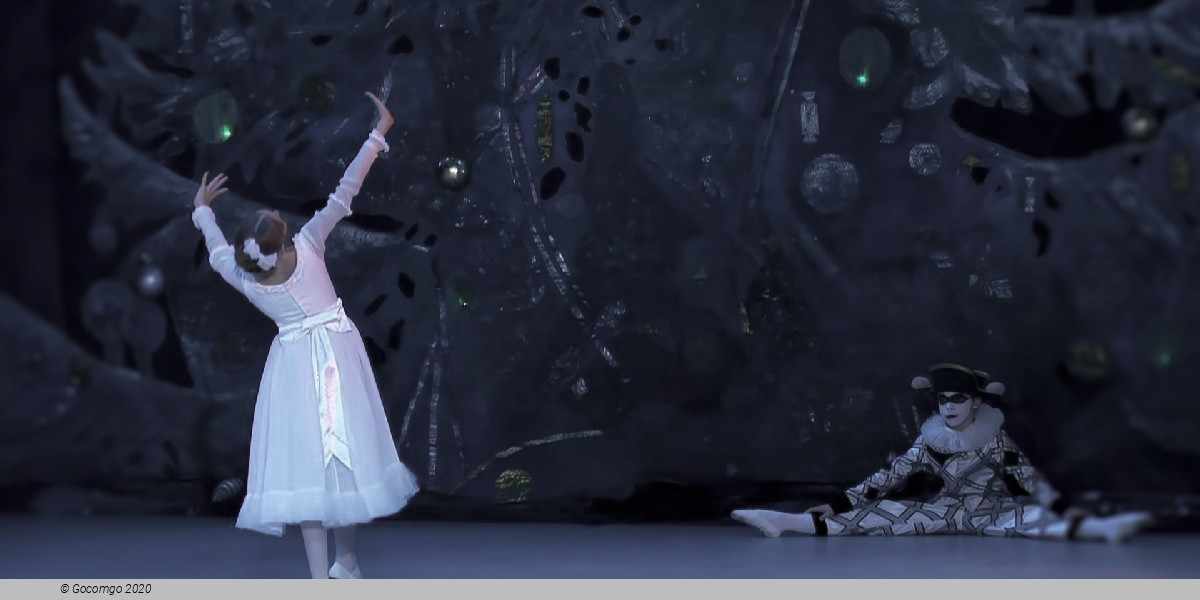
In Balanchine's version, the leading roles of Clara (here called Marie) and the Nutcracker/Prince are danced by children, and so their dances are choreographed to be less difficult than the ones performed by the adults. Marie does not dance at all in the second act of this version. The Prince's dancing in Act II is limited to the pantomime that he performs "describing" his defeat of the Mouse King. Instead, Marie and the Prince sit out nearly all of Act II watching other dancers perform for them, and unlike most other versions, neither one of them takes part in the ballet's Final Waltz.

Because Marie and the Nutcracker / Prince are played by children approximately ten years old in the Balanchine Nutcracker, no adult romantic interest between them is even implied, although Marie and Drosselmeyer's nephew, who looks exactly like the Prince, are clearly drawn to each other during the Christmas party. However, the 1958 Playhouse 90 telecast of the Balanchine Nutcracker, which changed Marie's name back to Clara and stated that the Prince was Drosselmeyer's nephew, had narrator June Lockhart saying at the end that "From that day on, Drosselmeyer's nephew is Clara's Prince and Clara is his Princess, and I need not tell you that they lived happily ever after." (But Drosselmeyer's nephew is there when the Nutcracker is broken during the Christmas party, so it is difficult to believe that he is the Nutcracker/ Prince, unless Marie dreams her fantasy adventures, and it is unclear in this version whether she does or not.) Years later, movie critic Stephen Holden, in reviewing the 1993 film version of the Balanchine Nutcracker, referred to Marie as the Prince's sweetheart. And oddly enough, throughout Act II of the 1993 film of Balanchine's version, Marie does wear a veil that resembles a bridal veil.

The Balanchine version uses perhaps more real children than any other version. (In other versions, the children are sometimes played by adult women.) The rôles of Clara and the Nutcracker/ Prince are performed by adults in many other versions, and in these productions of the ballet, there is usually more than a hint of budding romance between the two.

The Journey Through the Snow sequence, in many other productions danced by Clara and the Nutcracker immediately after his transformation into a Prince, is not danced at all in the Balanchine version, although the music is played. Instead, Marie faints and falls on the bed after the battle, and the Nutcracker exits. Marie's bed moves by itself across the stage as the music plays, and at its climax, the Nutcracker reappears and through the use of a stage effect, turns into a Prince. He awakens Marie, places on her head one of the crowns that he took from the dead seven-headed Mouse King, and they exit. (In the 1993 film of Balanchine's Nutcracker, the bed flies through the air rather than simply moving across the stage. This is achieved by special effects created by Industrial Light & Magic.)

A virtuosic ballet, Tschaikovsky Pas de Deux is brief, beautiful, and beloved – an adrenaline rush for both dancers and audiences.

For the original production of Swan Lake in Moscow in 1877, Tschaikovsky composed a pas de deux for Act III at the request of Anna Sobeshchanskaya, a Bolshoi prima ballerina who was one of the first dancers to perform the lead role. Since it was composed later than the rest of the music, it was not included in the published score and was therefore not available to Marius Petipa when he choreographed his famous Swan Lake in St. Petersburg, in 1895. In its place, Petipa moved some music from Act I to Act III, and it is this piece that is now well-known as the Black Swan pas de deux. Well over half a century later, the complete and original Swan Lake score was found, including an appendix with the lost pas de deux. Hearing of its historic discovery, George Balanchine asked for — and was granted — permission to use it for his own choreography. The result is an eight-minute display of ballet bravura and technique.

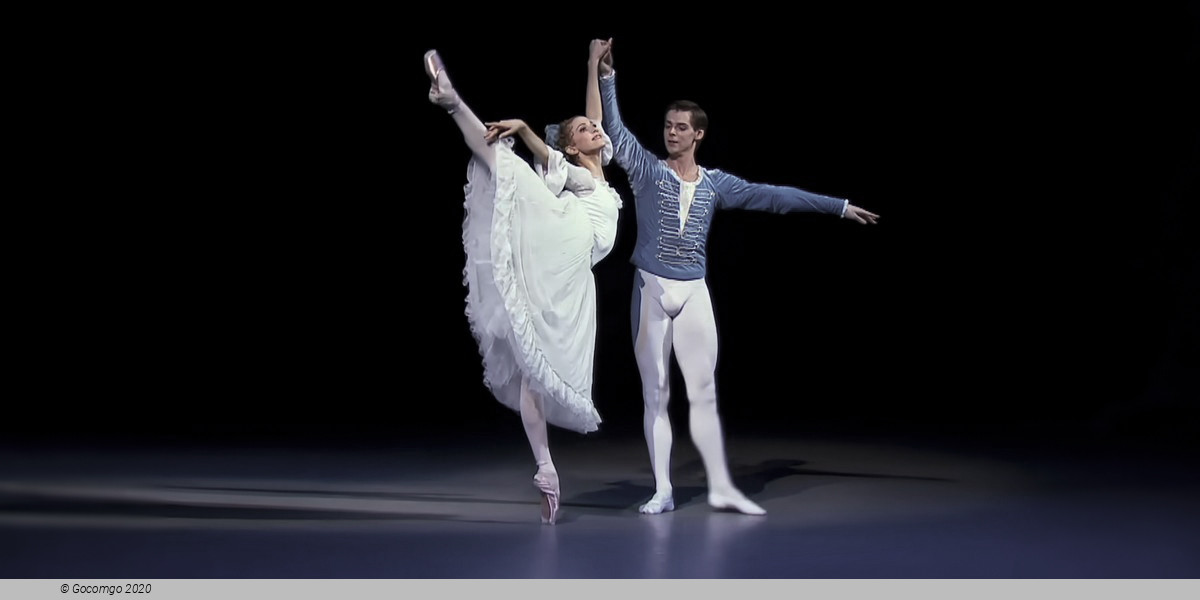
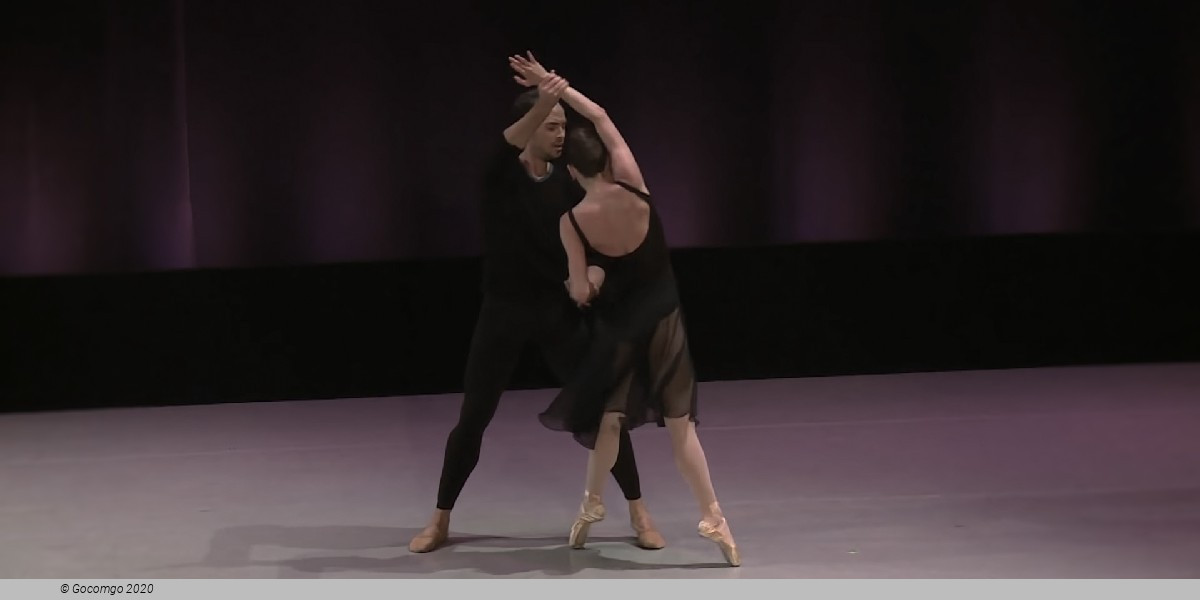
This breathtaking and poetic dance for a couple explores the haunting, tenuous melodies set to a remix of Dinah Washington’s soulful rendition of “This Bitter Earth” and Max Richter’s “On the Nature of Daylight.”

This Bitter Earth is a pas de deux from Christopher Wheeldon’s Five Movements, Three Repeats. The full work was originally created for Fang-Yi Sheu & Artists, a group led by former Martha Graham Dance Company star Fang-Yi Sheu that included NYCB dancers Wendy Whelan, Tyler Angle, and Craig Hall. Set to a remix of Dinah Washington’s performance of Clyde Otis’ This Bitter Earth, and Max Richter’s On the Nature of Daylight, the ballet had its Company premiere at NYCB’s 2012 Fall Gala.

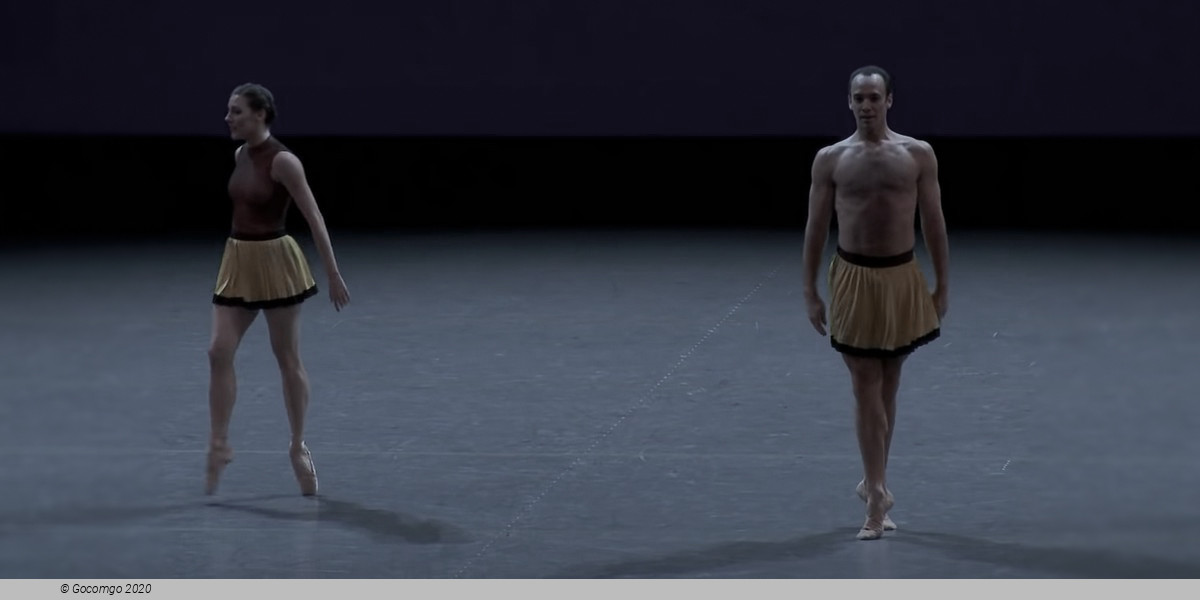
Forsythe’s angular, contemporary choreography for this striking and inventive pas de deux is paired to an electronic score by his long-time collaborator Thom Willems.

William Forsythe choreographed Herman Schmerman, his second work for NYCB, as part of the 1992 Diamond Project. Originally choreographed for five dancers, Forsythe said at the time, "The ballet means nothing. It’s a piece about dancing that will be a lot of fun."

In 1993, Forsythe added a pas de deux to the ballet, and when NYCB revived the ballet in 1999, Forsythe decided to present just the pas de deux.

History
Premiere of this production: 27 April 1928, Washington festival

Apollo (originally Apollon musagète and variously known as Apollo musagetes, Apolo Musageta, and Apollo, Leader of the Muses) is a neoclassical ballet in two tableaux composed between 1927 and 1928 by Igor Stravinsky.

Premiere of this production: 13 April 1967, New York State Theater

Jewels is a three-act ballet created for the New York City Ballet by co-founder and founding choreographer George Balanchine. It premièred on Thursday, 13 April 1967 at the New York State Theater, with sets designed by Peter Harvey and lighting by Ronald Bates.

Premiere of this production: 06 December 1892, Imperial Mariinsky Theatre, Saint Petersburg

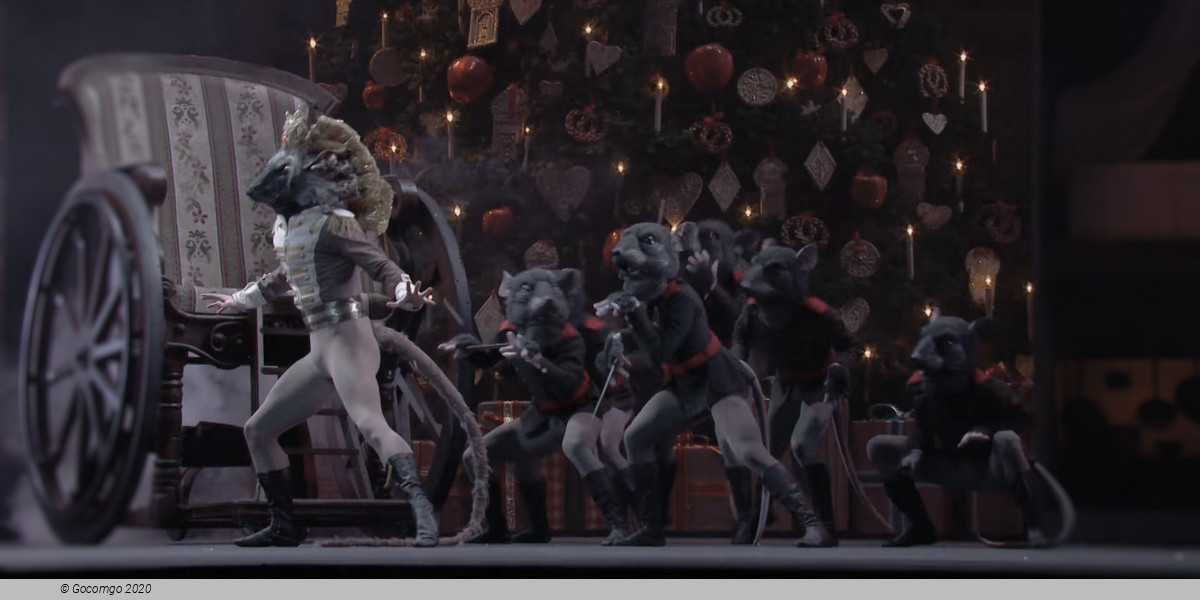
The Nutcracker (Balet-feyeriya) is a two-act ballet, originally choreographed by Marius Petipa and Lev Ivanov with a score by Pyotr Ilyich Tchaikovsky (Op. 71). The libretto is adapted from E. T. A. Hoffmann's story "The Nutcracker and the Mouse King".

Premiere of this production: 29 March 1960, City Center of Music and Drama, New York

Tchaikovsky Pas de Deux is a ballet choreographed by George Balanchine to a composition by Pyotr Ilyich Tchaikovsky originally intended for act 3 of Swan Lake (Op. 20, 1875–76). With costumes by Barbara Karinska and lighting by Jack Owen Brown, it was first presented by New York City Ballet at the City Center of Music and Drama, New York, on 29 March 1960. Robert Irving conducted the New York City Ballet Orchestra. The dancers were Violette Verdy and Conrad Ludlow.

Premiere of this production: 01 April 1846, Salle Le Peletier, Paris

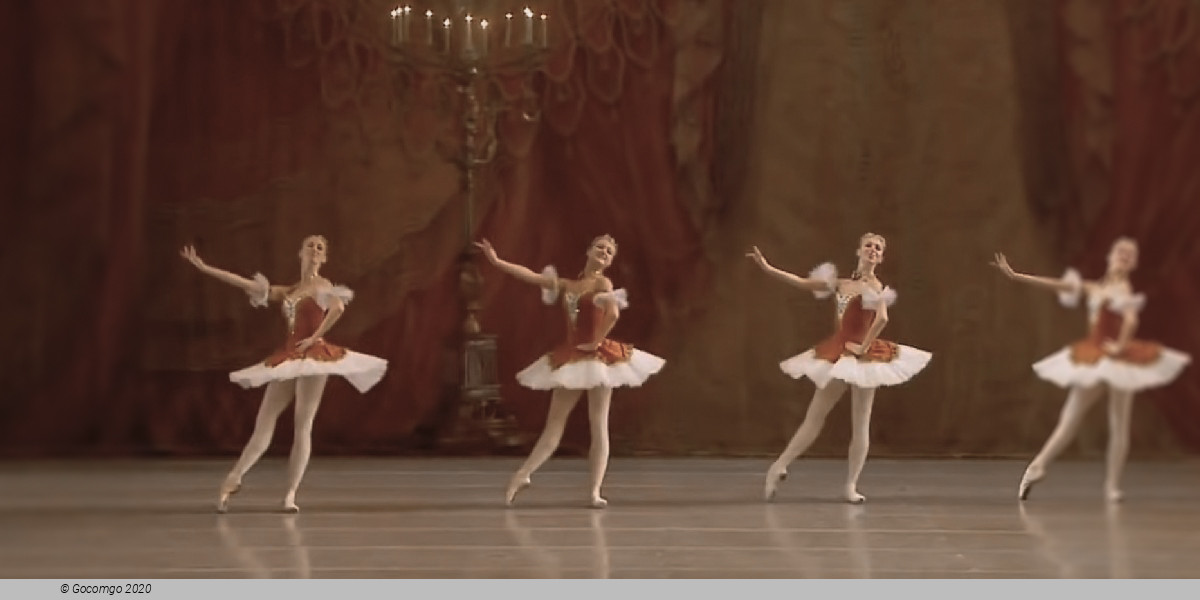
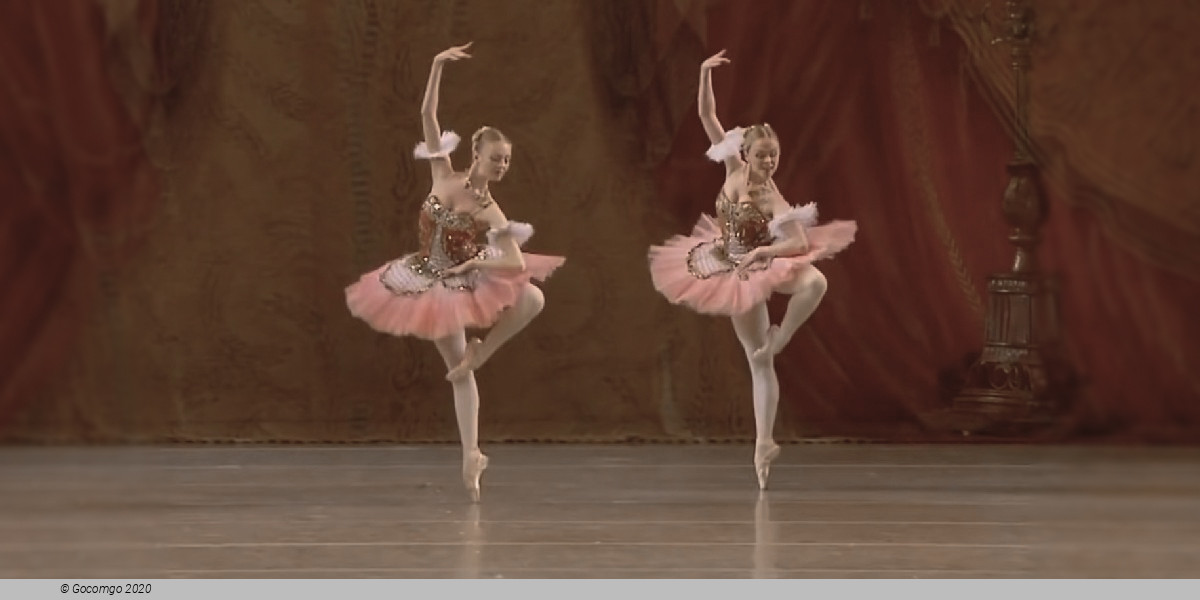
Paquita is a ballet in two acts and three scenes originally choreographed by Joseph Mazilier to music by Édouard Deldevez and Ludwig Minkus. Paul Foucher received royalties as librettist.

Synopsis

Plot 

Below is a synopsis based on the original 1892 libretto by Marius Petipa. The story varies from production to production, though most follow the basic outline. The names of the characters also vary. In the original E. T. A. Hoffmann story, the young heroine is called Marie Stahlbaum and Clara (Klärchen) is her doll's name. In the adaptation by Dumas on which Petipa based his libretto, her name is Marie Silberhaus. In still other productions, such as Baryshnikov's, Clara is Clara Stahlbaum rather than Clara Silberhaus.

Act I

Scene 1: The Stahlbaum Home

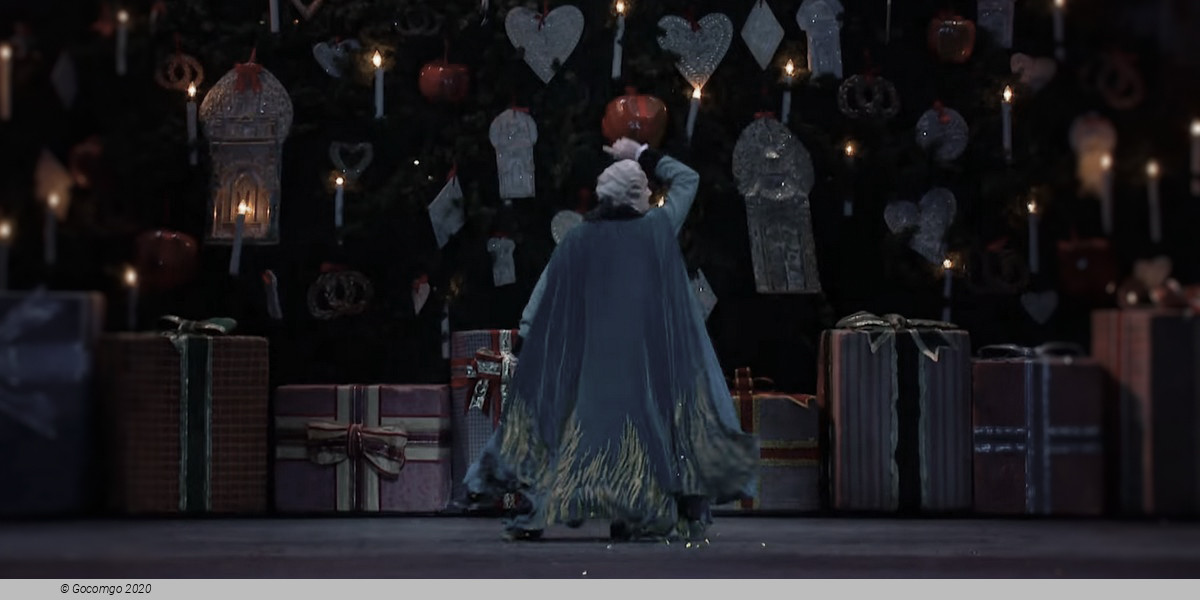
It is Christmas Eve. Family and friends have gathered in the parlor to decorate the beautiful Christmas tree in preparation for the party. Once the tree is finished, the children are sent for. They stand in awe of the tree sparkling with candles and decorations.

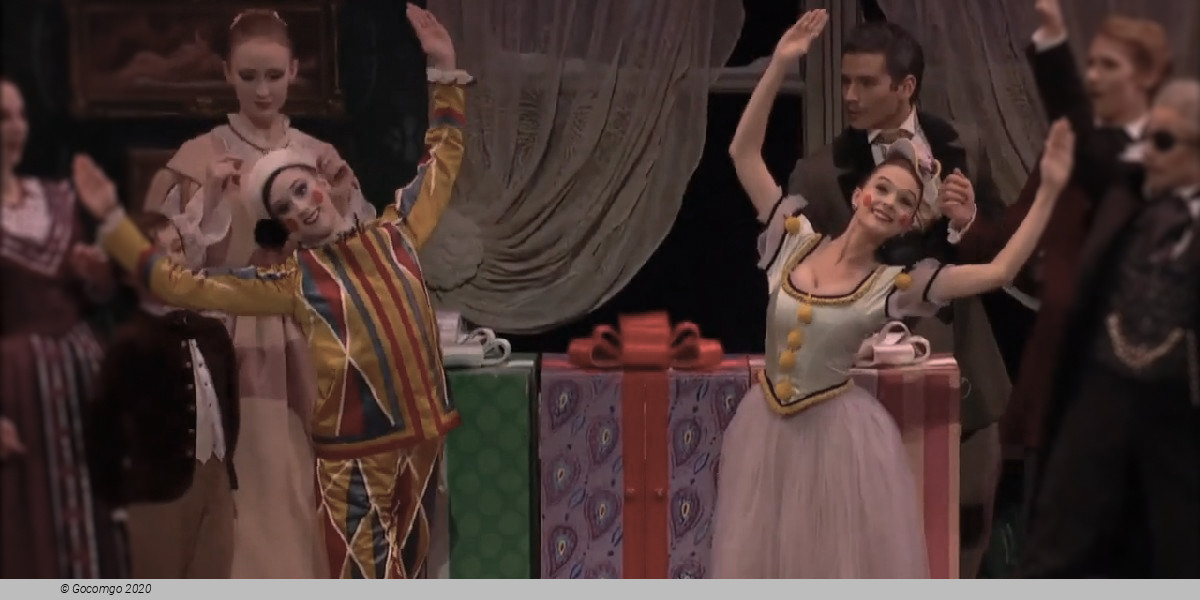
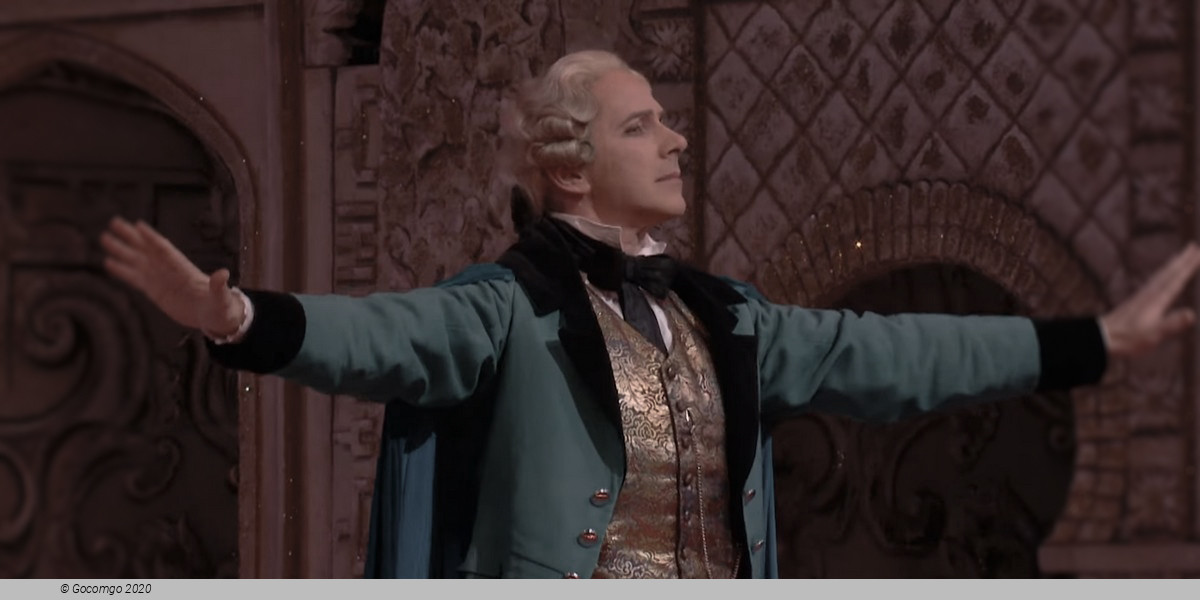
The party begins. A march is played. Presents are given out to the children. Suddenly, as the owl-topped grandmother clock strikes eight, a mysterious figure enters the room. It is Drosselmeyer, a local councilman, magician, and Clara's godfather. He is also a talented toymaker who has brought with him gifts for the children, including four lifelike dolls who dance to the delight of all. He then has them put away for safekeeping.

Clara and Fritz are sad to see the dolls being taken away, but Drosselmeyer has yet another toy for them: a wooden nutcracker carved in the shape of a little man. The other children ignore it, but Clara immediately takes a liking to it. Fritz, however, breaks it, and Clara is heartbroken.

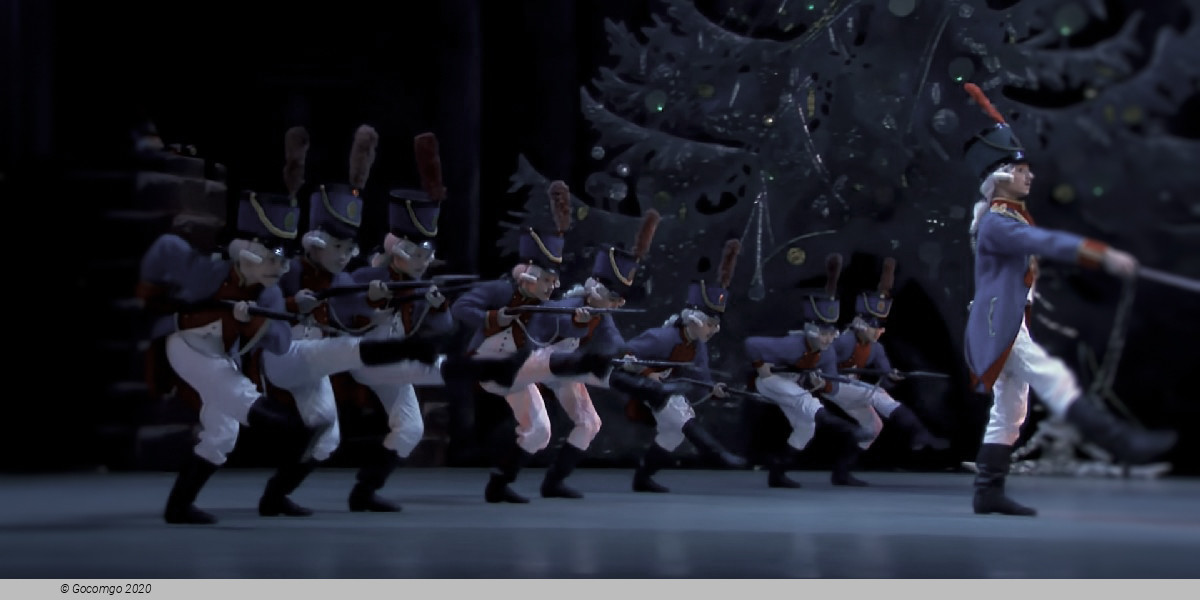
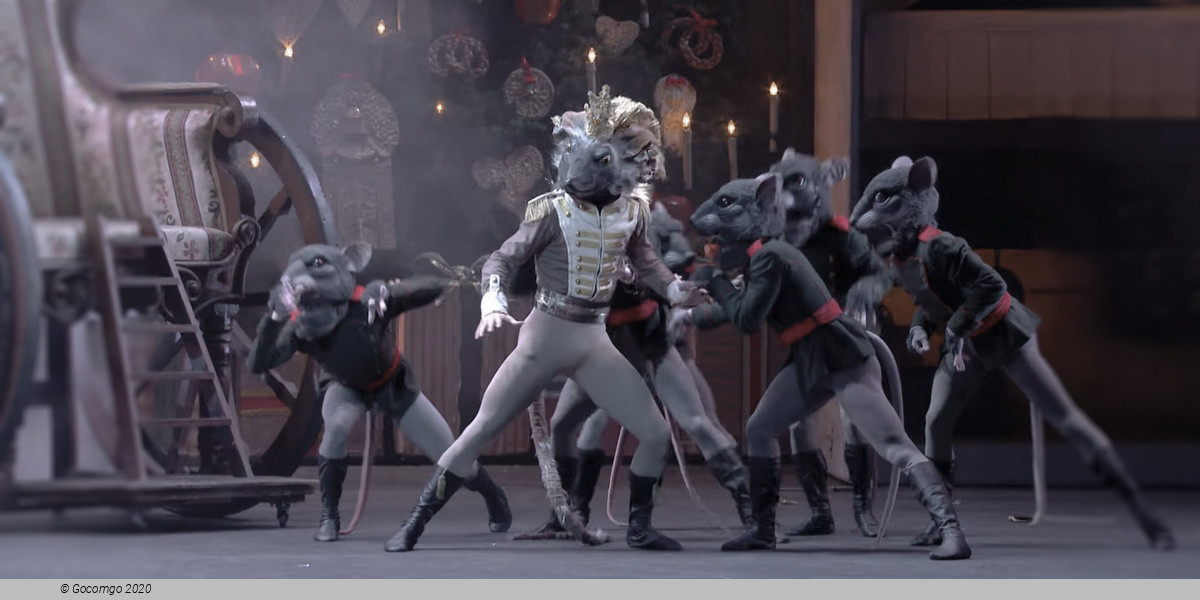
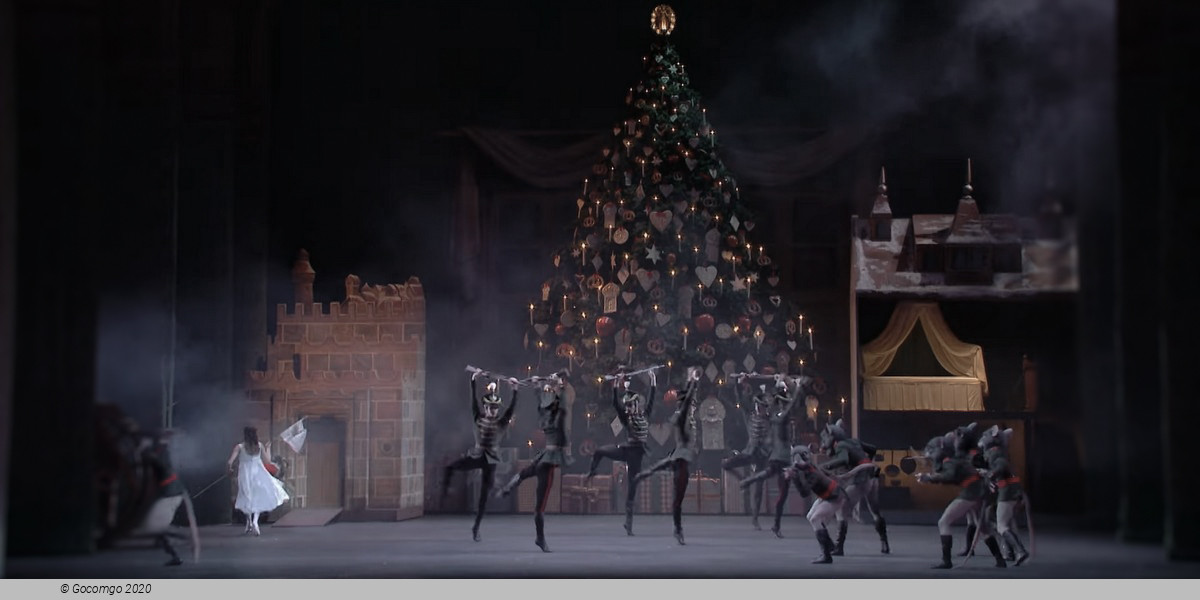
During the night, after everyone else has gone to bed, Clara returns to the parlor to check on her beloved nutcracker. As she reaches the little bed, the clock strikes midnight and she looks up to see Drosselmeyer perched atop it. Suddenly, mice begin to fill the room and the Christmas tree begins to grow to dizzying heights. The nutcracker also grows to life size. Clara finds herself in the midst of a battle between an army of gingerbread soldiers and the mice, led by their king. They begin to eat the soldiers.

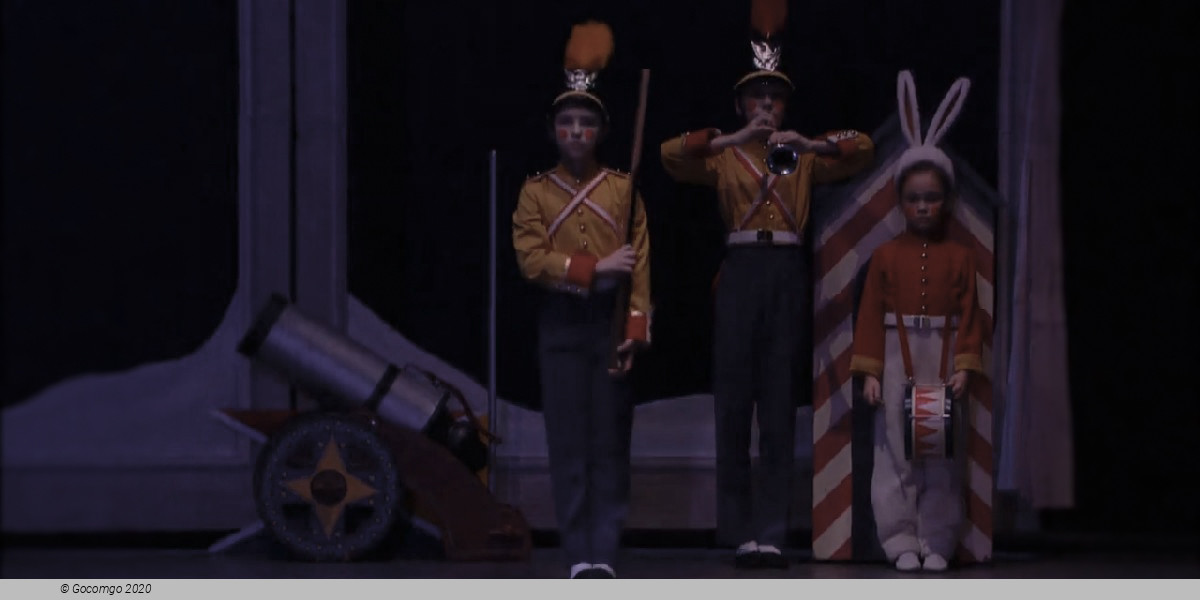
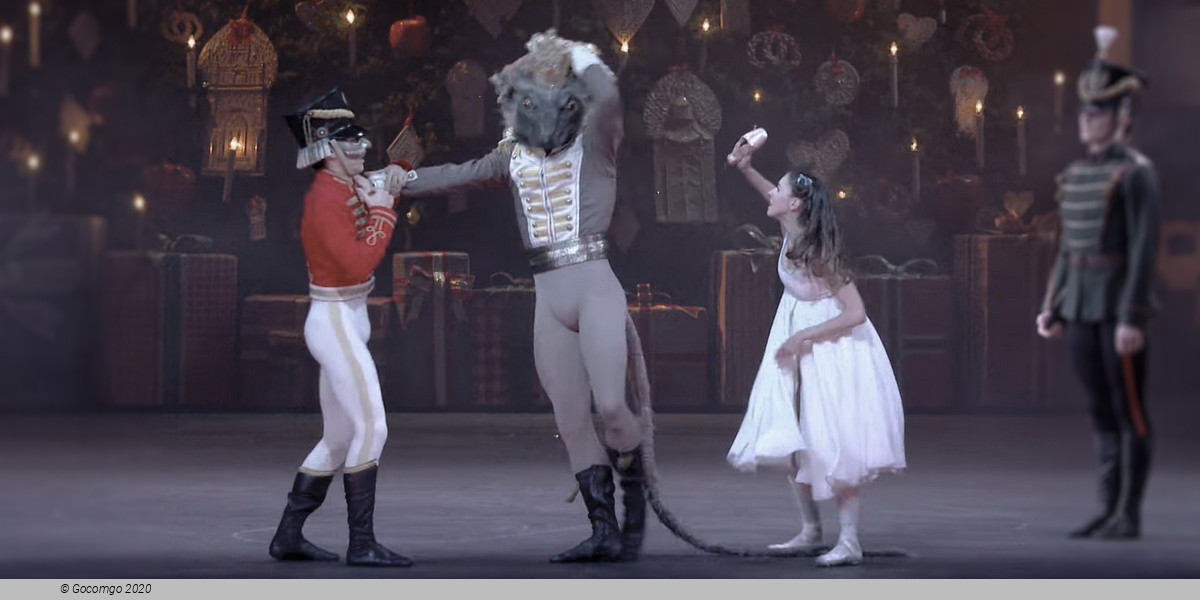
The nutcracker appears to lead the soldiers, who are joined by tin soldiers, and by dolls who serve as doctors to carry away the wounded. As the Mouse King advances on the still-wounded nutcracker, Clara throws her slipper at him, distracting him long enough for the nutcracker to stab him.

Scene 2: A Pine Forest

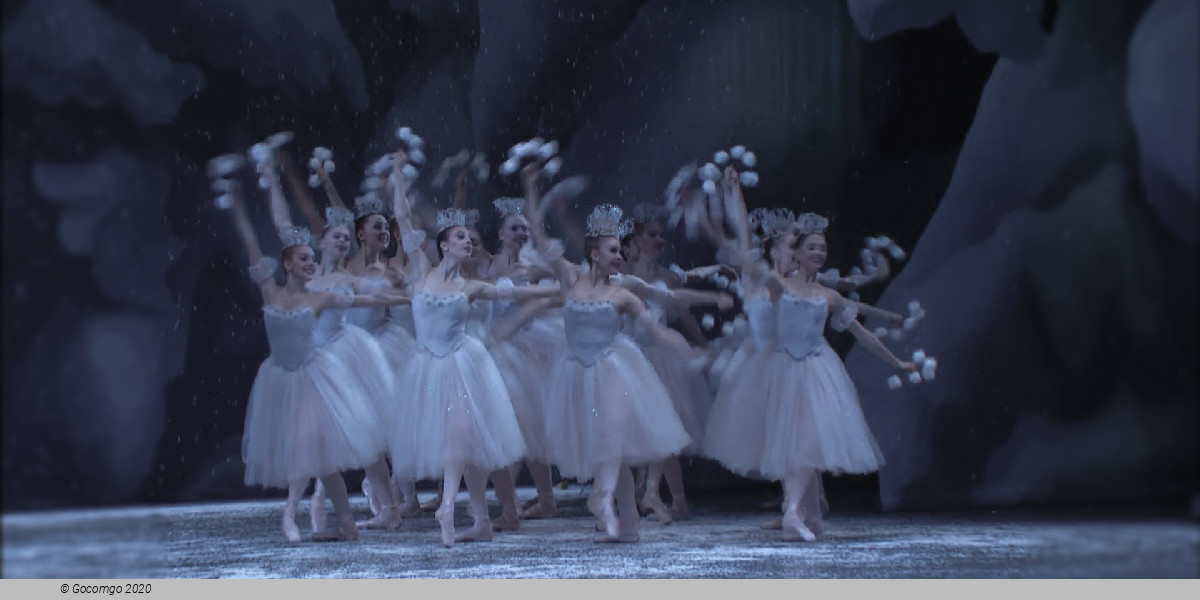
The mice retreat and the nutcracker is transformed into a handsome Prince. He leads Clara through the moonlit night to a pine forest in which the snowflakes dance around them, beckoning them on to his kingdom as the first act ends.

Act II

Scene 1: The Land of Sweets

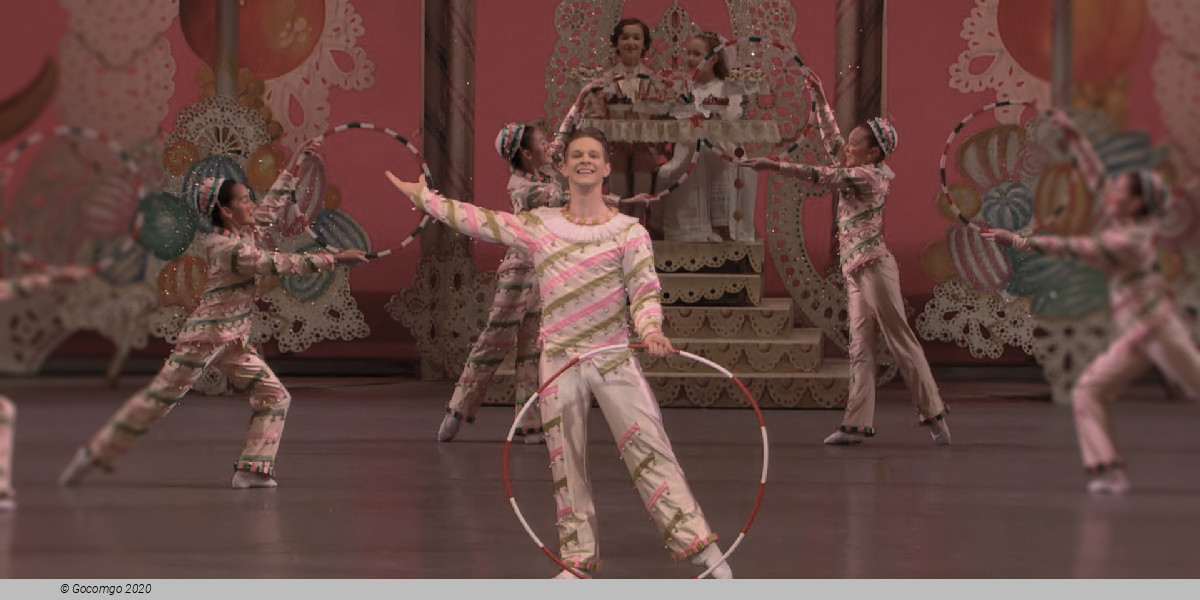
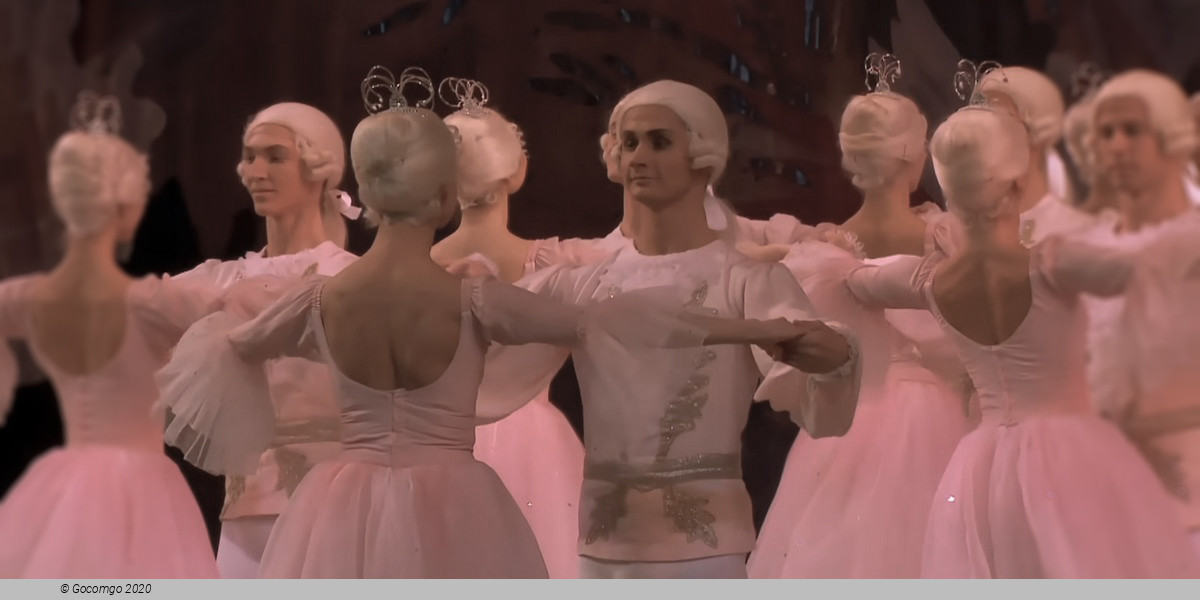
Clara and the Prince travel to the beautiful Land of Sweets, ruled by the Sugar Plum Fairy in the Prince's place until his return. He recounts for her how he had been saved from the Mouse King by Clara and transformed back into himself. In honor of the young heroine, a celebration of sweets from around the world is produced: chocolate from Spain, coffee from Arabia, tea from China, and candy canes from Russia all dance for their amusement; Danish shepherdesses perform on their flutes; Mother Ginger has her children, the Polichinelles, emerge from under her enormous hoop skirt to dance; a string of beautiful flowers perform a waltz. To conclude the night, the Sugar Plum Fairy and her Cavalier perform a dance.

A final waltz is performed by all the sweets, after which the Sugar Plum Fairy ushers Clara and the Prince down from their throne. He bows to her, she kisses Clara goodbye, and leads them to a reindeer drawn sleigh. It takes off as they wave goodbye to all the subjects who wave back.

In the original libretto, the ballet's apotheosis "represents a large beehive with flying bees, closely guarding their riches". Just like Swan Lake, there have been various alternative endings created in productions subsequent to the original.

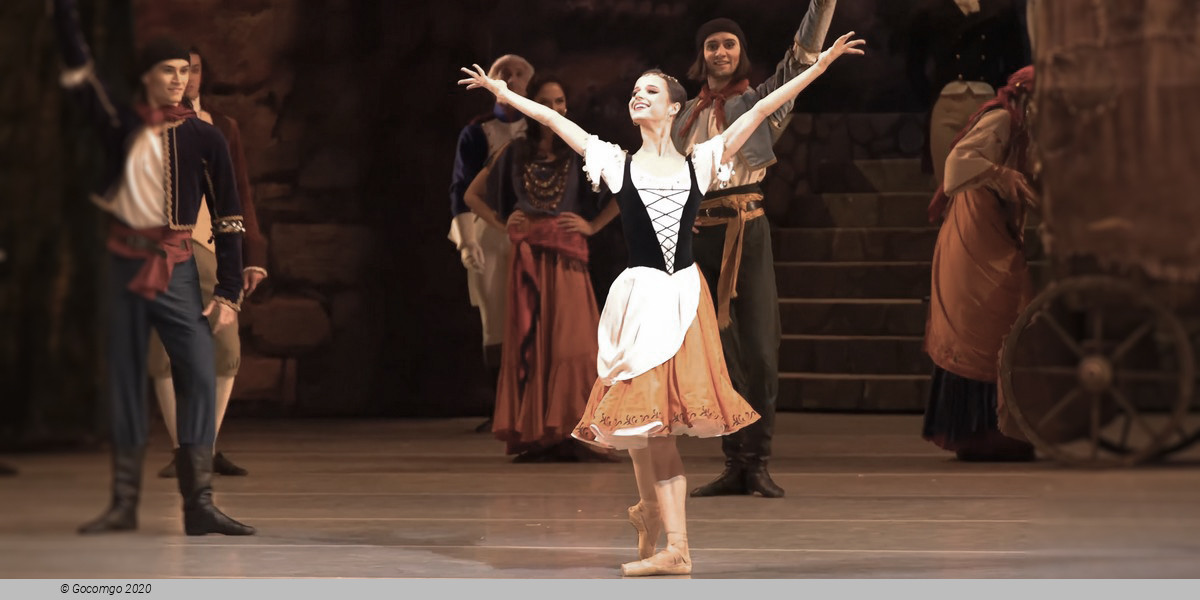
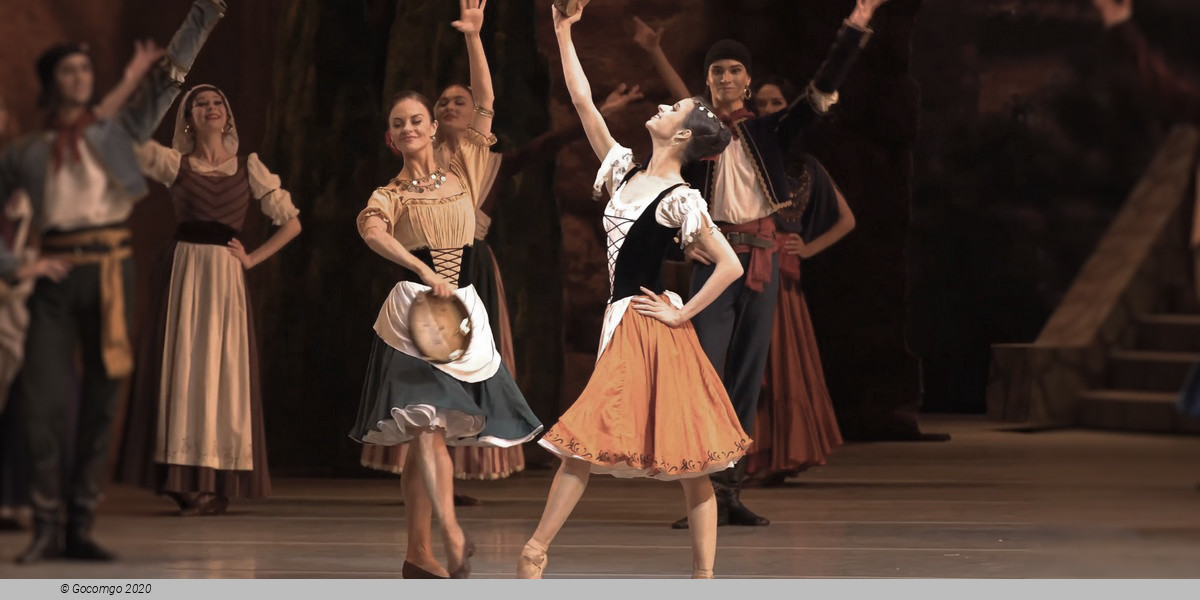
The story takes place in Spain during the presence of Napoleon's army. The heroine is the young gypsy girl, Paquita. Unbeknownst to Paquita, she is really of noble birth, having been abducted by gypsies when she was an infant. She saves the life of a young French officer, Lucien d'Hervilly, who is the target of a Spanish governor who desires to have him killed by Iñigo, a gypsy chief. By way of a medallion she discovers that she is of noble birth, being in fact the cousin of Lucien. As such, she and the Officer are able to get married.

Venue Info

Shanghai Grand Theatre - Shanghai
Location   300 Renmin Ave, Ren Min Guang Chang

The Shanghai Grand Theatre is one of the largest and best-equipped automatic stages in the world. Since the theatre opened on August 27, 1998, it has staged over 6,000 performances of operas, musicals, ballets, symphonies, chamber music concerts, spoken dramas and various Chinese operas.

The site is located at the intersection of Central Boulevard and Huangpi Road South in the northern part of the People's Square in Huangpu District, Shanghai. It is the home of the Shanghai Opera House Company; however, the title "Shanghai Opera House" officially applies to only the performing company and not to the building. The Shanghai Grand Theatre is also the resident for other performing companies.

Shanghai Grand Theater actively combines domestic and foreign performing arts and production resources and presents world classics to Chinese audiences in the way of its own after integrating national elements and characteristics. It has successively cooperated with Shanghai Shaoxing Opera House, Shanghai Ballet Company, Shanghai Opera House, Shanghai Peking Opera House, Salzburg Music Festival in Austria, Budapest Grand Art Palace in Hungary, and The Royal Opera House in Britain to launch various types of performances, such as operas, ballets, and dramas. The mode of adding Chinese elements to the world excellent culture has played a vital role in promoting Shanghai's cultural originality and creativity as well as the spirit of the times.

Architecture

The Grand Theatre building is a landmark for the city Shanghai. With a total investment of 1.2 billion RMB, an area of 2.1 hectares and a total construction area of 70,000 sq. meters, SGT is home to three theatres inside: the Lyric Theatre with 1,800 seats, the drama theatre that can seat 600 and the studio theatre of 300 seats. All sound and lighting devices were sourced from world famous suppliers. The stage in the Lyric Theatre, which has an area of about 1,700 square meters, including main stage, rear stage and left/right side stages, is one of the world’s biggest, best equipped and most versatile automatic mechanical stages. Supporting facilities of the Theatre include the SGT Arc Banquet Hall (Sky Ball Room), Maxim’s, Box Office and a big underground parking lot.

The building’s distinctive architectural style was designed by ARTE Charpentier, a famous architecture design company founded by French architect Jean-Marie Charpentier. And its interior was designed by STUDIOS Architecture. When the night falls, the light installations around the build make the site’s entire exterior resemble a crystal palace.

Important Info
Type: Ballet
City: Shanghai, China
Starts at: 19:30
Top of page