Stanislavsky Music Theatre tickets 14 July 2026 - Molière Passion, or The Mask of Don Juan. Performed by Boris Eifman ballet | GoComGo.com

Molière Passion, or The Mask of Don Juan. Performed by Boris Eifman ballet

Stanislavsky Music Theatre, Moscow, Russia
All photos (6)
Select date and time
7 PM
Request for Tickets
Important Info
Type: Modern Ballet
City: Moscow, Russia
Starts at: 19:00
Acts: 2
Intervals: 1
Duration: 2h

E-tickets: Print at home or at the box office of the event if so specified. You will find more information in your booking confirmation email.

You can only select the category, and not the exact seats.
If you order 2 or 3 tickets: your seats will be next to each other.
If you order 4 or more tickets: your seats will be next to each other, or, if this is not possible, we will provide a combination of groups of seats (at least in pairs, for example 2+2 or 2+3).

Cast
Performers
Creators
Composer: Hector Berlioz
Composer: Jean-Baptiste Lully
Composer: Wolfgang Amadeus Mozart
Choreographer: Boris Eifman
Overview

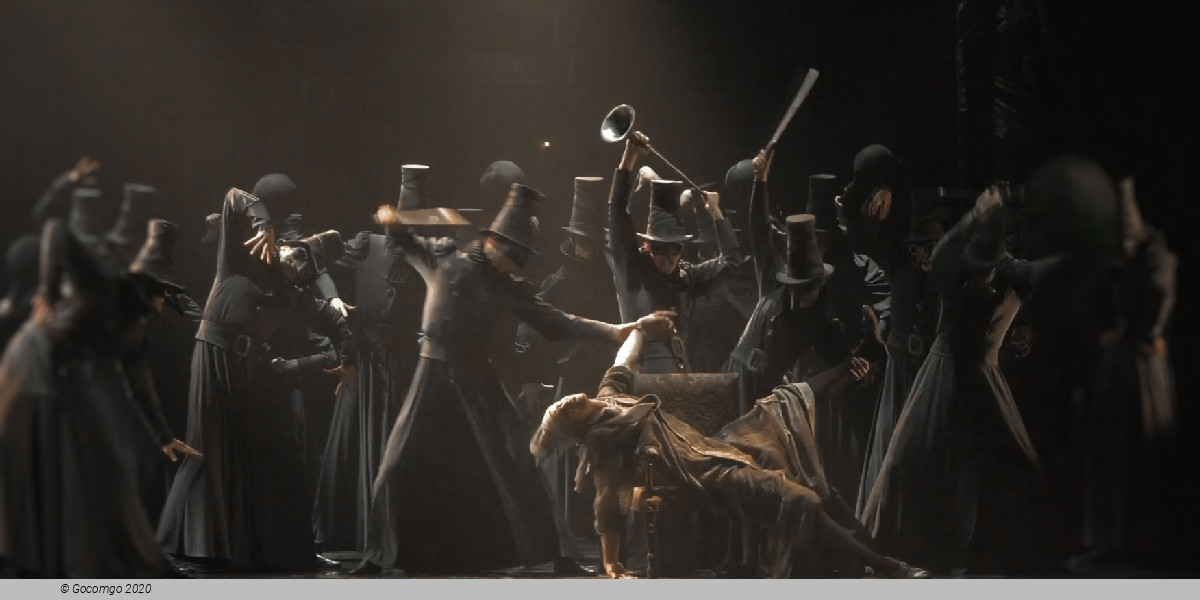
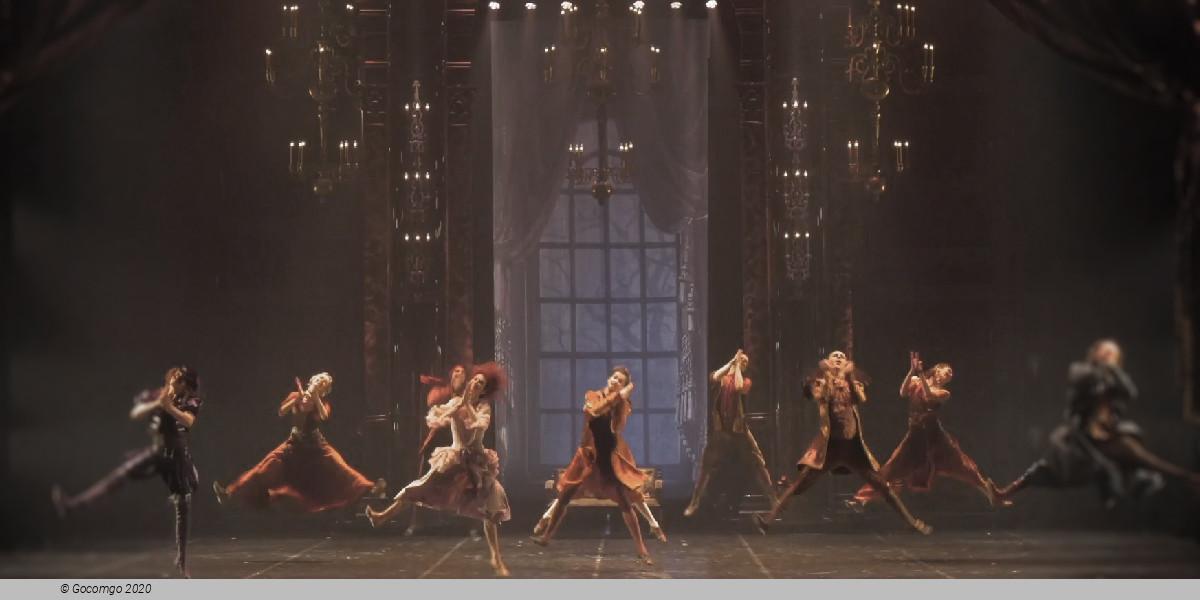
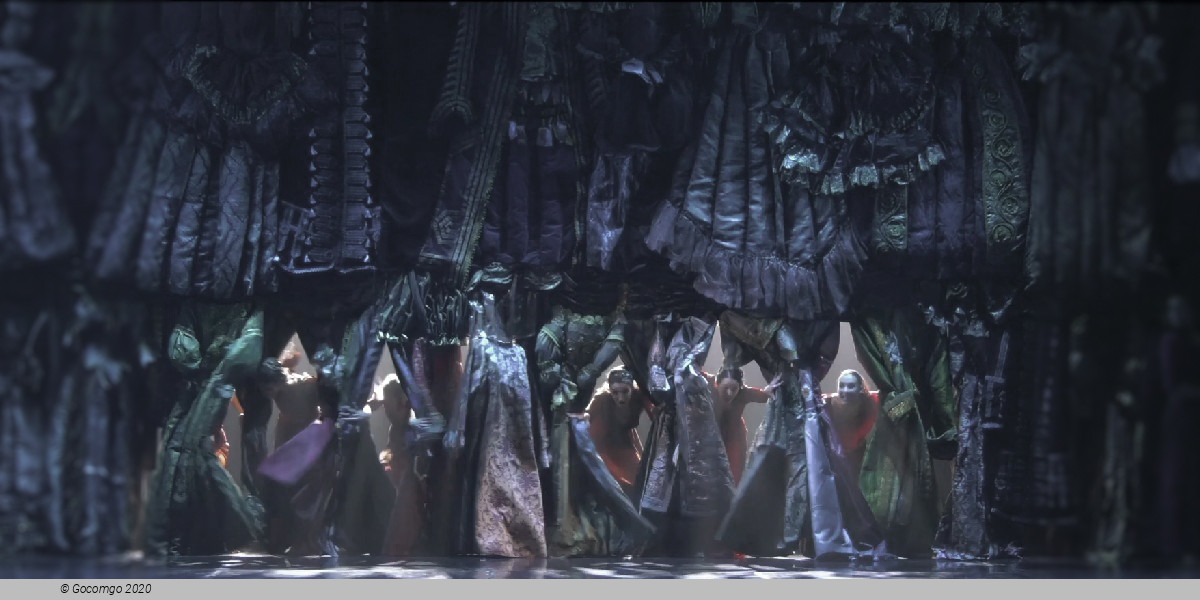
Colourful sets, well thought-through costumes, a dynamic lighting design effectively underscore the dramatic contrast between the alluring world of stage and the miserable daily routine of the creator.

In this production of Molière Passion, or The Mask of Don Juan Boris Eifman explores for the second time the life story and artistic universe of the famous comedy dramatist. Similarly to the production of Don Juan & Molière, presented to the public in 2001 (which, according to The New York Times’s dance critic Anna Kisselgoff, surpassed all of the choreographer’s pervious works), the new ballet draws its dramatic energy from the contradictory unity of the theatre and the reality, from the complex, sometimes paradoxical relationship between the author and his characters. However, this time Eifman depicts the multifaceted personality of the French writer and actor even more expressively.

The audience is taken beyond the theatre curtain and gets an insight into the kind of “trash” of scheming, anguish and concerns that paves the path of immortal comedies. The choreographer sees Molière, who created his own theatre, as the artist closest to himself.

St. Petersburg Eifman Ballet production

Synopsis

Act 1

The life of a brilliant playwright Jean-Baptiste Molière is nearing its end. Although terminally ill, he continues to write.

His wife Armande, who is cheating on her husband with yet another admirer, interrupts his intense work. Molière’s reminiscences take him back to the days of his youth.

Busy routine of the theatre company touring the provinces of France. The theatre manager Jean-Baptiste runs rehearsals with actors, smoothes out erupting squabbles, and performs on stage. His true friend and a gifted actress Madeleine is always at his side. Her adolescent daughter Armande is also there, among the performers.

The nomadic theatre family seeks its fortune in the capital. Glamour and luxury of Paris are intoxicating. The premiere of L’École des femmes at the Palais-Royal – the long-awaited playhouse – is a success. The company pays tribute to their director Molière.

It is a sad return to reality, to his unfaithful Armande, for the elderly Jean-Baptiste. What bitter pain causes him this flirting creature! And only memories of the past happiness with Madeleine restore his wounded soul...

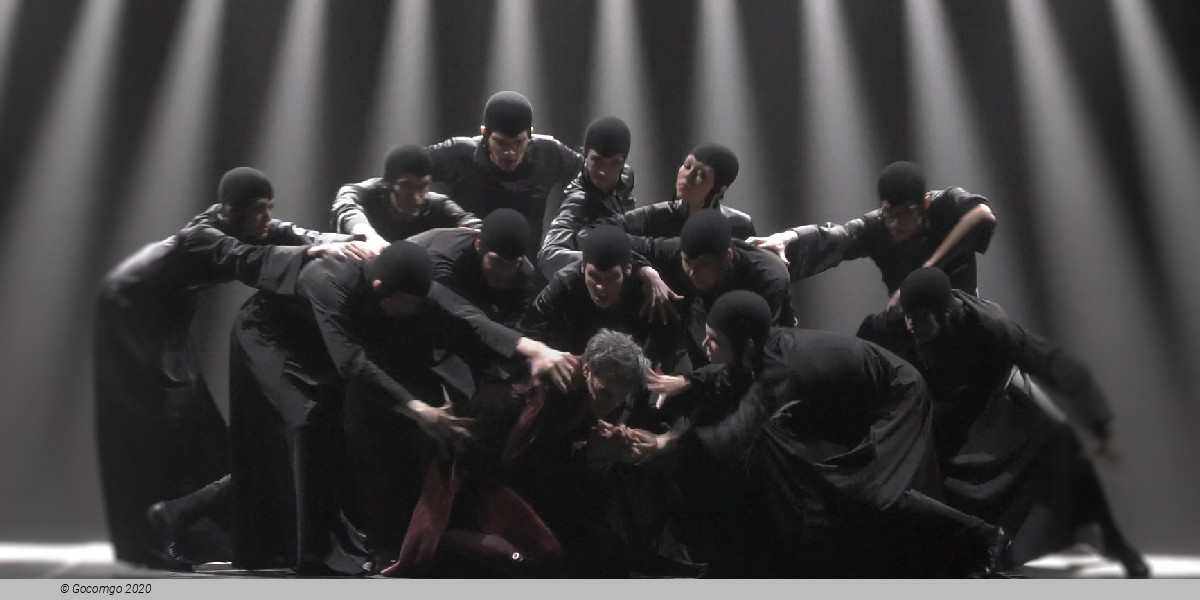
New concepts seek expression on paper. Molière’s Tartuffe ruthlessly condemns bigotry and hypocrisy of the contemporary society. His challenging play infuriates moral crusaders, and their revenge is not far behind. Only the patronage of Louis XIV saves the playwright.

Armande becomes Jean-Baptiste’s lover. Madeleine leaves the theatre. Armande and Molière get married.

Act 2

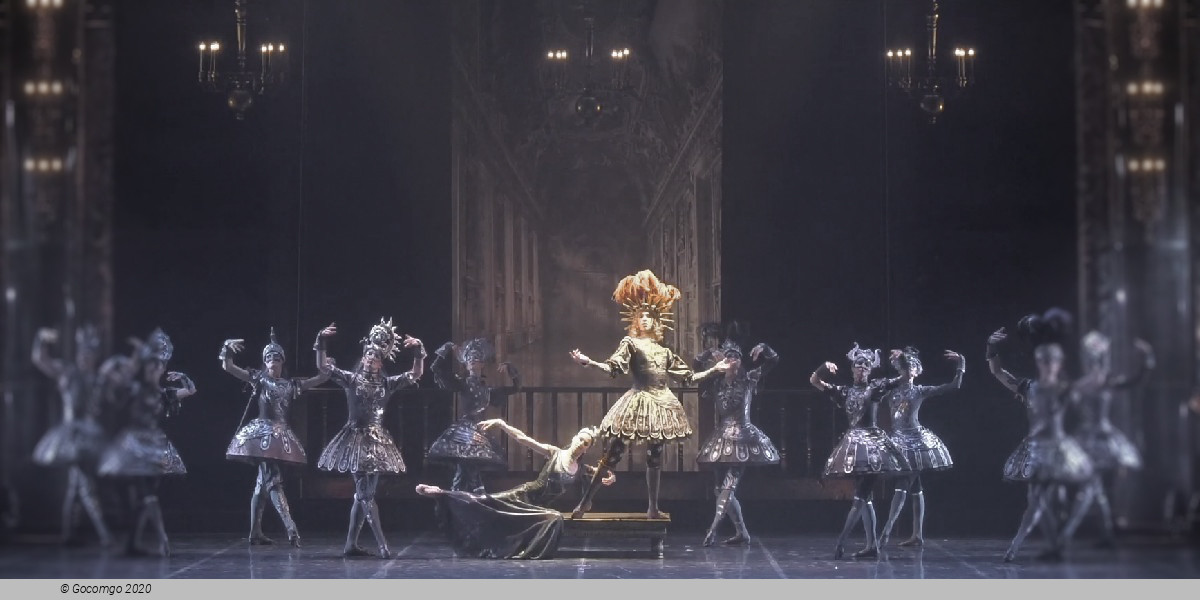
A magnificent court performance is prepared by Jean-Baptiste. The King appears on stage as the Sun, Armande – as the Moon.

His wife’s frivolous behaviour distresses Molière, who is powerless of changing anything. The author of comedies finds consolation in his creative fantasies. Wishing revenge against abhorrent fops who destroy families, Molière presents a play about Don Juan.

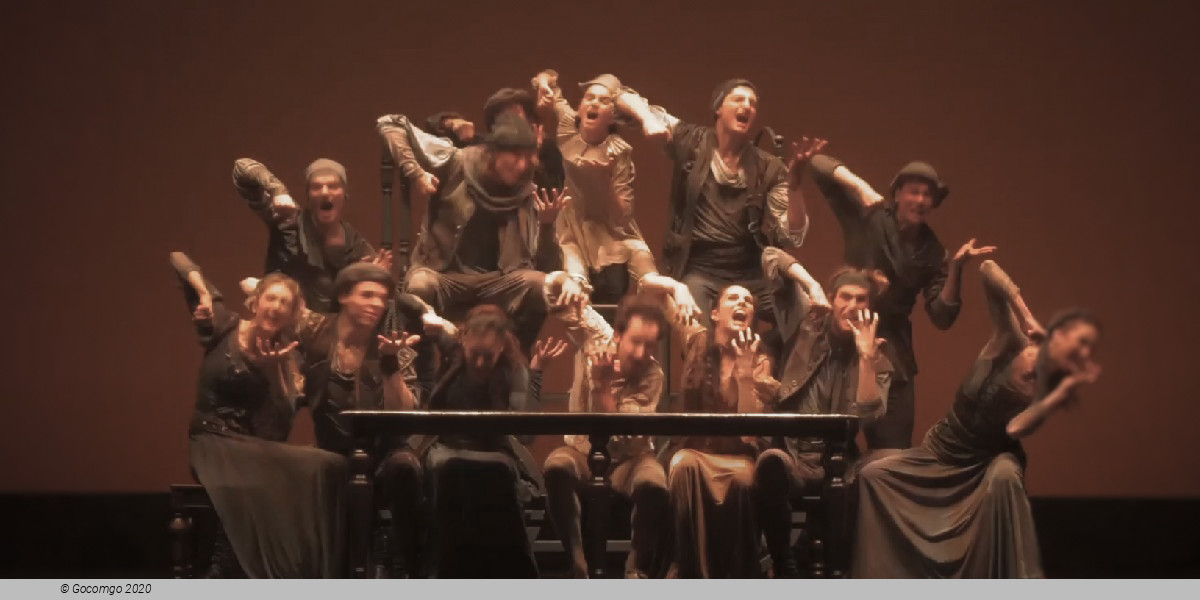
Jean-Baptiste’s pen makes the conqueror of ladies’ hearts a prey of two tenacious peasant women.

A wall of estrangement grows between Molière and Armande. A peaceful image of the past, when Jean-Baptiste, Madeleine and Armande have been together, becomes all the more poignant in comparison.

A ball in the Commander’s castle. Don Juan is among the guests. The noble Commander’s love for his wife Donna Anna makes the devious tempter jealous. The host and his spouse perish in the fight with Don Juan.

A noisy shindig distracts Jean-Baptiste from his writing. Armande is, as always, surrounded by her suitors.

In his nightmarish hallucinations Molière sees himself as a cuckold. Delusions are replaced by mockery.

The play about Don Juan is again on stage. Molière plays the role of Sganarelle, Don Juan’s servant. Armande plays the seduced nun Elvira. In the finale Heaven itself punishes the reprobate destined for the inferno.

Molière is horrified by Don Juan. Nonetheless, his craving to follow the path of the great sinner, which is filled with pleasures, to conquer Armande with the force of a diabolical spell, is too strong. In his dreams Jean-Baptiste transforms into his own creation and revels in Don Juan’s demonic power.

The production is banned; the bailiffs seize the assets of the theatre. Molière’s body is shaking with dreadful fits of coughing. But Jean-Baptiste turns even his own slow decline into a comedy, which mocks charlatan doctors.

Madeleine comes to Molière in his final joyous vision. Royal favour is withdrawn. The vulnerable author is exposed to persecution.

Death leads Molière to immortality.

Venue Info

Stanislavsky Music Theatre - Moscow
Location   B. Dmitrovka, 17

The Stanislavski and Nemirovich-Danchenko Moscow Academic Music Theatre is a music theatre in Moscow.

The Stanislavsky and Nemirovich-Danchenko Moscow Academic Music Theatre was founded in 1941 when two companies directed by the legendary reformers of twentieth-century theatre — Konstantin Stanislavski and Vladimir Nemirovich-Danchenko — merged: the Stanislavsky Opera Theatre (established at the end of 1918 as an Opera Studio of the Bolshoi Theatre) and the Nemirovich-Danchenko Music Theatre (set up in 1919 as a Studio of the Moscow Art Theatre).

The new theatre followed the artistic principles of its founders, who applied the system of the Moscow Art Theatre to opera and ballet. Both Stanislavsky and Nemirovich-Danchenko rejected the current conception of opera as "costume concert". They wanted to bring it closer to drama and comedy, revealing the main idea of the plot through psychologically motivated action. The ballet company entered the Theatre as a part of Nemirovich-Danchenko's troupe. It was the former company of the Moscow Art Ballet, established in 1929 by Victorina Krieger, the valued ballerina of the Bolshoi Theatre. She was Artistic Director and one of the principal dancers of the Moscow Art Ballet. Soon after Stanislavsky's death, Nemirovich-Danchenko took charge of all the companies (Vsevolod Meyerhold invited by Stanislavsky to work for his theatre, was arrested in 1939, and no other stage director could prove equal to Nemirovich-Danchenko). Then the theatre was given its present name.

Important Info
Type: Modern Ballet
City: Moscow, Russia
Starts at: 19:00
Acts: 2
Intervals: 1
Duration: 2h
Top of page