
Teatro Dell'Opera Di Roma tickets 24 April 2027 - Iphigénie en Tauride | GoComGo.com

Iphigénie en Tauride

Teatro Dell'Opera Di Roma, Teatro Costanzi, Rome, Italy
All photos (4)
Select date and time
4:30 PM
From
US$ 94

E-tickets: Print at home or at the box office of the event if so specified. You will find more information in your booking confirmation email.

You can only select the category, and not the exact seats.
If you order 2 or 3 tickets: your seats will be next to each other.
If you order 4 or more tickets: your seats will be next to each other, or, if this is not possible, we will provide a combination of groups of seats (at least in pairs, for example 2+2 or 2+3).

Important Info
Type: Opera
City: Rome, Italy
Starts at: 16:30

E-tickets: Print at home or at the box office of the event if so specified. You will find more information in your booking confirmation email.

You can only select the category, and not the exact seats.
If you order 2 or 3 tickets: your seats will be next to each other.
If you order 4 or more tickets: your seats will be next to each other, or, if this is not possible, we will provide a combination of groups of seats (at least in pairs, for example 2+2 or 2+3).

Cast
Performers
Baritone: Alessio Arduini (Oreste)
Soprano: Axelle Fanyo (Iphigénie)
Bass-Baritone: Jean-Fernand Setti (Thoas)
Tenor: Julien Behr (Pylade)
Choir: Teatro dell`Opera di Roma Chorus
Creators
Composer: Christoph Willibald Gluck
Author: Claude Guimond
Librettist: Nicolas-François Guillard
Director: Robert Carsen
Opera Company: Teatro dell’Opera di Roma
Overview

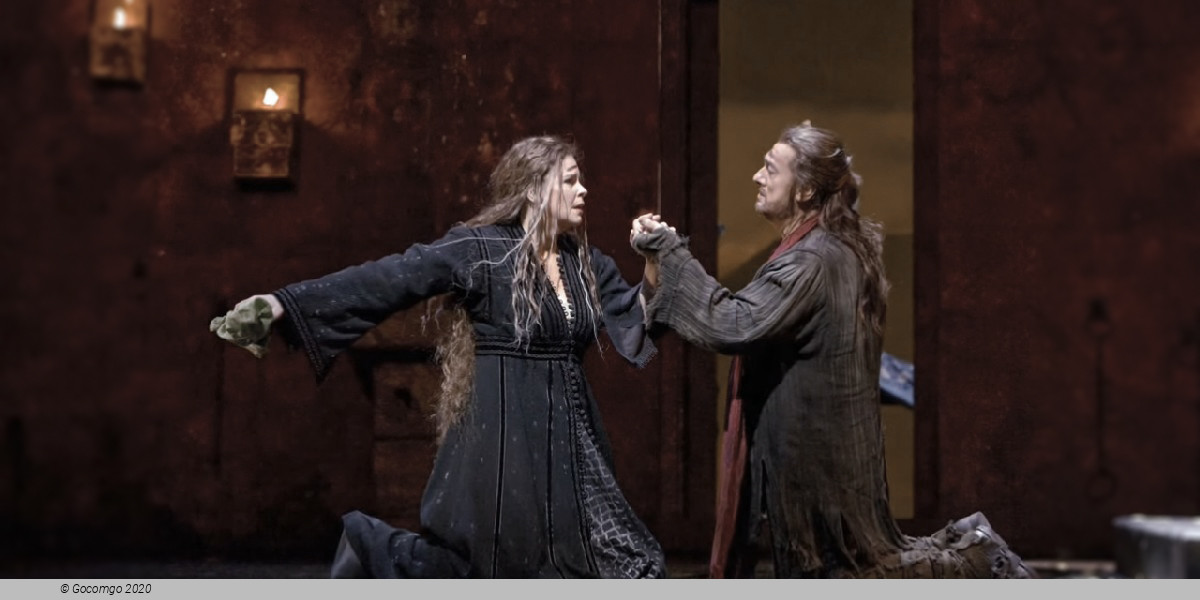
Iphigénie en Tauride is a four-act lyric tragedy by Christoph Willibald Gluck, following Iphigénie as she faces fate, sacrifice, and a devastating encounter with her brother Oreste. The production is directed by Robert Carsen and conducted by Alessandro De Marchi, performed in the original language with Italian and English surtitles.

History
Premiere of this production: 18 May 1779, Paris Opéra

Iphigénie en Tauride (Iphigenia in Tauris) is a 1779 opera by Christoph Willibald Gluck in four acts. It was his fifth opera for the French stage. The libretto was written by Nicolas-François Guillard. The drama is ultimately based on the play Iphigenia in Tauris by the ancient Greek dramatist Euripides which deals with stories concerning the family of Agamemnon in the aftermath of the Trojan War.

Synopsis

Act 1
Scene: The entrance hall of the temple of Diana in Tauris.

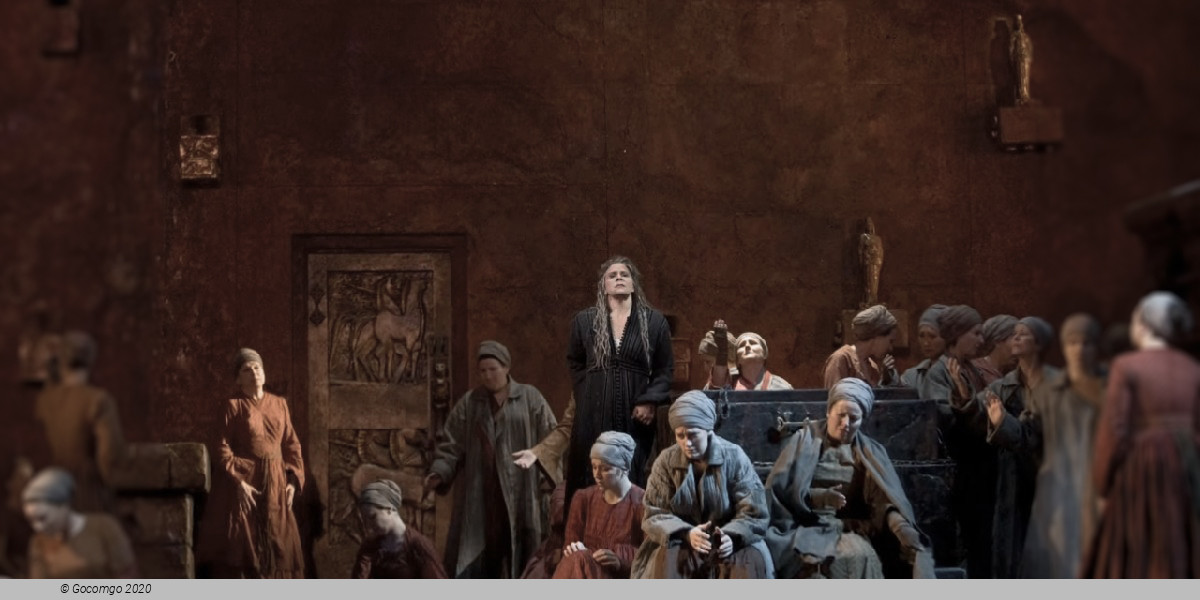
There is no overture; the opera begins with a short passage evoking calm before turning into a depiction of a great storm at sea. Iphigenia, sister of Orestes, is the high priestess of Diana in the temple of Tauris, having been transported there magically by the goddess when her father Agamemnon attempted to offer her as a sacrifice. Iphigenia and her priestesses beg the gods to protect them from the storm (Grands dieux! soyez nous secourables).

Although the storm dies down, Iphigenia remains troubled by a dream she has had, in which she envisioned her mother Clytaemnestra murdering her father, then her brother Orestes killing her mother, and finally her own hand stabbing her brother. She prays to Diana to reunite her with Orestes (Ô toi qui prolongeas mes jours). Thoas, King of Tauris, enters. He too is obsessed with dark thoughts (De noirs pressentiments): the oracles, he tells her, predict doom for him if a single stranger escapes with his life. (The custom of the Scythians, who inhabit Tauris, is to ritually sacrifice any who are shipwrecked on their shores).

A chorus of Scythians comes bringing news of two young Greeks who have just been found shipwrecked, demanding their blood (Il nous fallait du sang). After Iphigenia and the priestesses depart, Thoas brings in the Greeks, who turn out to be Orestes and his friend Pylades. After asking them for what purpose they came (they have come to retrieve Diana's statue and return it to Greece, though they do not divulge this), Thoas promises them death and has them taken away.

Act 2
Scene: An inner chamber of the temple

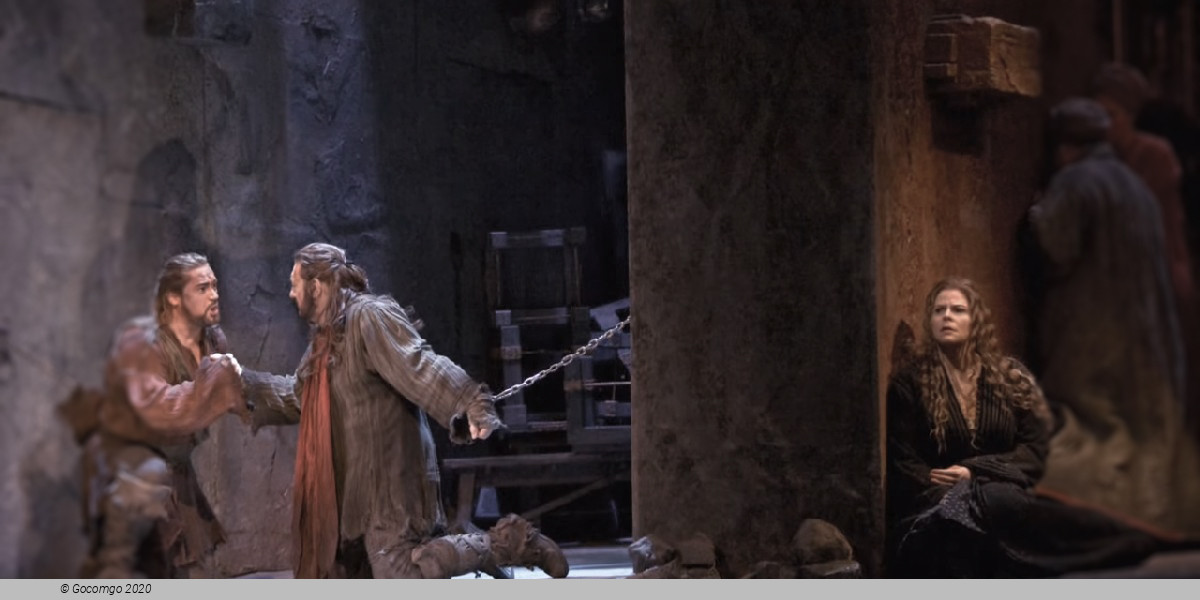
Orestes and Pylades languish in chains. Orestes berates himself for causing the death of his dear friend (Dieux qui me poursuivez), but Pylades assures him that he does not feel dispirited because they will die united (Unis dès la plus tendre enfance). A minister of the sanctuary comes to remove Pylades. Orestes half falls asleep (Le calme rentre dans mon coeur), but he is tormented by visions of the Furies, who wish to avenge his slaying of his mother (whom Orestes killed for murdering his father Agamemnon).

Iphigenia enters and, although the two do not recognize each other, Orestes sees an astonishing likeness between her and the slain Clytaemnestra seen in his dream. She questions him further, asking him the fate of Agamemnon and all Greece, and he tells her of Agamemnon's murder by his wife, and the wife's murder by her son. In agitation, she asks of the fate of the son, and Orestes says that the son found the death he had long sought, and that only their sister Electra remains alive. Iphigenia sends Orestes away and with her priestesses laments the destruction of her country and the supposed death of her brother (Ô malheureuse Iphigénie). She and the priestesses perform a funeral ceremony for Orestes (Contemplez ces tristes apprêts).

Act 3
Scene: Iphigenia's chamber

Iphigenia is drawn to the stranger who reminds her of her brother Orestes (D'une image, hélas! trop chérie). She tells Orestes and Pylades she can persuade Thoas to save one of them from the sacrifice (Je pourrais du tyran tromper la barbarie) and asks the one who is spared to carry word of her fate to her sister Electra in Argos. Both men readily agree, and Iphigenia chooses Orestes to survive.

But on her exit, Orestes insists that Pylades agree to switch places with him as Orestes cannot bear the thought of his friend's death and sees dying as an escape from his own madness; Pylades, on the contrary, is glad at the thought of dying so Orestes can live (Duet: Et tu prétends encore que tu m'aimes and aria for Pylades: Ah! mon ami, j'implore ta pitié!). When Iphigenia returns, Orestes insists that she reverse her decision, threatening to kill himself before her eyes if she does not. Reluctantly, she agrees to spare Pylades instead and sends him to carry her message to Electra. Everyone but Pylades departs, and he closes the act by promising to do everything possible to save Orestes (Divinité des grandes âmes!).

Act 4
Scene: Inside the temple of Diana

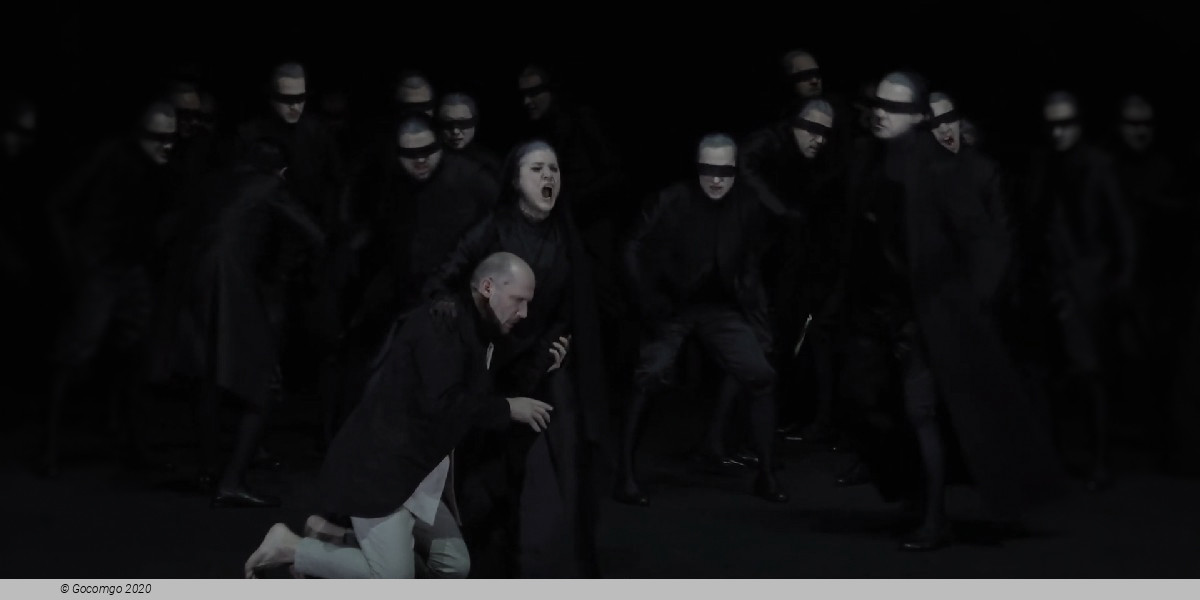
Iphigenia wonders how she can ever carry out the killing of Orestes, since somehow her soul shrinks from the thought of it. She asks the goddess Diana to help her steel herself for the task (Je t'implore et je tremble). The priestesses bring in Orestes, who has been prepared for sacrifice (Chorus: Ô Diane, sois nous propice). He tells her not to lament him, but to strike, telling her it is the will of the gods. The priestesses sing a hymn to Diana as they lead Orestes to the altar (Chorus: Chaste fille de Latone). While she wields the knife, Orestes exclaims Iphigenia's name, leading her and the priestesses to recognize him and stop the ritual slaughter.

The happy reunion of sister and brother is cut short at news that Thoas is coming, having heard that one of the captives was released and intent on the blood of the other. The king enters wildly, ordering his guards to seize Orestes and promising to sacrifice both him and his sister. At that moment Pylades enters with a band of Greeks, cutting down Thoas where he stands.

The resulting rout of the Scythians by the Greeks is halted by a dea ex machina appearance of Diana, who commands the Scythians to restore her statue to Greece (Arrêtez! Écoutez mes décrets éternels). She also issues pardon to Orestes for murdering his mother, sending him to be king over Mycenae and bidding him restore Iphigenia to her country. As Diana is carried back into the clouds, everyone sings a concluding chorus of rejoicing at having the favor of earth and heaven restored to them (Les dieux, longtemps en courroux).

Venue Info

Teatro Dell'Opera Di Roma - Rome
Location   Piazza Beniamino Gigli

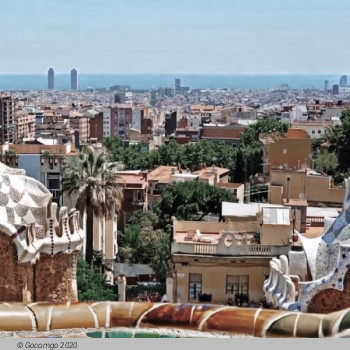
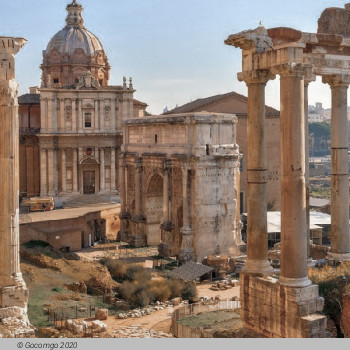
The Teatro dell'Opera di Roma is a major opera house in Rome. Originally opened in November 1880 as the 2,212-seat Costanzi Theatre, it has undergone several changes of name as well modifications and improvements. The present house seats 1,600.  Over one hundred years of success have brought the most acclaimed voices, the most prestigious sticks, and the notes of musicians who have marked its destiny to the Teatro dell'Opera di Roma: Pietro Mascagni, Giacomo Puccini, Ottorino Respighi, have delivered it to the honors of history of Italian melodrama as the cradle of 20th-century opera and musical theater.

Original Teatro Costanzi: 1880 to 1926
The Teatro dell'Opera was originally known as the Teatro Costanzi after the contractor who built it, Domenico Costanzi (1819–1898). It was financed by Costanzi, who commissioned the Milanese architect Achille Sfondrini (1836–1900), a specialist in the building and renovation of theatres. The opera house was built in eighteen months, on the site where the house of Heliogabalus stood in ancient times, and was inaugurated on 27 November 1880 with a performance of Semiramide by Gioachino Rossini.

Designing the theatre, Sfondrini paid particular attention to the acoustics, conceiving the interior structure as a "resonance chamber", as is evident from the horseshoe shape in particular. With a seating capacity of 2,212, the house had three tiers of boxes, an amphitheater, and two separate galleries, surmounted by a dome adorned with splendid frescoes by Annibale Brugnoli.

Costanzi was obliged to manage the theater himself. Under his direction, and despite financial problems, the opera house held many world premieres of operas, including Cavalleria Rusticana by Pietro Mascagni on 17 May 1890. For a brief period, the theatre was managed by Costanzi's son, Enrico, who gained renown by organizing another great premiere, that of Tosca by Giacomo Puccini on 14 January 1900.

In 1907, the Teatro Costanzi was purchased by the impresario Walter Mocchi (1871–1955) on behalf of the Società Teatrale Internazionale e Nazionale (STIN). In 1912 Mocchi's wife, Emma Carelli, became the managing director of the new Impresa Costanzi, as the theatre was later known, following various changes in the company structure. During the fourteen years of her tenure, major works which had not been performed before in Rome (or even in Italy) were staged. These included La fanciulla del West, Turandot and Il trittico by Giacomo Puccini; Parsifal by Richard Wagner; Francesca da Rimini (Zandonai) by Riccardo Zandonai; Boris Godunov by Modest Mussorgsky; Samson et Dalila by Camille Saint-Saëns and many others. Diaghilev's Ballets Russes also performed.

Restructured Teatro Reale dell'Opera: 1926 to 1946
In November 1926 the Costanzi was bought by the Rome City Council and its name changed to Teatro Reale dell'Opera. A partial rebuilding ensued, led by architect Marcello Piacentini and lasting fifteen months. The house re-opened on 27 February 1928 with the opera Nerone by Arrigo Boito.

Chief among several major changes was the relocated entrance, from the street formerly known as Via del Teatro (where the garden of the Hotel Quirinale is now) to the opposite side, where Piazza Beniamino Gigli exists today. In addition, the amphitheater inside the theatre was replaced by the fourth tier of boxes (now the third tier) and a balcony. The interior was embellished by new stuccowork, decorations, and furnishings, including a magnificent chandelier measuring six meters in diameter and composed of 27,000 crystal drops.

Above the proscenium arch is a plaque commemorating the rebuilding: "Vittorio Emanuele III Rege, Benito Mussolini Duce, Lodovicus Spada Potenziani, Romae Gubernator Restituit MCMXXVIII—VI”". Confusingly the dates appear to be back to front. (The VI refers to the sixth year after the Fascist's March on Rome of 1922.)

Present Teatro dell'Opera di Roma: from 1946
Following the end of the monarchy, the name was simplified to Teatro dell'Opera and, in 1958, the building was again remodeled and modernized. Rome City Council again commissioned architect Marcello Piacentini, who radically altered the building's style, notably with regard to the facade, entrance, and foyer, each of these taking the form we know today.

The theater's legendary acoustics still bear comparison with any other auditorium in the world. The seating capacity is about 1,600. The house was retrofitted with air-conditioning subsequent to a restoration, which provided improvements to the interior. The stucco work was completely restored, the great proscenium arch strengthened, and a parquet floor of solid oak blocks laid to replace the previous one.

On 2 January 1958, the theater was the venue for a controversial performance of Norma starring Maria Callas in the presence of the President of Italy: for health reasons, Callas abandoned the performance after the first act (the opera company had not engaged an understudy).

The post-war period saw celebrated productions, including Mozart's Le nozze di Figaro in 1964 and Verdi's Don Carlo in 1965, both conducted by Carlo Maria Giulini and directed by Luchino Visconti.

In the 1950s and 1960s, the Director was Riccardo Vitale (father of actress Milly Vitale).

In 1992, Gian Carlo Menotti was appointed Artistic Director of the Teatro dell'Opera di Roma, a post he maintained for two years before being asked to resign over conflicts with the theatre's managers involving Menotti's insistence on staging Wagner's Lohengrin.

From 2001 to 2010, the music director and chief conductor of the company were Gianluigi Gelmetti. He was due to be succeeded in these posts by Riccardo Muti, as announced in August 2009, but Muti demurred, citing in La Repubblica in October 2010 "general difficulties that are plaguing the Italian opera houses". Later, Muti assumed a role similar to that of a music director but without a title. Notable productions under Muti have included Gluck's Iphigénie en Aulide (2009), Verdi's Nabucco (2011), Simon Boccanegra (2012), and Ernani (2013).

Daniele Gatti was first guest-conducted with the company during the 2016–2017 season. He returned for subsequent guest engagements in each of the following two seasons. In December 2018, the company announced the appointment of Gatti as its new music director, with immediate effect. Gatti is scheduled to stand down as the company's music director on 31 December 2021. In June 2021, the company announced the appointment of Michele Mariotti as its next music director, effective 1 November 2022, with an initial contract of 4 years.

Important Info
Type: Opera
City: Rome, Italy
Starts at: 16:30
Top of page