
Teatro Dell'Opera Di Roma tickets 23 September 2027 - La rondine | GoComGo.com

La rondine

Teatro Dell'Opera Di Roma, Teatro Costanzi, Rome, Italy
All photos (6)
Select date and time
6 PM
From
US$ 94

E-tickets: Print at home or at the box office of the event if so specified. You will find more information in your booking confirmation email.

You can only select the category, and not the exact seats.
If you order 2 or 3 tickets: your seats will be next to each other.
If you order 4 or more tickets: your seats will be next to each other, or, if this is not possible, we will provide a combination of groups of seats (at least in pairs, for example 2+2 or 2+3).

Important Info
Type: Opera
City: Rome, Italy
Starts at: 18:00

E-tickets: Print at home or at the box office of the event if so specified. You will find more information in your booking confirmation email.

You can only select the category, and not the exact seats.
If you order 2 or 3 tickets: your seats will be next to each other.
If you order 4 or more tickets: your seats will be next to each other, or, if this is not possible, we will provide a combination of groups of seats (at least in pairs, for example 2+2 or 2+3).

Cast
Performers
Tenor: Francesco Meli (Ruggero Lastouc)
Baritone: Bruno Taddia (Rambaldo)
Soprano: Ermonela Jaho (Magda de Civry)
Tenor: Matteo Mezzaro (Prunier)
Soprano: Rosalía Cid (Lisette)
Choir: Teatro dell`Opera di Roma Chorus
Creators
Composer: Giacomo Puccini
Director: Andrea Bernard
Librettist: Giuseppe Adami
Opera Company: Teatro dell’Opera di Roma
Overview

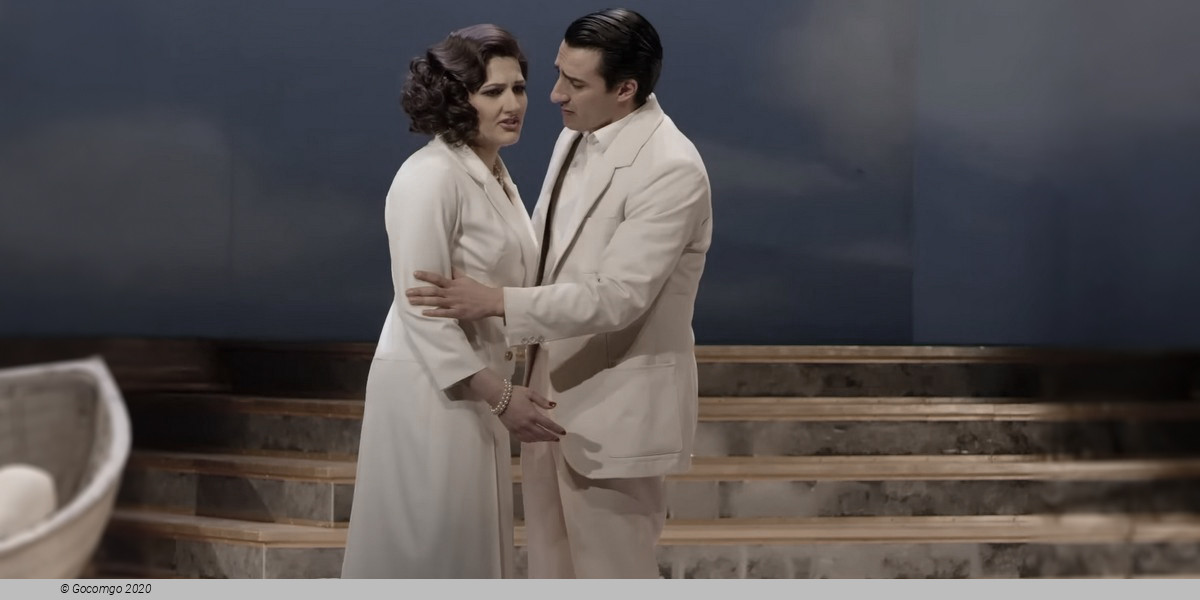
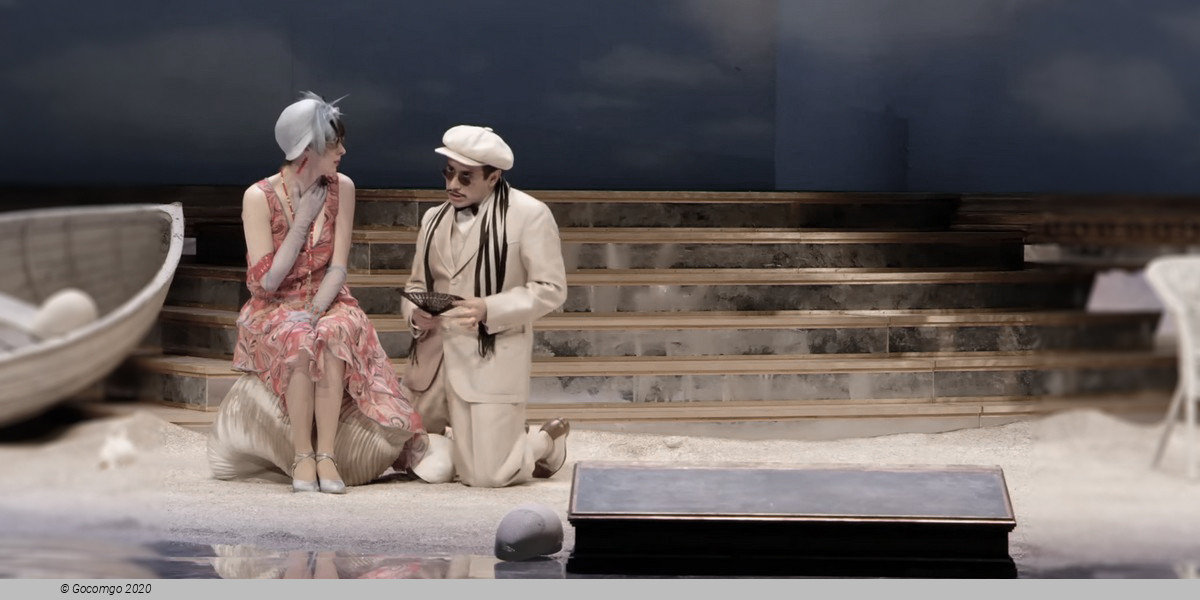
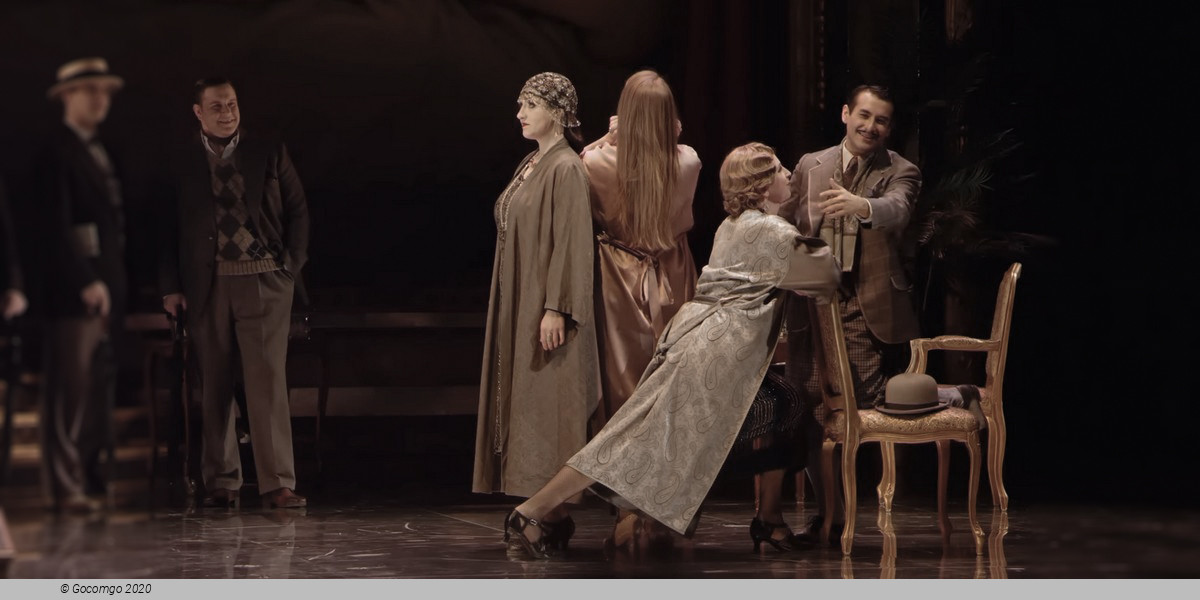
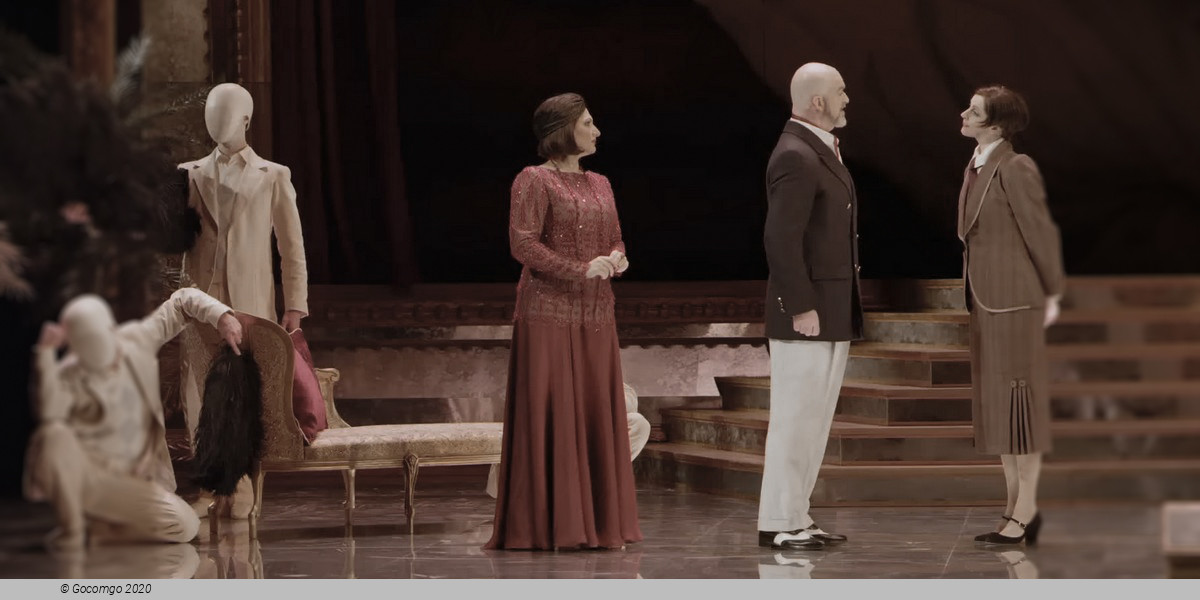
La rondine is Puccini’s bittersweet lyrical comedy about Magda, a Parisian woman who falls in love with the young Ruggero and dreams of a new life with him, but ultimately must choose between love and the life she has always known. The new Teatro dell’Opera di Roma production is directed by Andrea Bernard and conducted by Francesco Lanzillotta, starring Ermonela Jaho and Francesco Meli.

History
Premiere of this production: 27 March 1917, Grand Théâtre de Monte Carlo, Monte Carlo

La rondine (The Swallow) is an opera in three acts by Giacomo Puccini to an Italian libretto by Giuseppe Adami, based on a libretto by Alfred Maria Willner and Heinz Reichert. It was first performed at the Grand Théâtre de Monte Carlo (or the Théâtre du Casino) in Monte Carlo on 27 March 1917.

Synopsis

Place: Paris and the French Riviera.
Time: Mid-19th century.

Act 1
Magda's salon, Paris

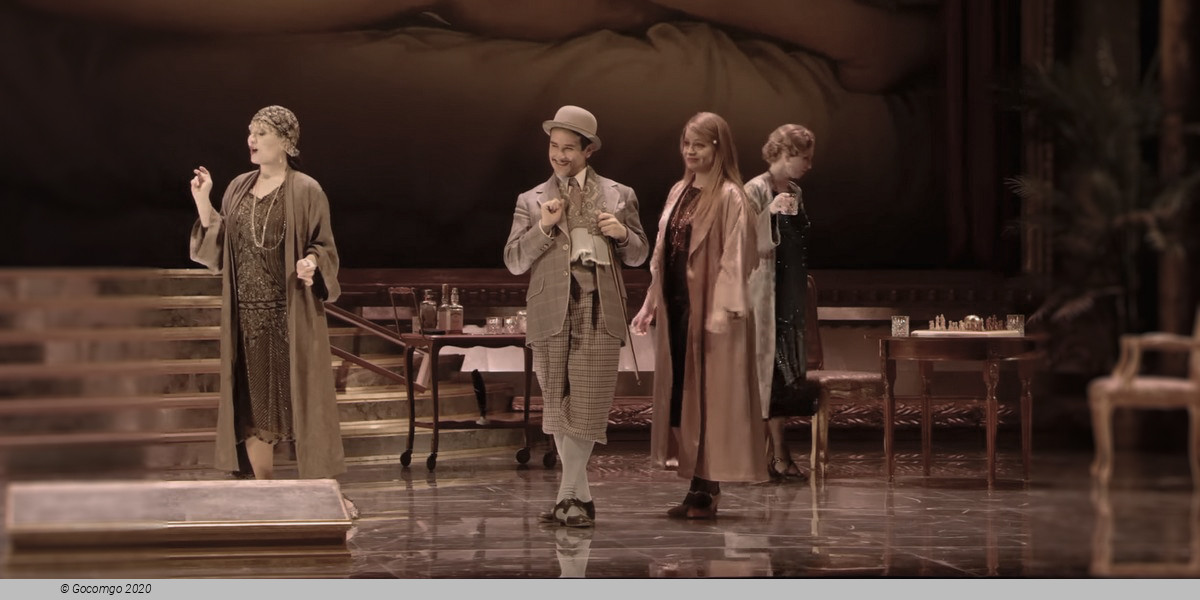
At a cocktail party hosted by the courtesan Magda, the poet Prunier expounds his theories on love. Magda's friends Yvette, Bianca and Suzy playfully mock him, while Lisette, Magda's maid, tells him he does not know what he is talking about. Prunier takes offence and Magda orders Lisette to leave. Prunier maintains that no one is immune to romantic love and sings the first verse of his latest song about Doretta, who rejected a king as her suitor because of the value she placed on true love. He does not know how to finish the song, so Magda takes over and provides the second verse: she recounts how Doretta falls in love with a student (Aria: Chi il bel sogno di Doretta). Magda's guests are charmed by her performance and her long-term protector Rambaldo gives her a pearl necklace. Lisette enters to announce the arrival of a young man – the son of an old school friend of Rambaldo. Lisette is ordered by Rambaldo to bring in the guest. Suddenly nostalgic, Magda recalls her life as a young working girl and happy evenings spent dancing at Bullier's, where she first experienced love (Aria: Ore dolci e divine). Some of the guests suggest that Prunier should compose a song based on Magda's story but he declares a preference for songs about perverse heroines, such as Berenice or Salome. Prunier demonstrates his skills at palmistry to some of the girls, while Lisette brings in the visitor, Ruggero. He has an introduction from his father for Rambaldo. Prunier reads Magda's palm and tells her that she is like a swallow: she longs for migration towards the sun and true love. Ruggero explains that it is his first visit to Paris and asks where he may find the best place to spend an evening: after much discussion, Lisette recommends Bullier's. Ruggero leaves. Magda chides the other guests for mocking him. After they too have gone, she tells Lisette that she will remain at home that evening. Then, on a whim, she determines to disguise herself and go to Bullier's as well. She goes to get changed. Prunier returns in secret to escort Lisette to Bullier's and flirts extravagantly with her. Lisette is wearing Magda's hat and Prunier tells her that he dislikes it and orders her to take it off. They then set out together. Magda re-enters, disguised as a working girl. She sings a fragment of Prunier's song about Doretta as she leaves, happily anticipating an adventure.

Act 2
Bullier's, Paris

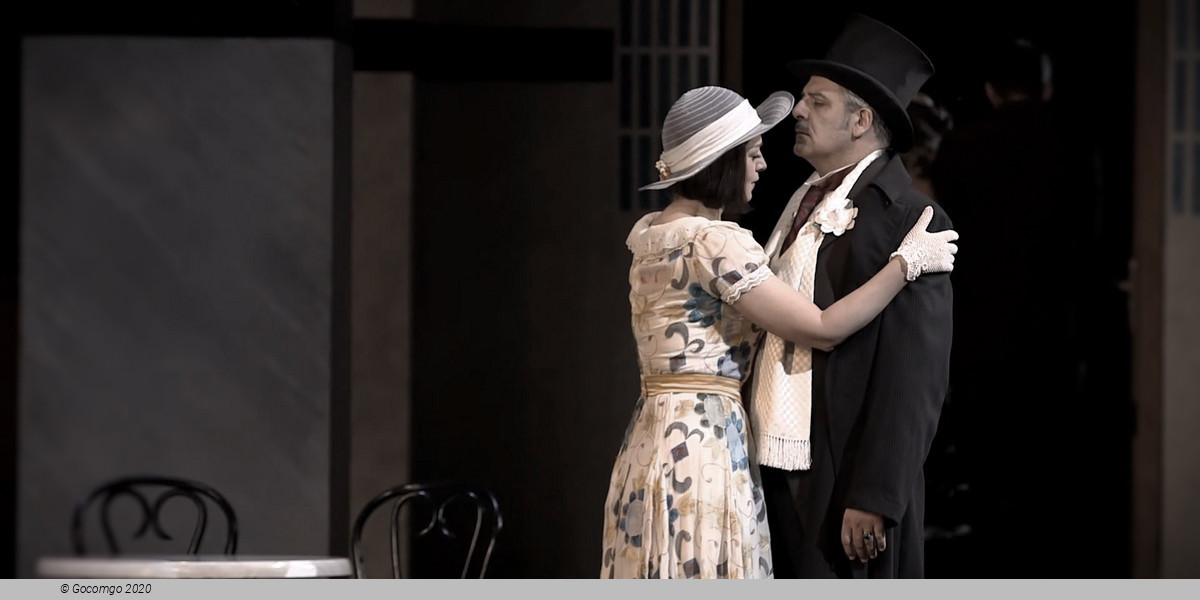
The bar is packed with students, artists and flower girls, singing and dancing. Magda enters and attracts the attention of several young men. She hurries over to a table at which Ruggero is sitting alone. She apologizes for intruding and tells him that she will move away as soon as the young men at the bar stop watching her. Ruggero, who does not recognize Magda in her disguise, asks her to stay. They chat and Ruggero tells Magda that she reminds him of the quiet and elegant girls from his home town, Montauban. They dance happily together. Prunier and Lisette enter, arguing about Prunier's desire to turn Lisette into a lady and to educate her. Magda and Ruggero return to their table and Magda begins to reminisce about a past love affair. Ruggero asks for her name and she answers 'Pauletta'. She writes the name on the tablecloth and Ruggero adds his own beneath. The attraction between Magda and Ruggero grows as they talk. Lisette and Prunier pass their table and Lisette recognizes Magda. Magda signals to Prunier not to give away her secret and Prunier tells Lisette she is mistaken. To prove his point, he introduces Lisette to Magda, who tries to maintain her disguise, to the puzzlement of Lisette. The two couples sit together and drink a toast to love (Aria: Bevo al tuo fresco sorriso). Prunier notices that Rambaldo has come in, and orders Lisette to take Ruggero out of the room for a few minutes, which she does. Rambaldo demands an explanation from Magda for her behaviour and disguise; she tells him that she has nothing to add to what he has already seen. Rambaldo suggests they leave together but she refuses and declares her love for Ruggero, apologizing for any pain she is causing Rambaldo by her actions. Rambaldo tells her that he cannot prevent her staying with Ruggero. As he leaves, Ruggero returns, and tells Magda that dawn is breaking. They decide to begin a new life together, but Magda secretly worries that she is deceiving Ruggero.

Act 3
The French Riviera

Magda and Ruggero have been living together on the French Riviera for some months. They talk about their first meeting and happiness together, living quietly by the sea. Ruggero tells Magda that he has written to his mother to ask for money to pay their growing debts and for her consent to his marriage to Magda. Ruggero imagines their happy married life and the child they may have (Aria: Dimmi che vuoi seguirmi). Magda is deeply touched, but also uneasy: she knows that her past life as a courtesan would make her unacceptable to Ruggero's family, and possibly to Ruggero if he knew who she really was. As Ruggero leaves to post his letter she meditates on her dilemma, torn between her desire to tell Ruggero everything, her wish not to hurt him and her fear of losing his love. Prunier and Lisette arrive. Lisette has had a brief and disastrous career as a music-hall singer: her performance in Nice the previous evening was a catastrophe. She and Prunier bicker with each other while waiting for Magda. When Magda appears, Lisette begs for her job back, and Magda consents. Prunier expresses surprise that Magda can be happy away from Paris, and delivers a message to Magda from Rambaldo: he is happy to take her back on any terms. Magda refuses to listen. Prunier takes his leave of Lisette (first arranging a rendezvous with her for that evening) and Lisette resumes her duties as Magda's maid. Ruggero returns with a letter from his mother, in which she says that if Ruggero's fiancée has all the virtues he has described to her, he will have a blissful marriage. She looks forward to welcoming the couple to her home and sends Magda a kiss. Magda is unable to keep her secret any longer. She tells Ruggero about her past and declares that she can never be his wife – she would cause his parents too much grief. Ruggero implores Magda not to abandon him (Ma come puoi lasciarmi), but Magda is adamant that they cannot remain together, and that Ruggero must return home. Like a swallow, she flies back to Rambaldo and her old life, leaving Ruggero behind, devastated.

Venue Info

Teatro Dell'Opera Di Roma - Rome
Location   Piazza Beniamino Gigli

The Teatro dell'Opera di Roma is a major opera house in Rome. Originally opened in November 1880 as the 2,212-seat Costanzi Theatre, it has undergone several changes of name as well modifications and improvements. The present house seats 1,600.  Over one hundred years of success have brought the most acclaimed voices, the most prestigious sticks, and the notes of musicians who have marked its destiny to the Teatro dell'Opera di Roma: Pietro Mascagni, Giacomo Puccini, Ottorino Respighi, have delivered it to the honors of history of Italian melodrama as the cradle of 20th-century opera and musical theater.

Original Teatro Costanzi: 1880 to 1926
The Teatro dell'Opera was originally known as the Teatro Costanzi after the contractor who built it, Domenico Costanzi (1819–1898). It was financed by Costanzi, who commissioned the Milanese architect Achille Sfondrini (1836–1900), a specialist in the building and renovation of theatres. The opera house was built in eighteen months, on the site where the house of Heliogabalus stood in ancient times, and was inaugurated on 27 November 1880 with a performance of Semiramide by Gioachino Rossini.

Designing the theatre, Sfondrini paid particular attention to the acoustics, conceiving the interior structure as a "resonance chamber", as is evident from the horseshoe shape in particular. With a seating capacity of 2,212, the house had three tiers of boxes, an amphitheater, and two separate galleries, surmounted by a dome adorned with splendid frescoes by Annibale Brugnoli.

Costanzi was obliged to manage the theater himself. Under his direction, and despite financial problems, the opera house held many world premieres of operas, including Cavalleria Rusticana by Pietro Mascagni on 17 May 1890. For a brief period, the theatre was managed by Costanzi's son, Enrico, who gained renown by organizing another great premiere, that of Tosca by Giacomo Puccini on 14 January 1900.

In 1907, the Teatro Costanzi was purchased by the impresario Walter Mocchi (1871–1955) on behalf of the Società Teatrale Internazionale e Nazionale (STIN). In 1912 Mocchi's wife, Emma Carelli, became the managing director of the new Impresa Costanzi, as the theatre was later known, following various changes in the company structure. During the fourteen years of her tenure, major works which had not been performed before in Rome (or even in Italy) were staged. These included La fanciulla del West, Turandot and Il trittico by Giacomo Puccini; Parsifal by Richard Wagner; Francesca da Rimini (Zandonai) by Riccardo Zandonai; Boris Godunov by Modest Mussorgsky; Samson et Dalila by Camille Saint-Saëns and many others. Diaghilev's Ballets Russes also performed.

Restructured Teatro Reale dell'Opera: 1926 to 1946
In November 1926 the Costanzi was bought by the Rome City Council and its name changed to Teatro Reale dell'Opera. A partial rebuilding ensued, led by architect Marcello Piacentini and lasting fifteen months. The house re-opened on 27 February 1928 with the opera Nerone by Arrigo Boito.

Chief among several major changes was the relocated entrance, from the street formerly known as Via del Teatro (where the garden of the Hotel Quirinale is now) to the opposite side, where Piazza Beniamino Gigli exists today. In addition, the amphitheater inside the theatre was replaced by the fourth tier of boxes (now the third tier) and a balcony. The interior was embellished by new stuccowork, decorations, and furnishings, including a magnificent chandelier measuring six meters in diameter and composed of 27,000 crystal drops.

Above the proscenium arch is a plaque commemorating the rebuilding: "Vittorio Emanuele III Rege, Benito Mussolini Duce, Lodovicus Spada Potenziani, Romae Gubernator Restituit MCMXXVIII—VI”". Confusingly the dates appear to be back to front. (The VI refers to the sixth year after the Fascist's March on Rome of 1922.)

Present Teatro dell'Opera di Roma: from 1946
Following the end of the monarchy, the name was simplified to Teatro dell'Opera and, in 1958, the building was again remodeled and modernized. Rome City Council again commissioned architect Marcello Piacentini, who radically altered the building's style, notably with regard to the facade, entrance, and foyer, each of these taking the form we know today.

The theater's legendary acoustics still bear comparison with any other auditorium in the world. The seating capacity is about 1,600. The house was retrofitted with air-conditioning subsequent to a restoration, which provided improvements to the interior. The stucco work was completely restored, the great proscenium arch strengthened, and a parquet floor of solid oak blocks laid to replace the previous one.

On 2 January 1958, the theater was the venue for a controversial performance of Norma starring Maria Callas in the presence of the President of Italy: for health reasons, Callas abandoned the performance after the first act (the opera company had not engaged an understudy).

The post-war period saw celebrated productions, including Mozart's Le nozze di Figaro in 1964 and Verdi's Don Carlo in 1965, both conducted by Carlo Maria Giulini and directed by Luchino Visconti.

In the 1950s and 1960s, the Director was Riccardo Vitale (father of actress Milly Vitale).

In 1992, Gian Carlo Menotti was appointed Artistic Director of the Teatro dell'Opera di Roma, a post he maintained for two years before being asked to resign over conflicts with the theatre's managers involving Menotti's insistence on staging Wagner's Lohengrin.

From 2001 to 2010, the music director and chief conductor of the company were Gianluigi Gelmetti. He was due to be succeeded in these posts by Riccardo Muti, as announced in August 2009, but Muti demurred, citing in La Repubblica in October 2010 "general difficulties that are plaguing the Italian opera houses". Later, Muti assumed a role similar to that of a music director but without a title. Notable productions under Muti have included Gluck's Iphigénie en Aulide (2009), Verdi's Nabucco (2011), Simon Boccanegra (2012), and Ernani (2013).

Daniele Gatti was first guest-conducted with the company during the 2016–2017 season. He returned for subsequent guest engagements in each of the following two seasons. In December 2018, the company announced the appointment of Gatti as its new music director, with immediate effect. Gatti is scheduled to stand down as the company's music director on 31 December 2021. In June 2021, the company announced the appointment of Michele Mariotti as its next music director, effective 1 November 2022, with an initial contract of 4 years.

Important Info
Type: Opera
City: Rome, Italy
Starts at: 18:00
Top of page